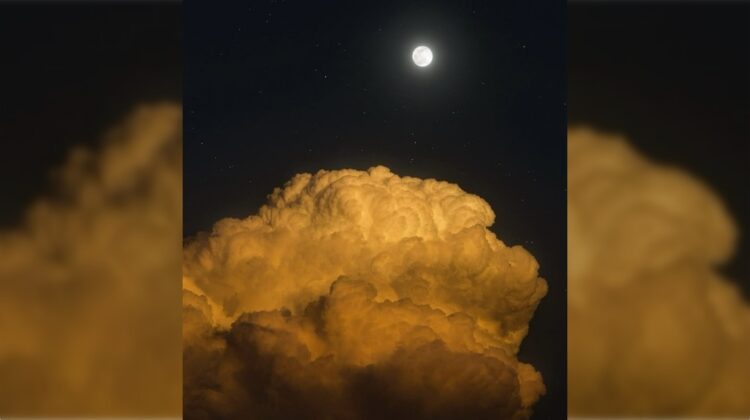
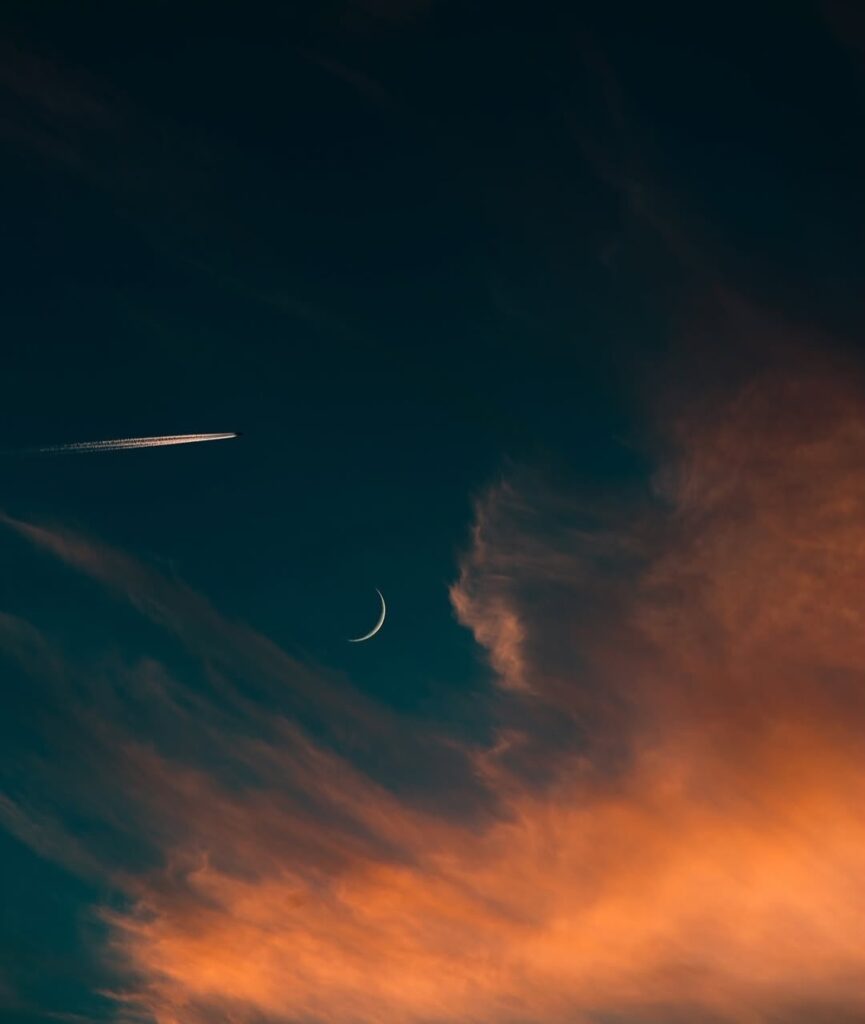
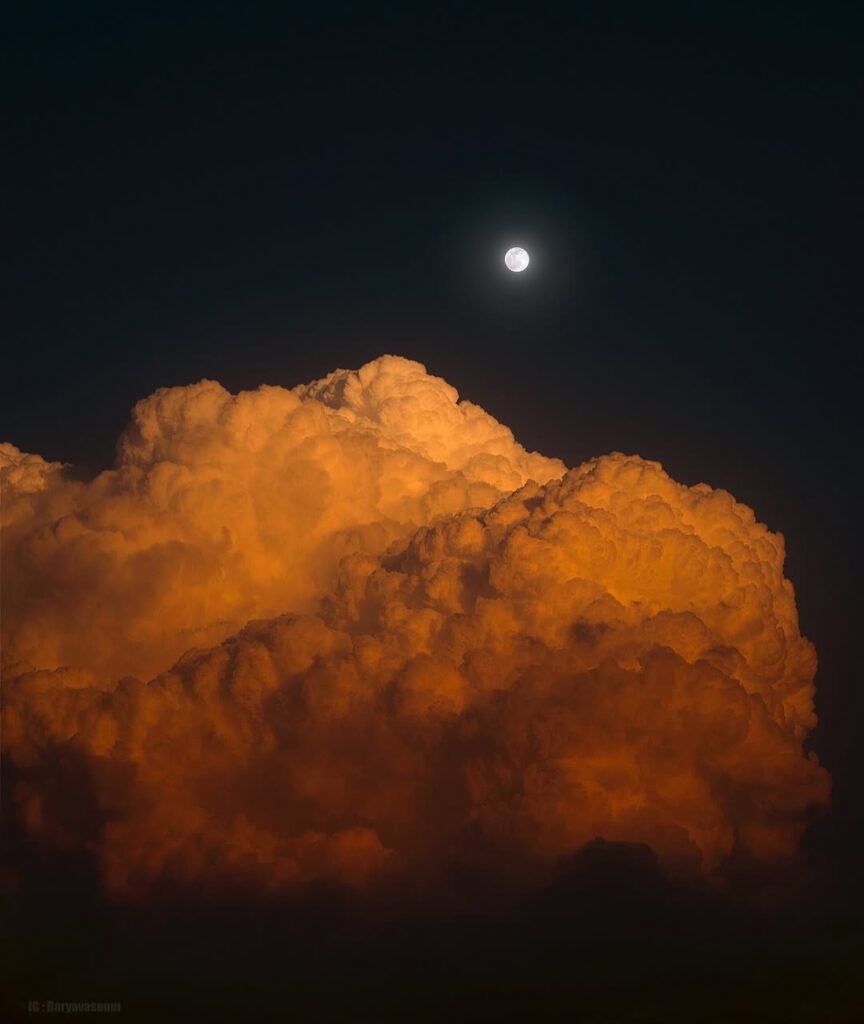
A photographer captures striking images of the moon suspended in the sky during sunset, where fading daylight and rising night briefly share the same frame. These moments are short-lived, yet they reveal how Earth’s atmosphere subtly reshapes the light we see.
During sunset, particles suspended in the air—including dust, aerosols, smoke, and pollution—alter the path of sunlight. As light travels through this thicker layer of atmosphere, shorter wavelengths such as blue and violet scatter away, while longer wavelengths remain.
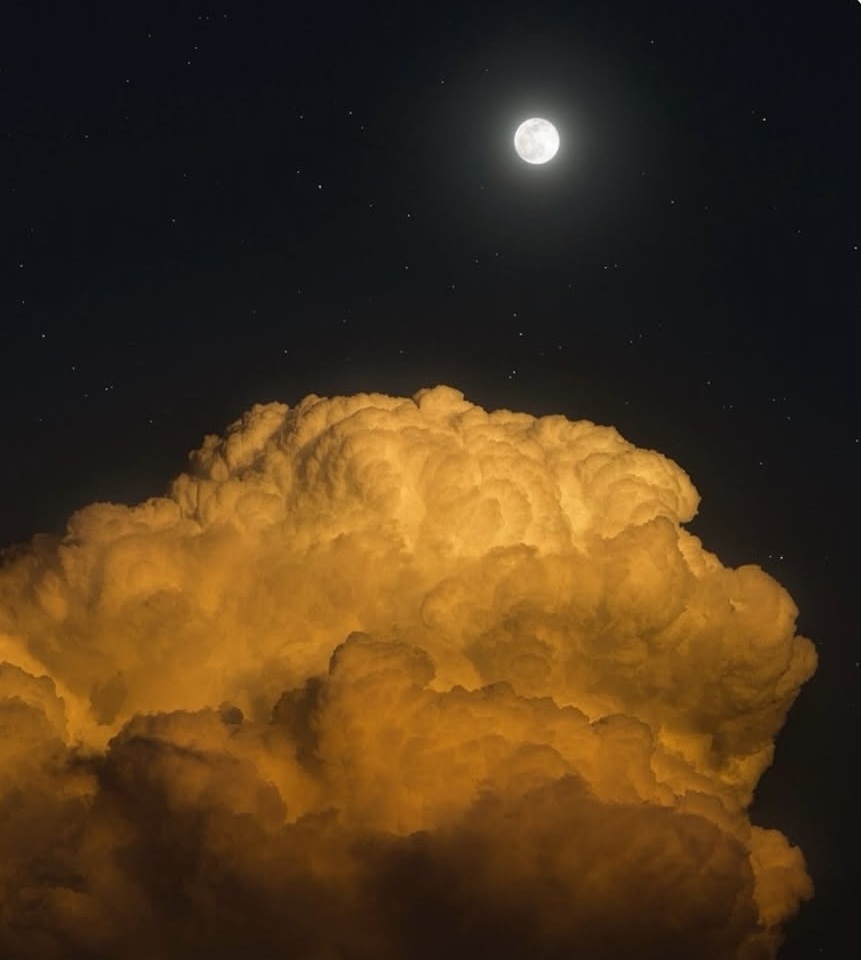
This natural filtering process allows reds, oranges, and warm amber tones to dominate the sky, deepening colors and giving sunsets their rich, dramatic appearance. When the moon is visible at the same time, its pale surface contrasts sharply with the warm horizon, creating a visually balanced and almost surreal scene.
These images are not the result of special effects, but of physics unfolding quietly above us—a reminder that even ordinary skies can offer extraordinary beauty when conditions align.
📷 Photos: @daryavaseum
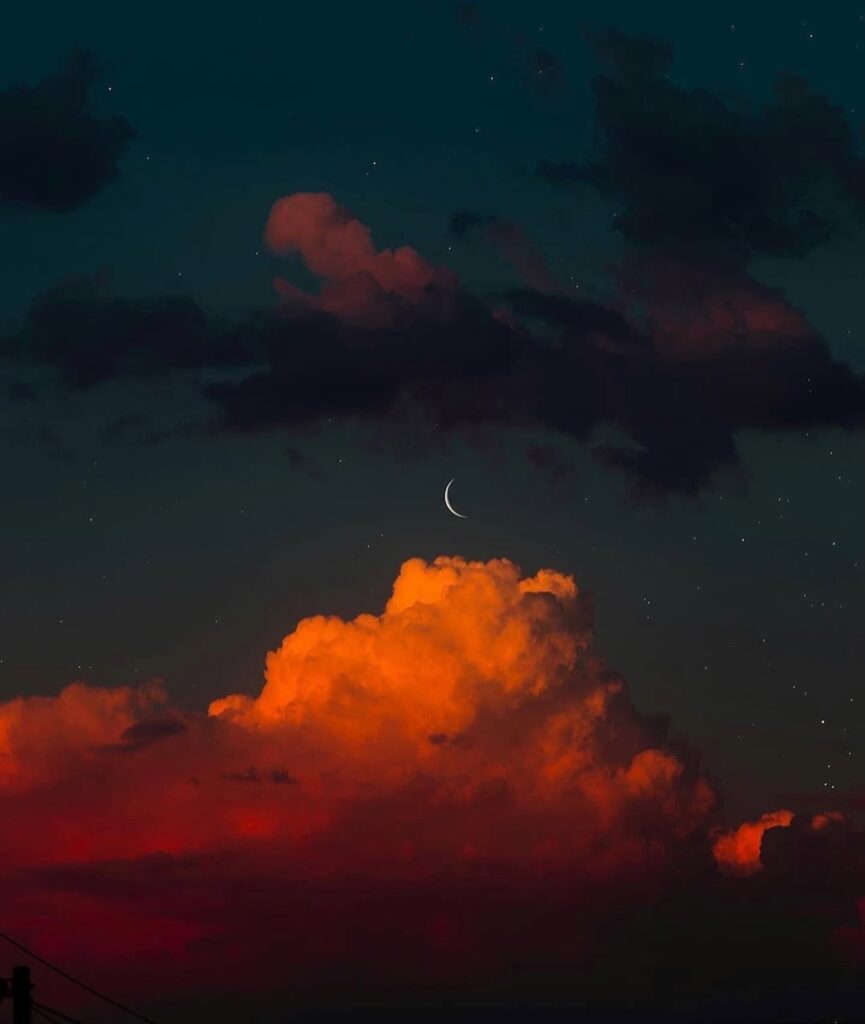
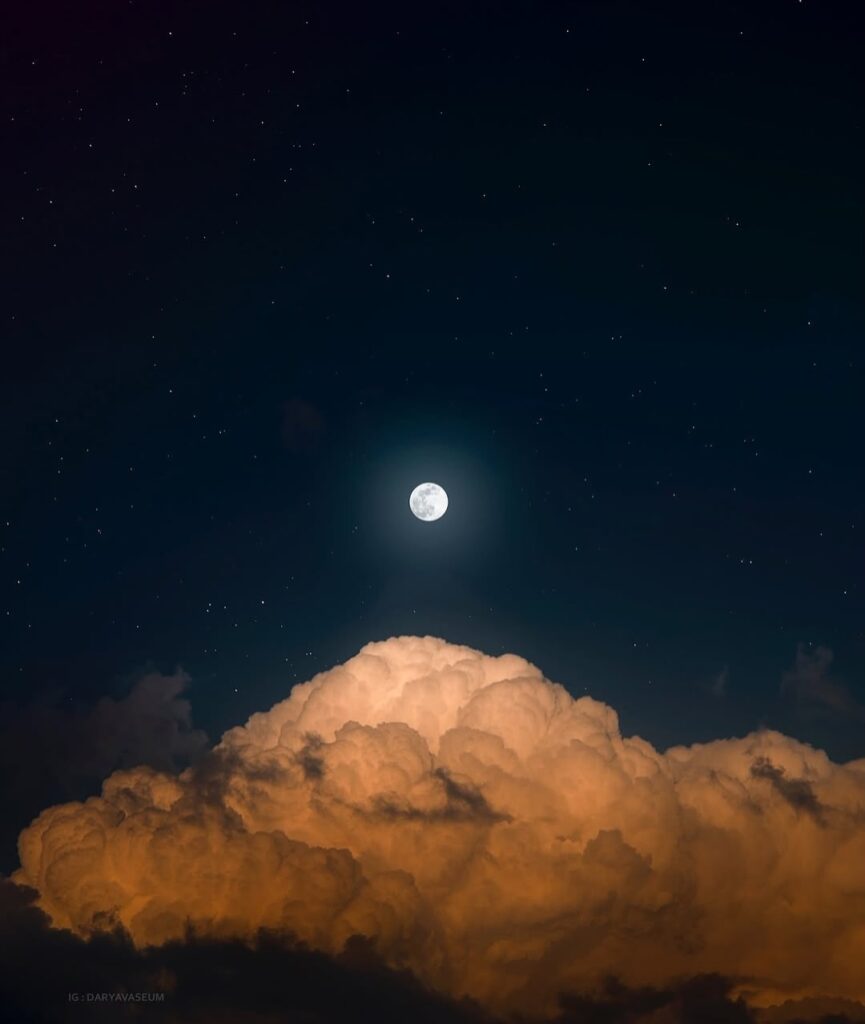
Why Atmospheric Light Matters
Sunsets shaped by atmospheric particles are more than aesthetic moments; they reflect air composition, weather conditions, and human impact on the environment. Changes in color intensity can offer insight into pollution levels and natural events such as wildfires or dust transport. Observing these skies helps connect visual beauty with environmental awareness and atmospheric science.
Leave a Reply