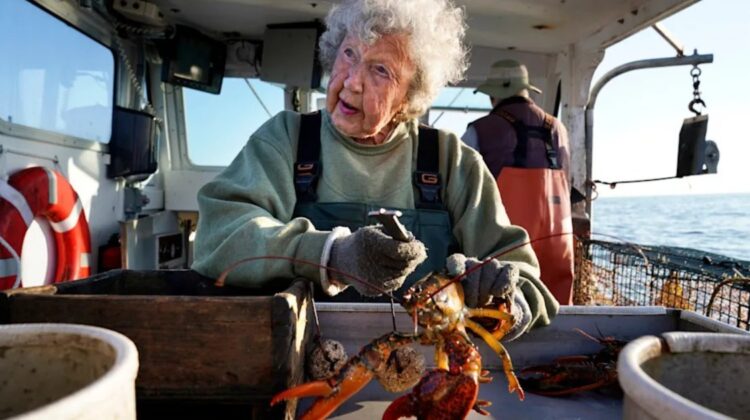
Virginia Oliver, believed to be one of the oldest working lobster fishers in the world, has died at the age of 105 after spending nearly a century hauling traps along the rugged coast of Maine.
Born in Rockland, Maine, Oliver began lobstering at just 8 years old, working beside her father and older brother at a time when women were rarely seen on the water. What began as childhood labor quickly became a lifelong calling. She would go on to earn the affectionate title of the “lobster lady,” a symbol of endurance, independence, and quiet determination in a traditionally male-dominated industry.
“I like doing it. I like being along the water,” Oliver told The Associated Press in 2021. “And so I’m going to keep on doing it just as long as I can.”
She did exactly that.
A Life Defined by the Sea
Oliver continued tending her traps well into her later years, long after most would have retired. Rising before dawn, she baited her traps with menhaden — known locally as pogies — and worked from a boat once owned by her late husband, fittingly named Virginia.
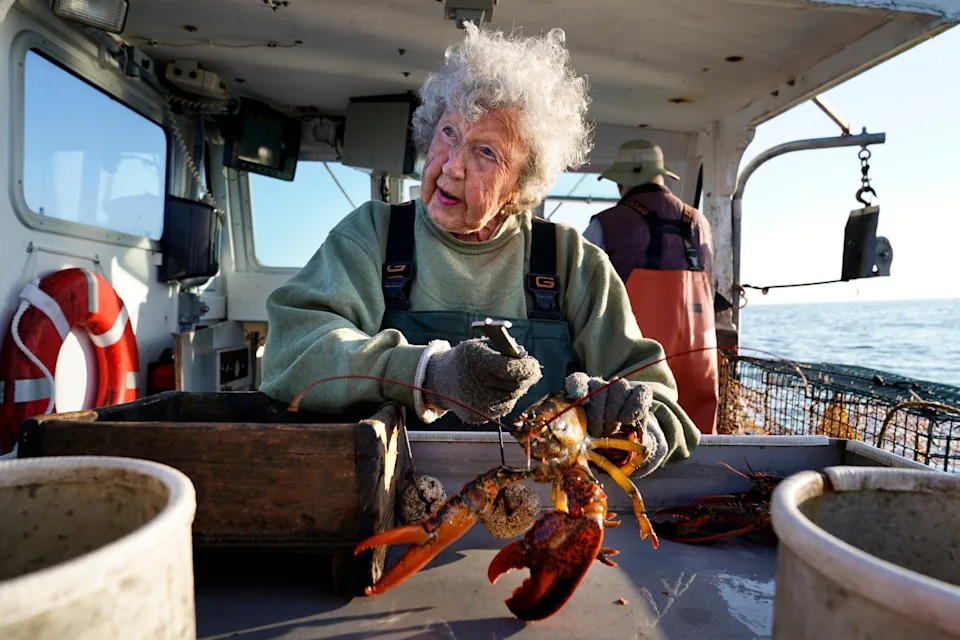
Over the decades, she witnessed the dramatic transformation of the lobster industry itself. When she started, lobsters were considered working-class food, selling for just 28 cents a pound at the docks. Today, they are a luxury commodity, fetching more than $6 per pound — a 22-fold increase that mirrors the broader commercialization of coastal fisheries.
Yet despite the industry’s evolution, the essence of the work remained unchanged: early mornings, physical labor, and deep respect for the ocean.
A Quiet Icon, Known Worldwide
Oliver’s death was confirmed through a family obituary published Monday. While her story reached far beyond Maine — appearing in books, articles, and social media across the world — those who knew her describe a woman untouched by fame.
“Despite her renown, she remained quiet and humble,” the obituary noted. “She greeted everyone with a quick, radiant smile and eyes that literally twinkled.”
The Maine Lobster Festival, where Oliver once served as grand marshal of the annual parade, honored her as “more than a local icon — a living piece of Maine’s maritime history.”
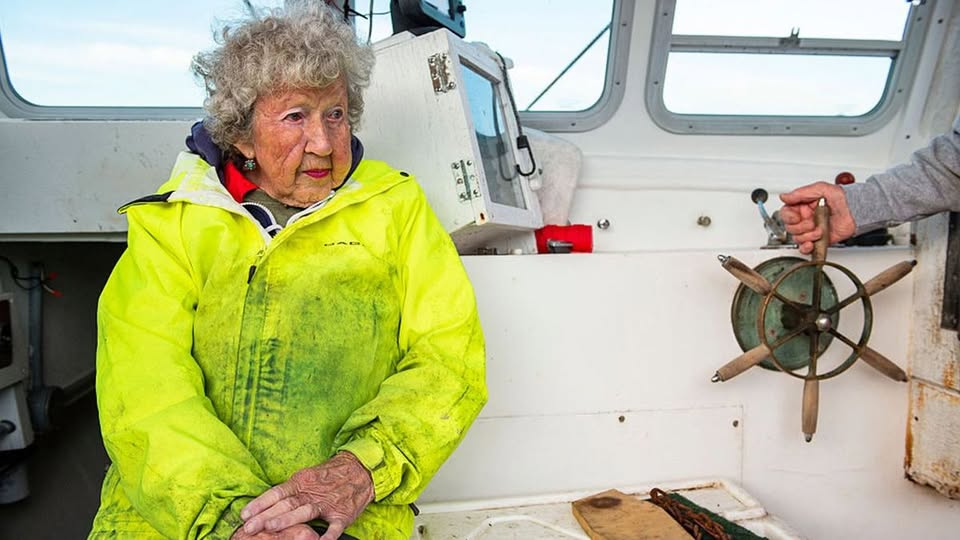
Maine Governor Janet Mills also paid tribute, writing that Oliver’s life would inspire “the next century of hardworking Maine fishermen.”
More Than a Fisher — A Living Timeline
Virginia Oliver’s story is not only about longevity, but about continuity. She bridged generations of coastal life, from hand-hauled traps and small family boats to modernized fisheries under economic and environmental pressure. Her life stands as a reminder of a disappearing way of life — one rooted in patience, resilience, and a personal relationship with the sea.
She did not chase recognition. She chased tides.
And in doing so, she became something rare: a living link between the past and the future of America’s working waterfronts.
Final Reflection
As coastal communities face climate change, economic uncertainty, and shifting food systems, Virginia Oliver’s life offers a powerful lesson in sustainability and devotion to craft. She represents a form of work that values endurance over speed, stewardship over profit, and purpose over prestige. In remembering her, we are reminded that history is not only written in books — sometimes, it rises before dawn and heads quietly out to sea.
Leave a Reply