
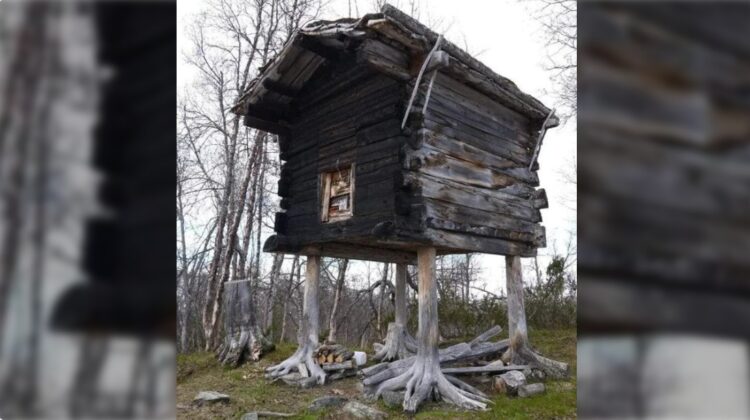
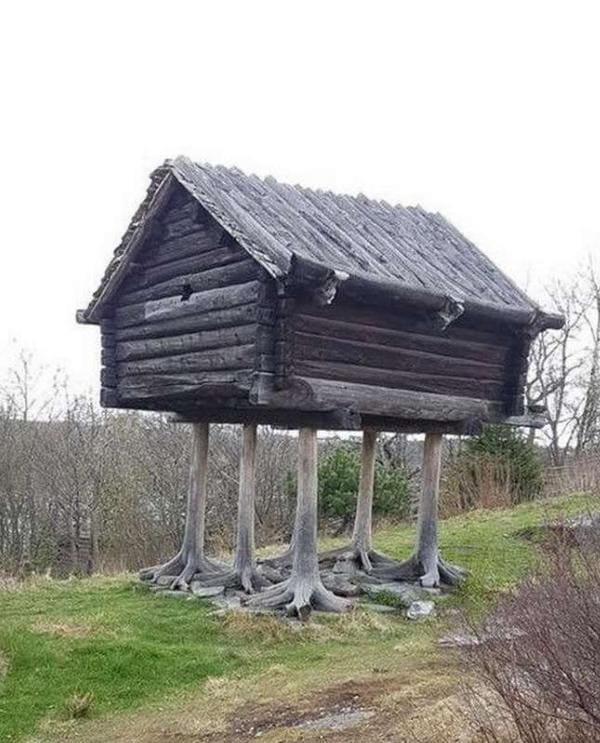
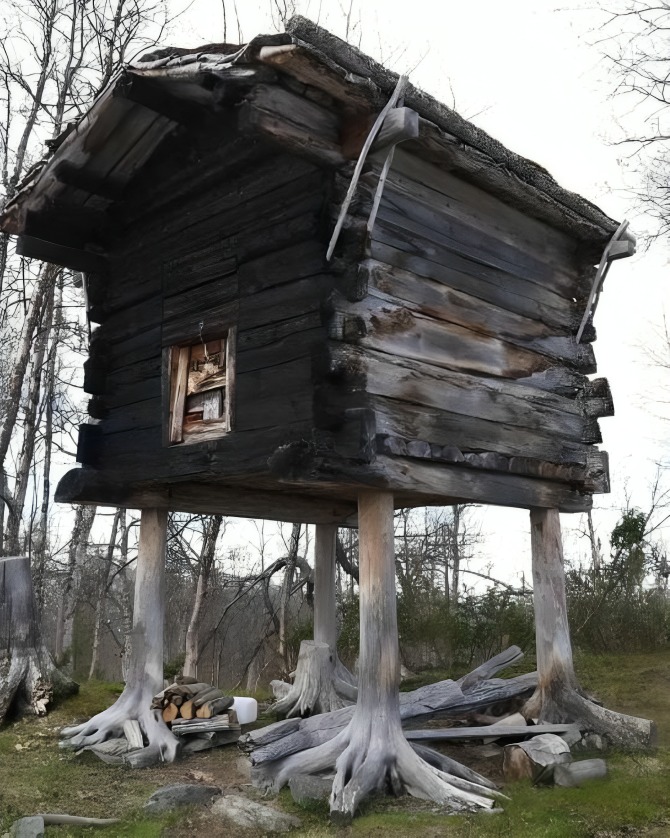
When you hear the phrase “house on chicken legs,” you might imagine Baba Yaga’s magical hut from Slavic folklore—an enchanted home deep in the forest, ready to spin and walk away. But this isn’t just a fairy tale image. In Hattfjelldal, Norway, a real structure dating back to the 18th century has brought that legend to life.
What Is This Strange House?
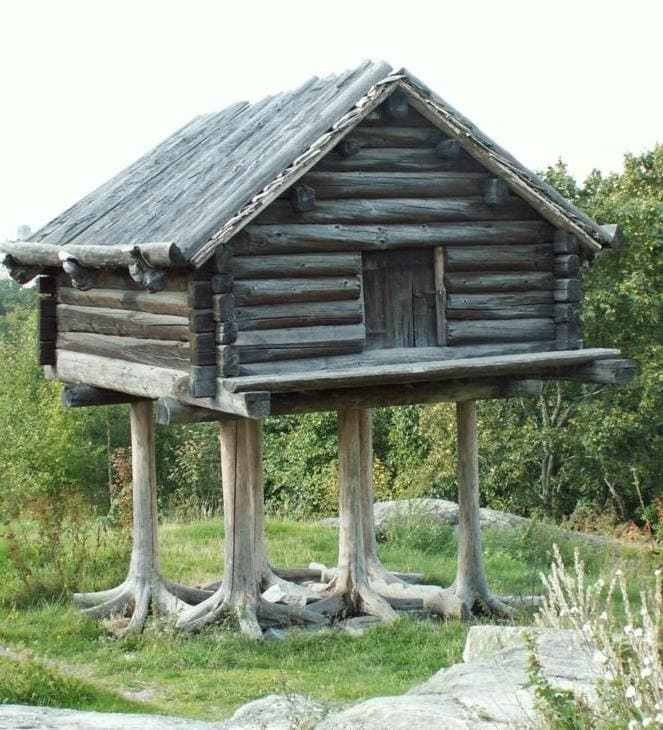
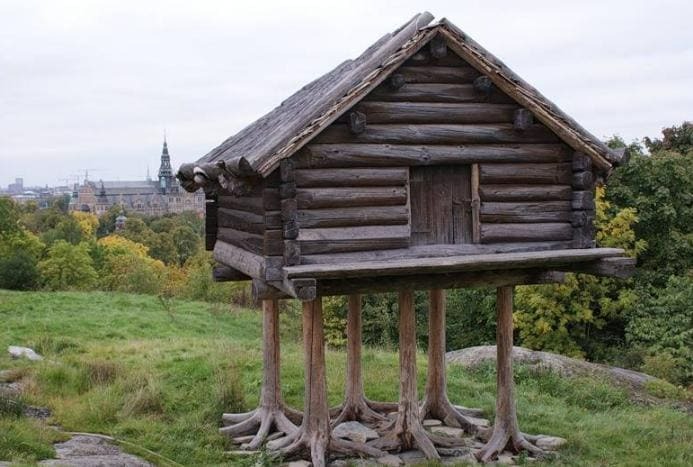
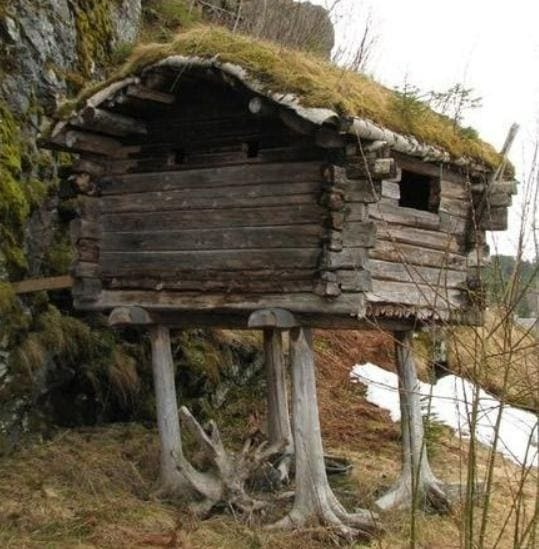
This unusual building is a stabbur—a traditional Norwegian storage house. These small, wooden structures were built on stilts or tree stumps to keep them elevated off the ground. The design wasn’t for decoration but for practical protection: it kept food and valuables safe from moisture, rodents, and wild animals.
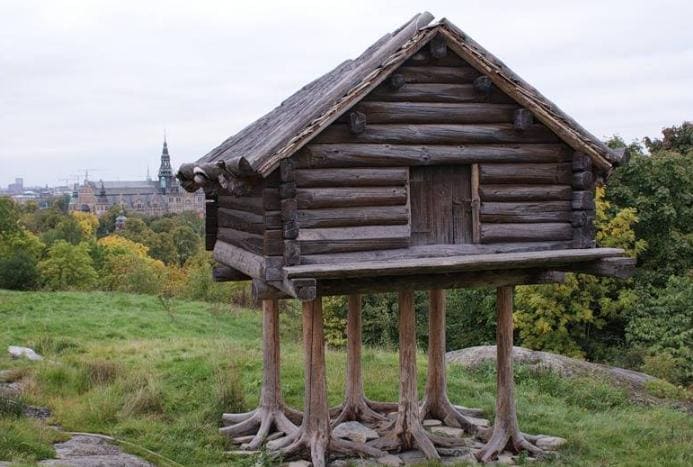
What makes this particular stabbur famous is its striking supports, which resemble bird-like legs. Standing beneath it, you almost expect it to shuffle off into the woods.
A Link to Slavic Mythology
Visitors often compare this house to Baba Yaga’s hut, a legendary figure from Slavic stories—a witch who can be either a helper or a villain. Her house, perched on giant bird legs, was said to rotate and serve as a gateway between worlds.
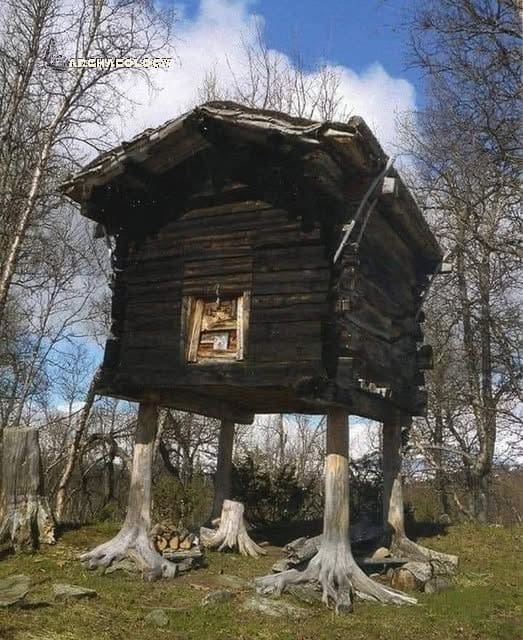
This Norwegian stabbur seems to echo that imagery, suggesting that folklore might have been inspired by real-world structures built centuries ago.
A Glimpse Into the Past
Stabbur storehouses were common in Norway during the 18th and 19th centuries. They held grain, dried meats, fish, clothing, and even important documents. The word “stabbur” itself means “farm storehouse,” and these raised designs ensured safety from both animals and floods.
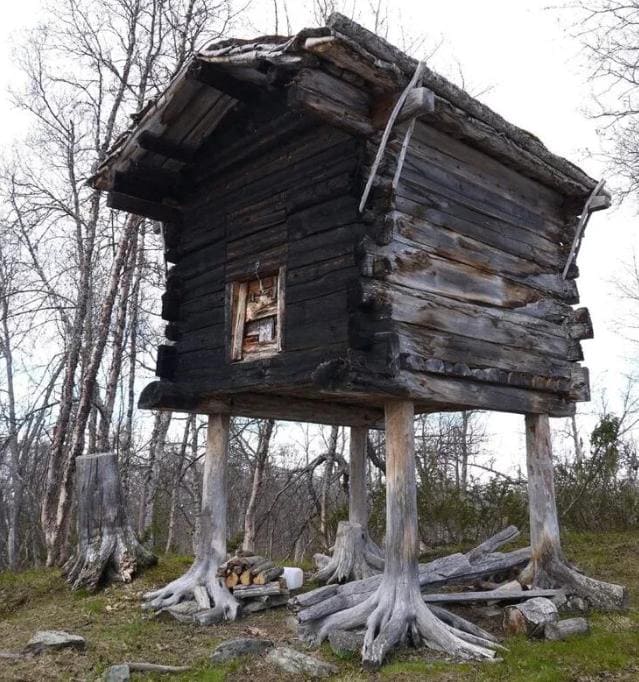
While many stabburs were simple, some—like this one—had carved supports resembling legs, adding to their mysterious and magical appearance.
Cultural Inspiration
The “house on legs” motif appears in cultures across the world. In Norway, it symbolized security and preservation, while in Slavic folklore, it became an icon of mystery and magic. The concept has influenced artists, writers, and composers—including Modest Mussorgsky, who featured a “Hut on Fowl’s Legs” in his famous Pictures at an Exhibition (1874).
A Living Fairy Tale
Today, this centuries-old building is a tourist attraction, drawing visitors who want to see a “real-life Baba Yaga hut.” Many describe it as almost alive, a building that blurs the line between history and myth.
Standing beneath it, you can’t help but feel connected to centuries of folklore and craftsmanship, proof that stories and architecture often intertwine.
Leave a Reply