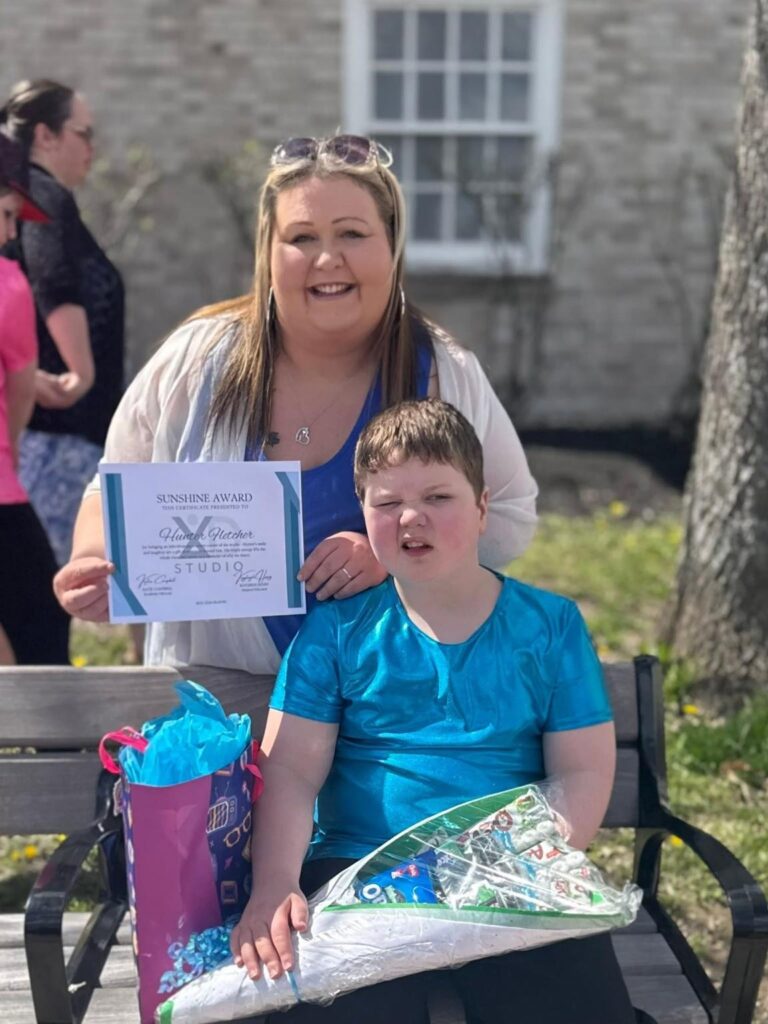
Jessica Fletcher, a mother from Fredericton, New Brunswick, was out to dinner with her 11-year-old son Hunter when the moment she’d been quietly dreading finally happened: the battery died on his AAC device, the tablet he relies on to select words and symbols to communicate. Hunter is autistic and nonverbal, and without the tablet, he suddenly had no way to tell his mother what he wanted to order.
Jessica tried a quick fix, sketching the alphabet on a napkin so Hunter could point out letters to spell his order. It didn’t quite work — the makeshift layout frustrated him. So Hunter took the napkin, flipped it over, and drew something else entirely from memory: a keyboard. Then he used it to “type” out what he wanted to eat, tapping the letters with his finger.
autistic son Hunter could always talk to her.Facebook/Hunter’s Voice
A Napkin Sketch That Changed Everything
For Jessica, watching her son solve the problem himself was the turning point. Devices fail — batteries die, screens crack, tablets get left at home — and she realized she needed a backup that couldn’t run out of power. As she later put it, technology has limits, and she didn’t want her son’s ability to communicate to have the same ones.
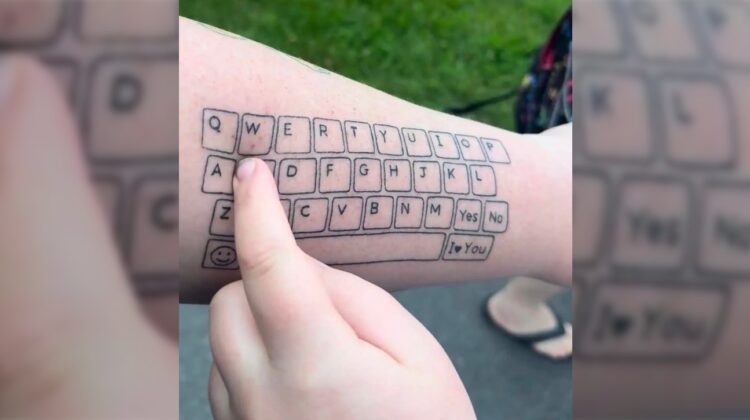
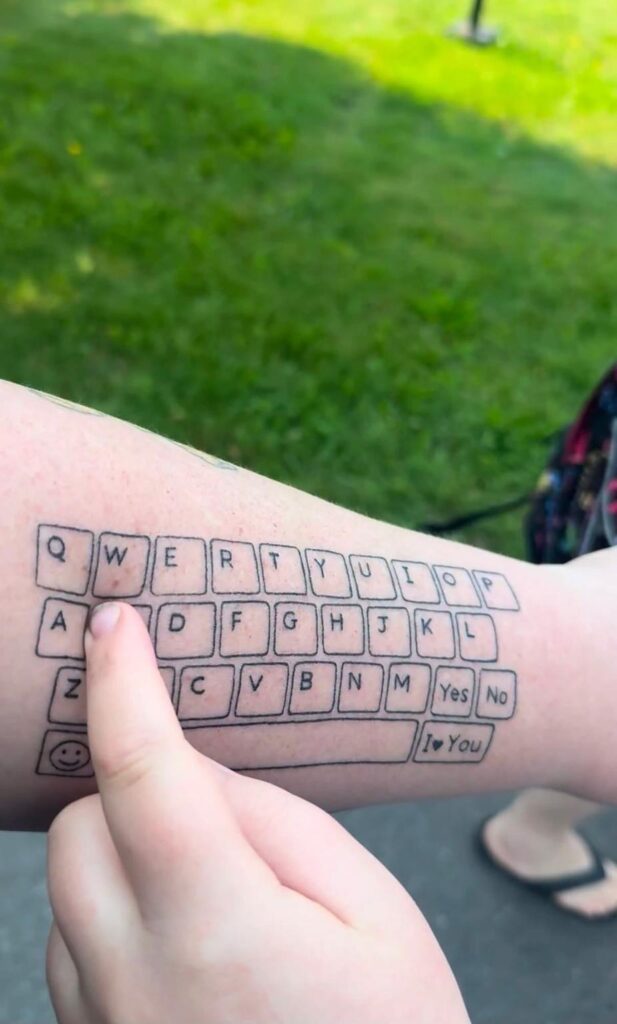
She worked with a local tattoo studio, Main Street Tattoo Company, to have a full keyboard permanently inked onto her forearm — complete with letters, a smiling face, a sad face, and a heart-shaped “I love you” button. When she showed Hunter the finished tattoo, the first word he tapped out on her arm was “Mama.”
More Than Just a Backup
The tattoo turned out to offer something Hunter’s tablet couldn’t: privacy. Unlike his AAC device, which speaks each selected word out loud, Jessica’s arm lets the two of them communicate quietly, without an audience — a small but meaningful shift for a child who now has a way to have a conversation that’s just his own.
Jessica shared a video of Hunter using the tattoo on her Facebook page in July, and it spread far beyond anything she expected, drawing millions of views and likes and reaching families around the world who are raising nonspeaking children of their own.
A Small Idea That Kept Growing
What started as one mother’s solution has since turned into something bigger. Hunter’s classmates asked for keyboard designs of their own, so they could “talk” with him on the playground the same way. Jessica partnered with a clothing company, Maritimer, to produce shirts with a keyboard printed down the sleeve, giving parents, teachers, and caregivers an easy way to offer the same kind of backup communication. Tattoo artists in multiple countries have since offered to ink the same design for free for other parents of nonspeaking children, and Jessica says she’s heard from nurses, doctors, and first responders interested in using the shirts in their own work.
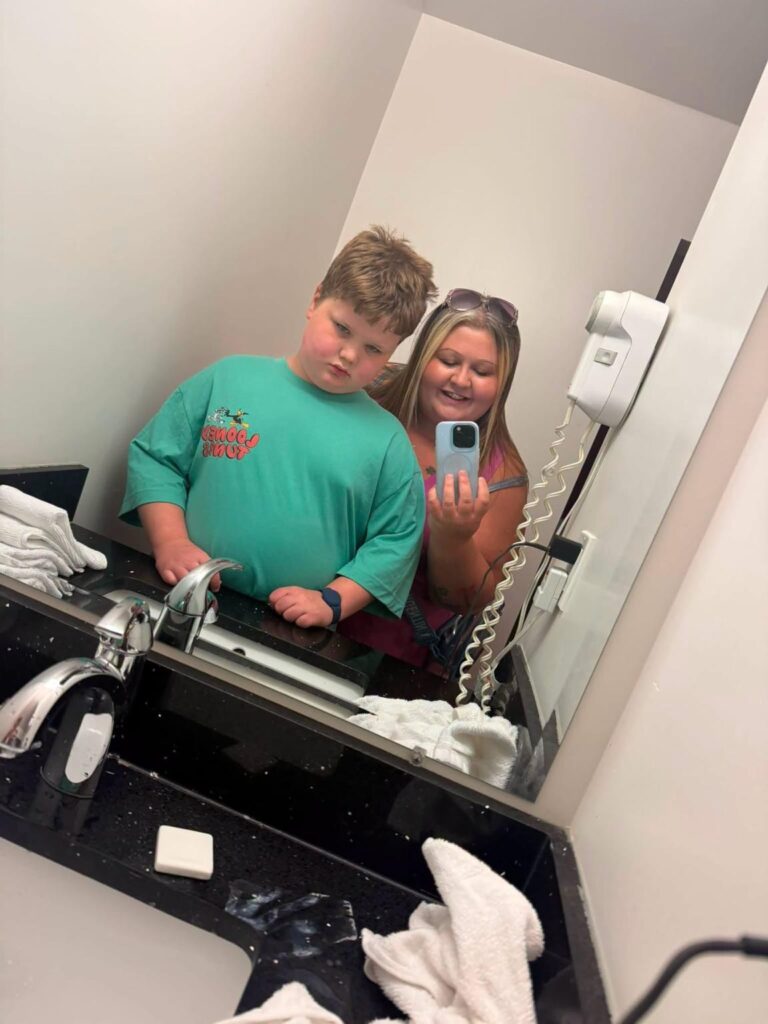
Autism advocates who’ve since spoken about Hunter’s story have pointed to it as a reminder that nonverbal doesn’t mean non-communicative — many nonspeaking children simply need a method that actually fits how they process language, and once they have it, what they’re capable of expressing often surprises everyone around them.
The Bottom Line
Jessica has said she’d do it all again without hesitation — that permanently marking her own arm is a small price for giving her son one more way to be understood. What began as an improvised fix for a dead battery has become something closer to a second language between a mother and her son, one that no charger or Wi-Fi signal can take away.
Sources consulted: CTV News Atlantic / CP24, TODAY.com, and Sunny Skyz.
Leave a Reply