
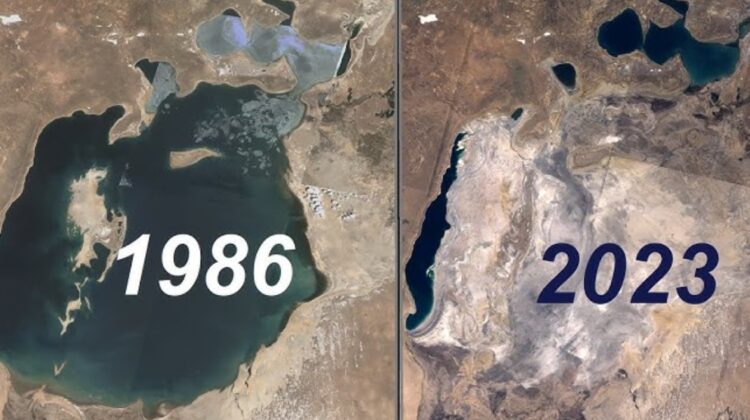
When Ostap Bender once raised a toast to irrigation in Uzbekistan during his wedding with Madame Gritsatsuyeva, he could never have imagined the tragic fate awaiting the Aral Sea. Decades of thoughtless irrigation policies in the Soviet Union’s Central Asian republics ultimately led to the near-total disappearance of this massive lake — creating one of the most severe ecological disasters of the modern world.
From the Fourth-Largest Lake to a Desert
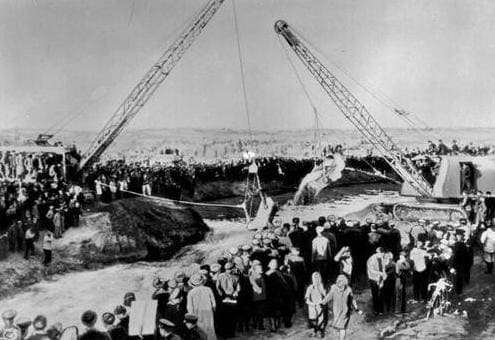
Fifty years ago, the Aral Sea ranked as the fourth-largest lake on Earth. But intensive water withdrawals for expanding cotton cultivation began in the 1960s. Over millennia, the Aral’s size naturally fluctuated — at times, the Amu Darya River shifted course toward the Caspian Sea, only to return later.
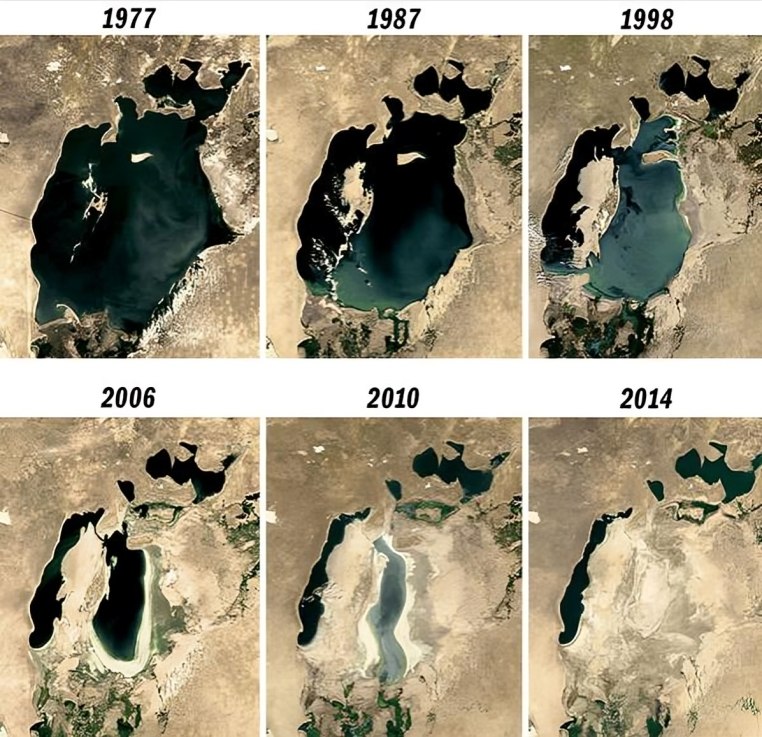
Today, however, irrigation has drastically reduced the inflows from the Amu Darya and Syr Darya. Groundwater, rain, and snow can no longer compensate for the lake’s evaporation, causing a continuous drop in water volume and a sharp rise in salinity.
Until 1985, the Soviet government kept the Aral Sea crisis hidden from citizens. It was Mikhail Gorbachev who first exposed the truth to the public. Many were shocked by the severity of the situation, yet no immediate reduction in water withdrawals occurred.
The Lake Splits and Disappears
By the late 1980s, the Aral Sea had effectively split into two distinct parts — the Small Aral in the north and the Large Aral in the south. By 2007, the Large Aral itself had fragmented into two basins connected by a narrow channel. Its volume plummeted from 708 km³ to just 75 km³, while salinity skyrocketed from 14 g/L to roughly 100 g/L. Today, the southern portion has completely transformed into the Aralkum Desert, with the shoreline retreating nearly 100 km from the former port of Aral’sk.
Toxic Legacy from Agriculture
Irrigation and drainage waters from Soviet-era farms were heavily laden with pesticides and agrochemicals. These chemicals now accumulate on the exposed lakebed, covering roughly 54,000 km². Strong winds spread these toxins across vast distances, contributing to a surge in respiratory illnesses, cancers, and other diseases among the local population.
Collapse of Ecosystems and Fisheries
The dramatic decline of river inflows ended the spring floods that once fertilized the river deltas. Agriculture in the Amu Darya and Syr Darya deltas collapsed. Of the 32 fish species that once thrived in these waters, only six remain.
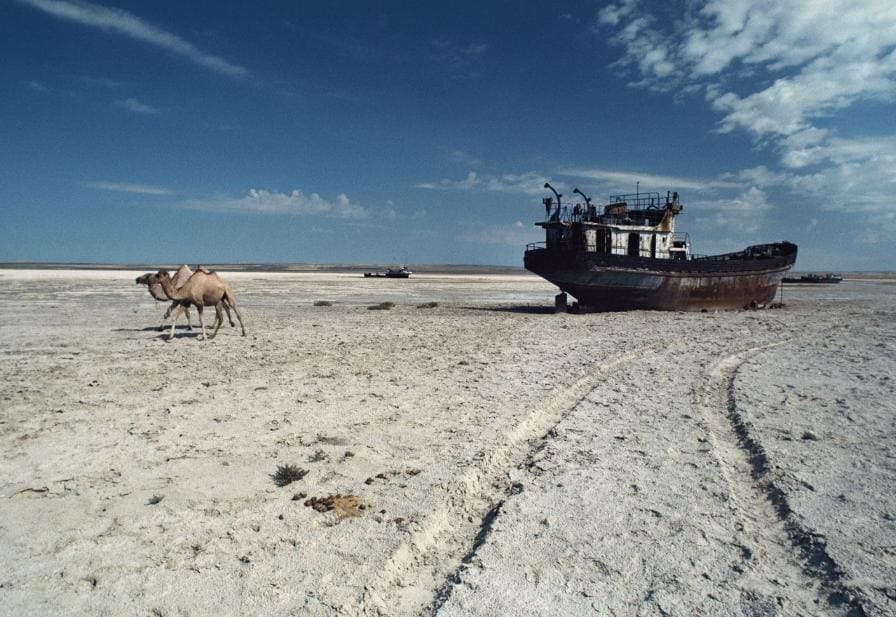
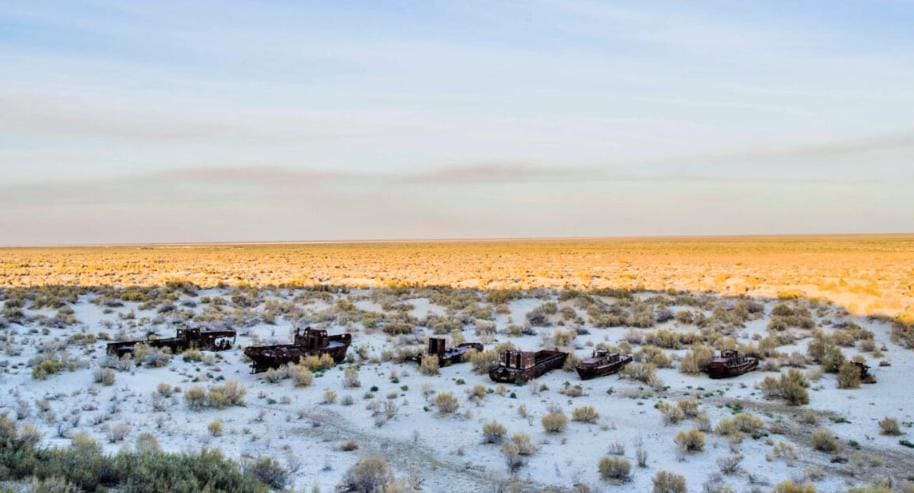
Once-thriving ports like Muynak and Aral’sk now lie stranded far from the receding waters, with rusting ship hulls marking the former coastline. In the early 1960s, commercial fishing yielded 40,000 tonnes of fish annually, but rising salinity wiped out nearly all species, including the last survivor, the Black Sea flounder, which disappeared from the Large Aral by 2003. The collapse of the fishing industry eliminated some 60,000 jobs, devastating the region’s economy.
Desertification and Climate Change
Navigation ceased entirely, and groundwater levels dropped. Vegetation that once lined the Aral’s shores mostly vanished, replaced by saline-adapted grasses. The local climate also shifted — hotter summers, colder winters, less precipitation, and frequent droughts. This environmental change caused the population of mammals and birds to plummet by around 50%, with dramatic reductions in species diversity.
Vozrozhdeniya Island: A Dark Chapter
On Vozrozhdeniya Island, the Soviets secretly conducted experiments on biological weapons, building a small, closed town for laboratory staff. Following the collapse of the USSR, the site was abandoned, leaving behind dangerous equipment and materials. Looting quickly stripped the area of valuables, but much hazardous material remained, adding another layer to the Aral region’s environmental tragedy.
Leave a Reply