
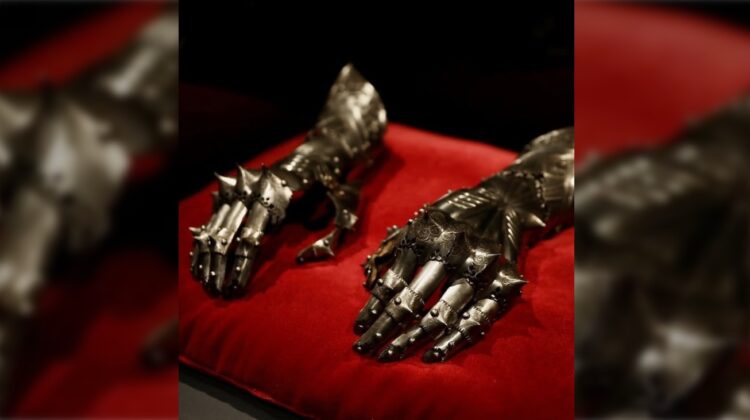
Among the many treasures associated with the Holy Roman Emperor Maximilian I, few pieces reflect his legacy as clearly as the armored gauntlets he personally owned from 1508 until his death in 1519. These gauntlets were not ordinary battlefield equipment. They were part of his private collection — armor created under his direct supervision and crafted to embody the height of Renaissance innovation.
A Ruler Who Revolutionized Armor Design
Maximilian I was more than a political leader; he was a visionary patron of the arts who transformed European armor-making. Under his influence, armor shifted from simple protection into an extraordinary blend of engineering, aesthetics, and symbolism.
He encouraged master artisans to experiment with advanced techniques:
– Fluted steel for improved strength
– Articulated plates for greater mobility
– Precision shaping that allowed armor to fit like a second skin
These innovations eventually formed what historians now call “Maximilian armor” — a distinct style that became iconic across Europe.
The Gauntlets: Strength, Precision, and Royal Identity
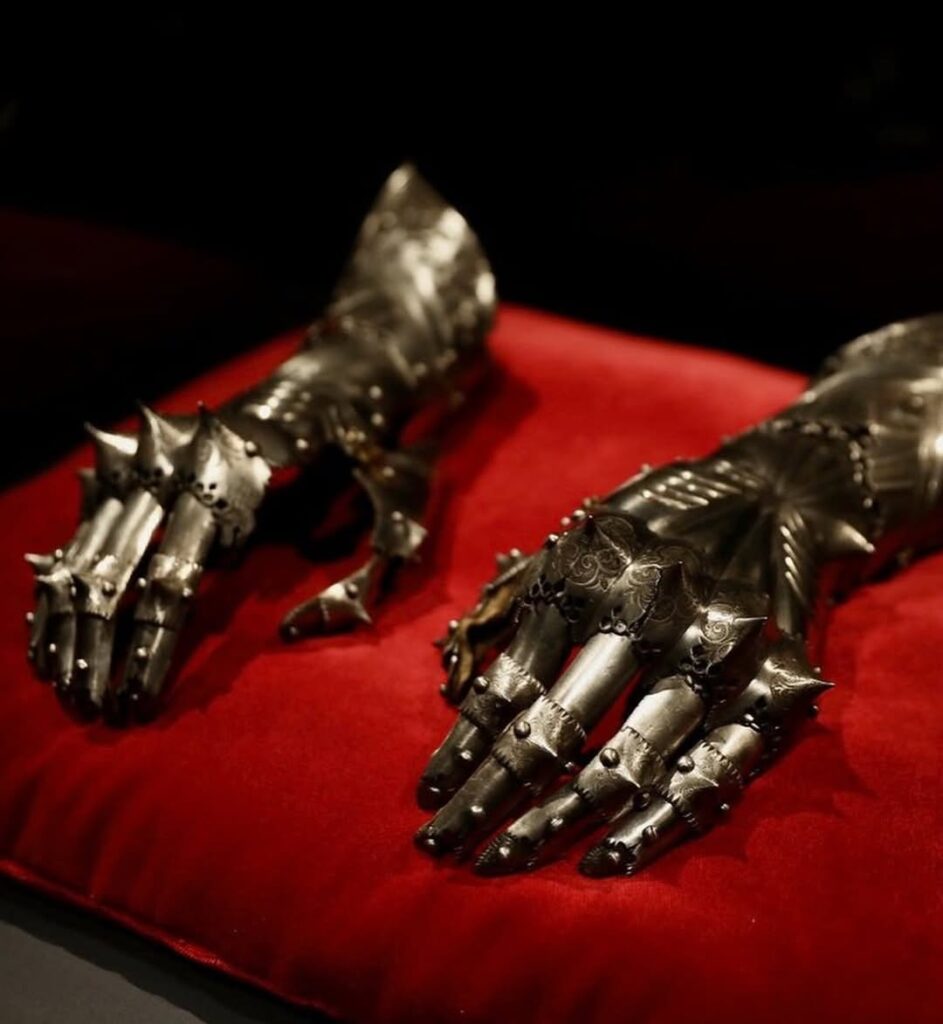
The gauntlets attributed to Maximilian are especially remarkable. Built for both combat and ceremonial display, they reveal a combination of durability and elegance:
- Articulated knuckle plates allowed flexibility in the hand.
- Reinforced cuffs offered protection without restricting wrist movement.
- Subtle decorative lines and fluting reflected the emperor’s taste for beauty in functionality.
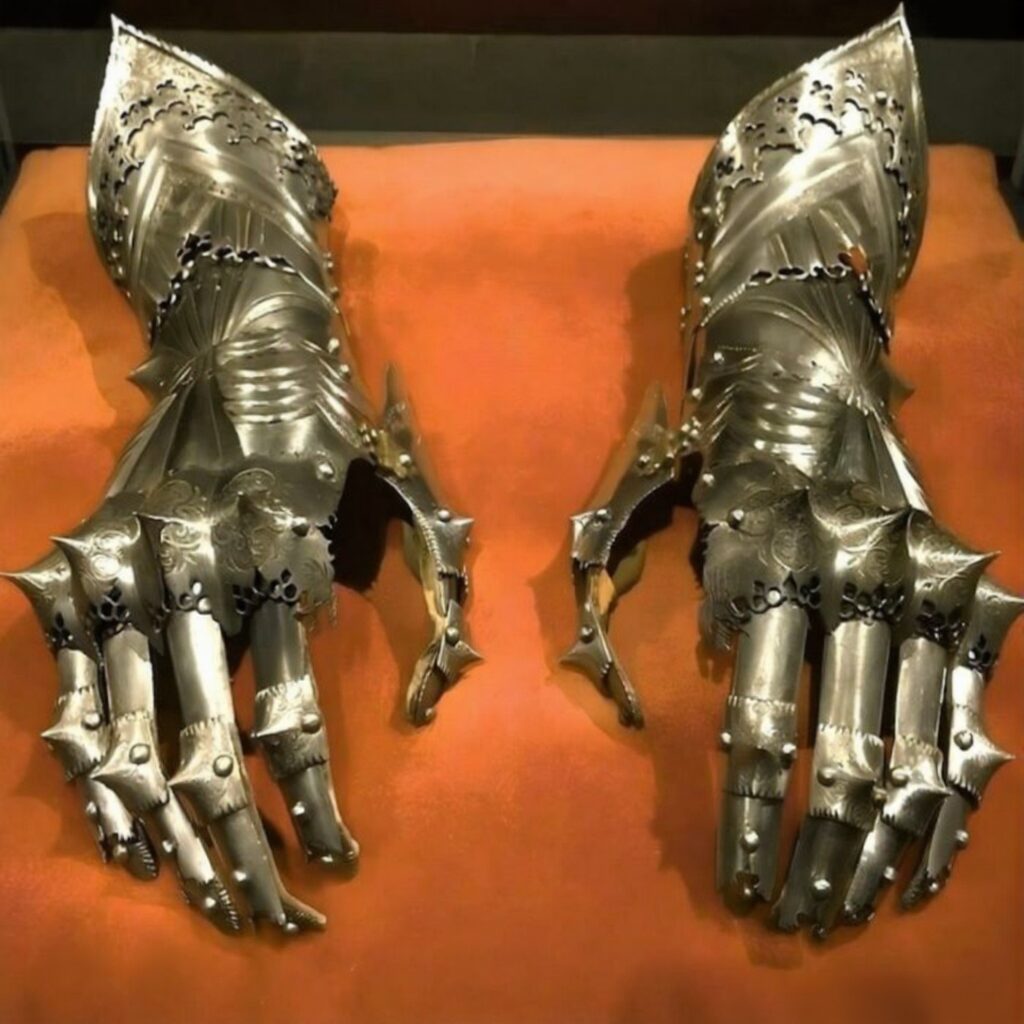
Every curve and contour was shaped by the era’s most skilled armorers, many of whom enjoyed Maximilian’s personal patronage.
A Personal Connection to Power
Because these gauntlets remained in Maximilian’s possession for his entire reign, historians believe they were among his favored pieces — items he returned to repeatedly, both as symbolic representations of power and as testaments to his role in shaping European martial art.
They serve as an intimate reminder of how deeply Maximilian involved himself in the design of his armor, treating it as both a battlefield necessity and an artistic statement.
More Than Armor — A Reflection of Renaissance Ideals
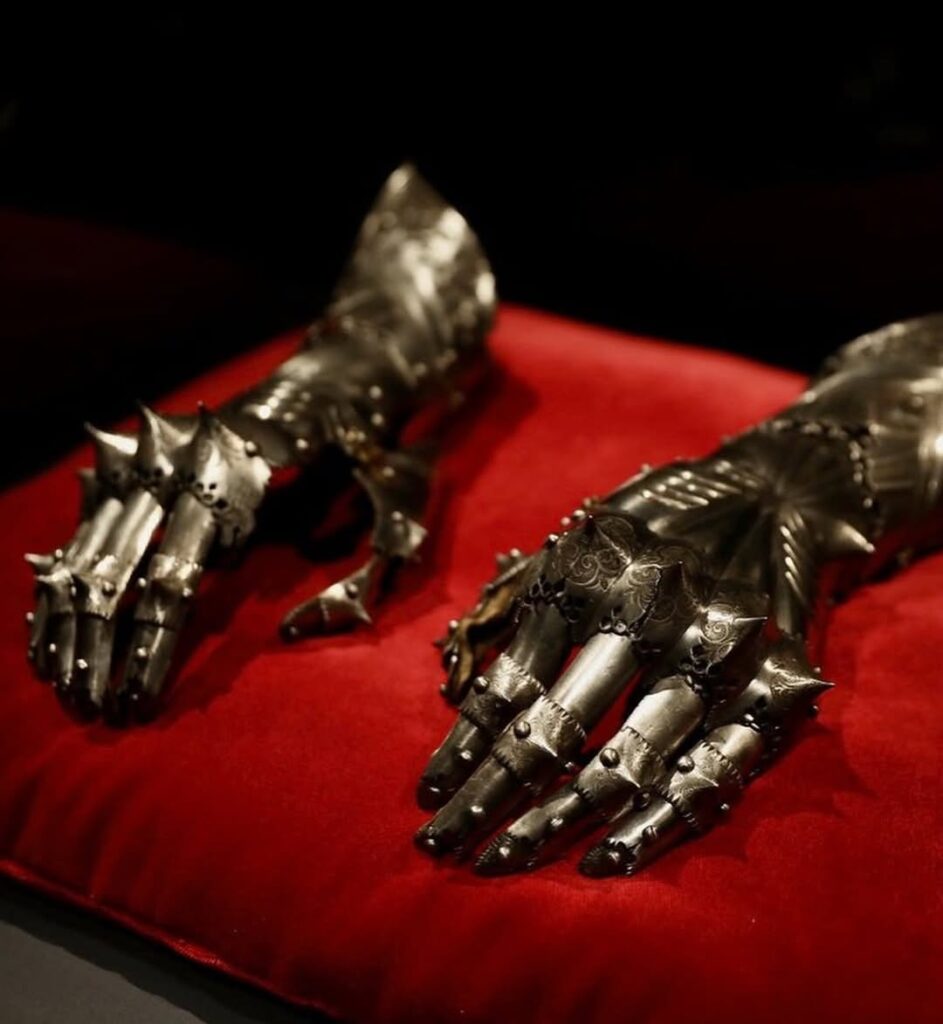
The craftsmanship behind these gauntlets mirrors the Renaissance belief that beauty and function should coexist. They represent a time when metalworkers were not only engineers but artists, blending mathematics, metallurgy, and aesthetics into a unified whole.
Objects like Maximilian’s gauntlets offer a window into a world where craftsmanship, leadership, and artistic ambition were deeply intertwined. They remind us that historical artifacts are not just remnants of the past, but living stories — shaped by the hands of masters and carried by figures whose influence still echoes through art and culture today.
Leave a Reply