
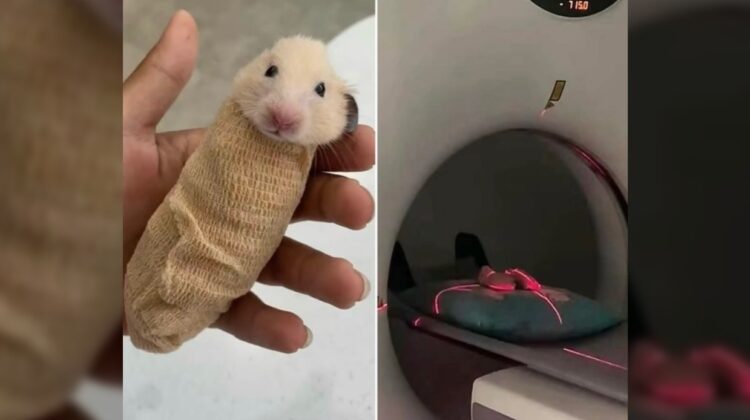
If you’ve ever seen a hamster curl up into a tiny ball or nibble on a seed, you already know how delicate they are. But have you ever stopped to wonder — how do veterinarians give such a small creature an MRI scan?
The answer might melt your heart.
Because of their miniature size, hamsters must stay perfectly still during imaging. Even the slightest twitch can blur the scan. To help with this, veterinarians carefully wrap the hamster in soft gauze or a tiny fabric blanket, almost like a burrito.

This gentle “hamster wrap” keeps them snug and secure, reducing stress while preventing movement. It’s not just for comfort — it’s crucial for producing clear, accurate MRI images of their tiny organs, bones, and brain.
Once wrapped, the hamster is placed into a special small-animal MRI machine, designed to accommodate creatures weighing only a few ounces. The scan itself is completely painless, and vets often monitor the hamster’s breathing and heartbeat the entire time to ensure it stays safe and calm.
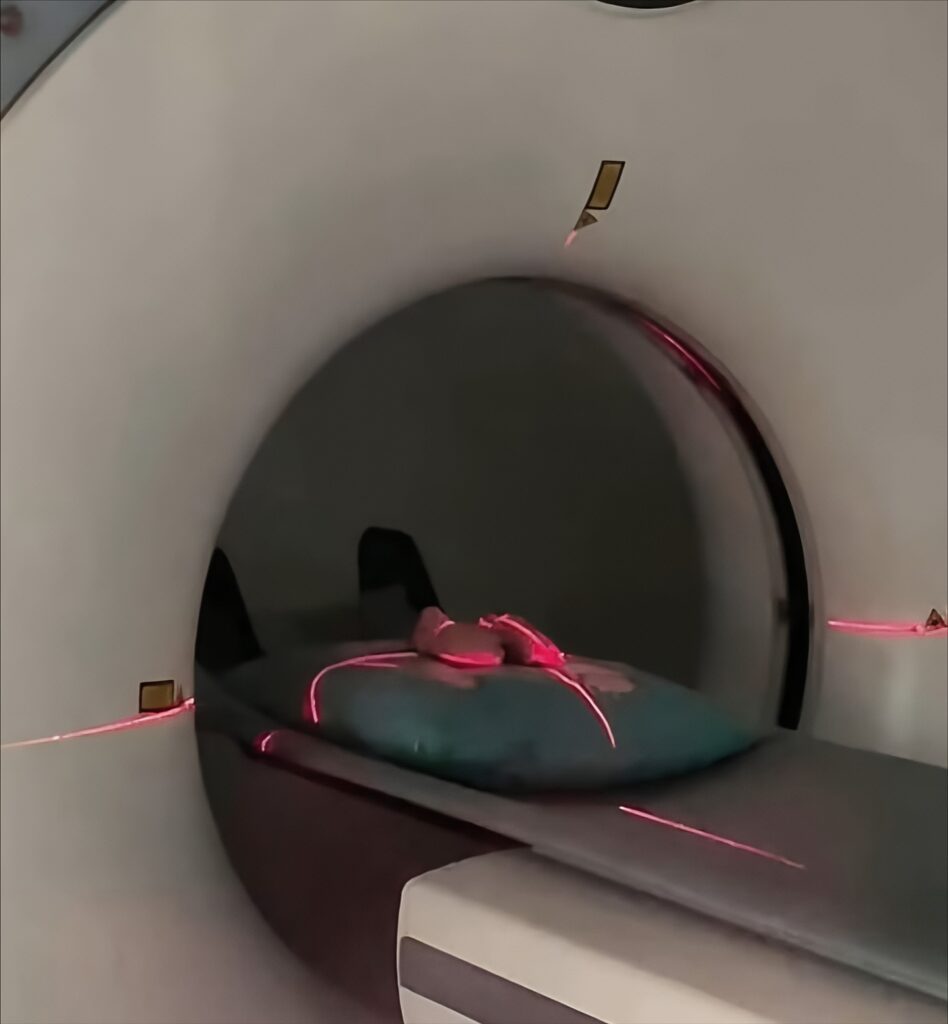
These miniature MRI sessions allow veterinarians and researchers to study neurological conditions, tumors, and internal injuries that would otherwise be impossible to diagnose in such small animals.
So yes — somewhere out there, a tiny hamster might be lying perfectly still, wrapped in gauze, bravely helping science while looking unbelievably cute.
Leave a Reply