
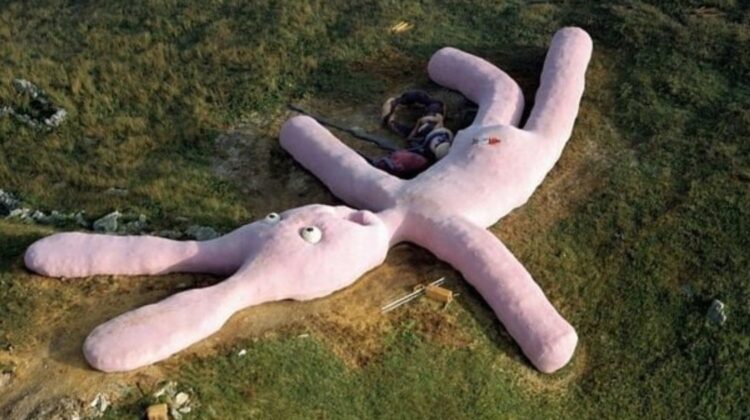
A large-scale art installation placed on a hillside in northern Italy is continuing to attract visitors and online attention nearly 20 years after it was first created.
The work, known as “Hase,” was installed in 2005 by the Vienna-based artist collective Gelitin. It is located on Colletto Fava, a hill in the Piedmont region, and measures approximately 200 feet (60 metres) in length.
Constructed to resemble a giant pink stuffed rabbit, the installation was designed to be both interactive and temporary. Visitors were encouraged to climb on the structure, which was intentionally built to deteriorate over time due to exposure to the elements.
Over the years, the rabbit has significantly decayed, with much of its surface worn down by weather conditions including rain, wind and snow. What remains today is a faded and partially collapsed version of the original structure.
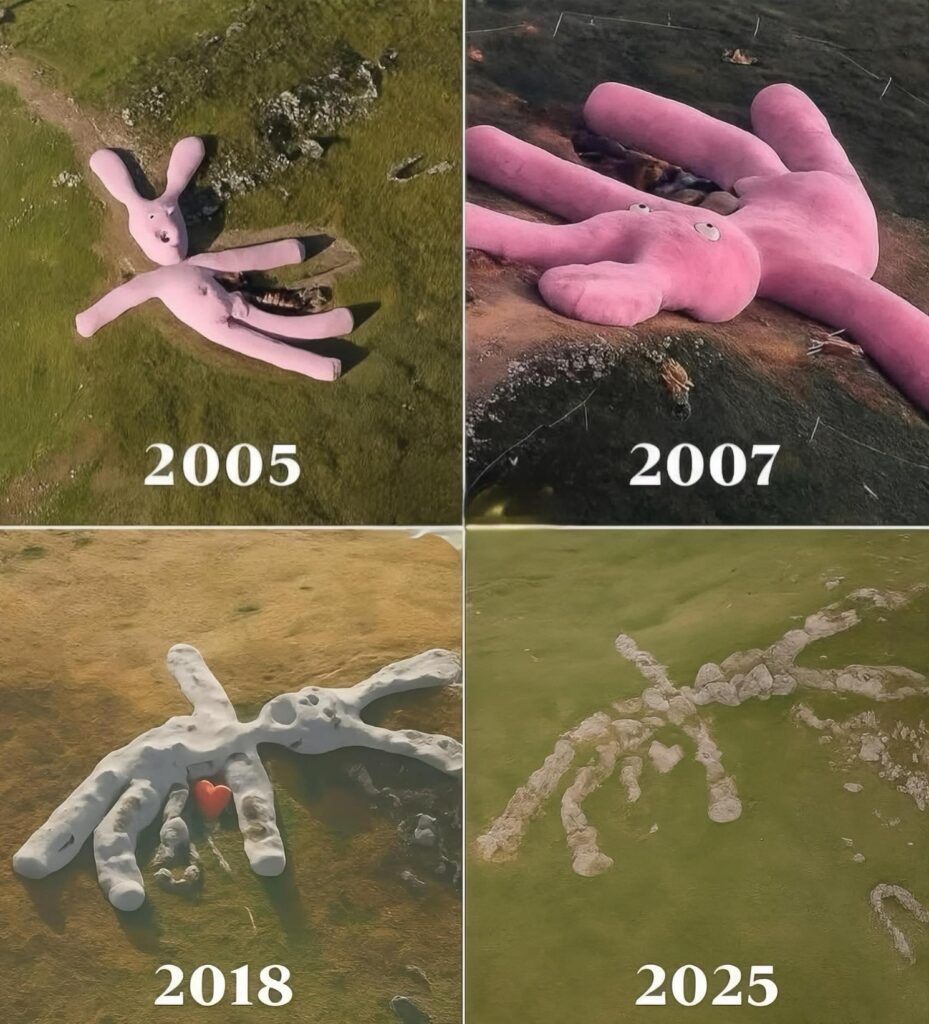
Despite this, the installation continues to draw interest from tourists, hikers and photographers. Its scale means it can be seen clearly in satellite imagery, contributing to its visibility online.
According to the artists, the project was intended to create an unexpected experience in a natural setting and to explore themes of impermanence and interaction between human-made objects and the environment.
The installation was originally expected to remain in place until the mid-2020s, depending on the rate of natural decay.
While reactions to the artwork vary, ranging from curiosity to unease, it has become one of the more unusual examples of contemporary land art in Europe.
The growing popularity of unique travel destinations and contemporary art has increased demand for cultural tourism, guided travel experiences, photography tours, and digital travel planning platforms. Visitors are increasingly seeking off-the-beaten-path attractions, driving interest in eco-tourism, local accommodation services, and premium travel content that highlights rare and unusual landmarks around the world.
Leave a Reply