
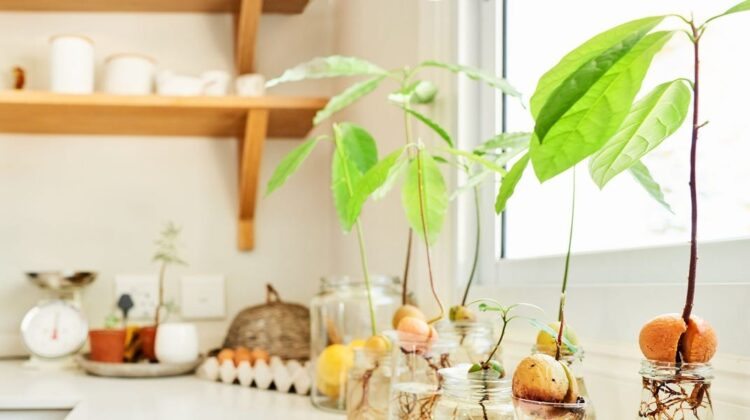
In orchards stretching across subtropical landscapes — from hillside groves to carefully managed backyard gardens — the avocado tree stands as both an agricultural success story and a symbol of modern self-sufficiency. In recent years, as global interest in sustainable living and home gardening has grown, more individuals have begun cultivating avocado trees in their own yards, transforming a discarded kitchen seed into a long-term investment in food independence.
But how do farmers grow avocado trees? And what does it take to nurture one from seed to harvest?
The answer lies in patience, preparation, and understanding the biology of this remarkable fruit-bearing tree.
Beginning with the Seed
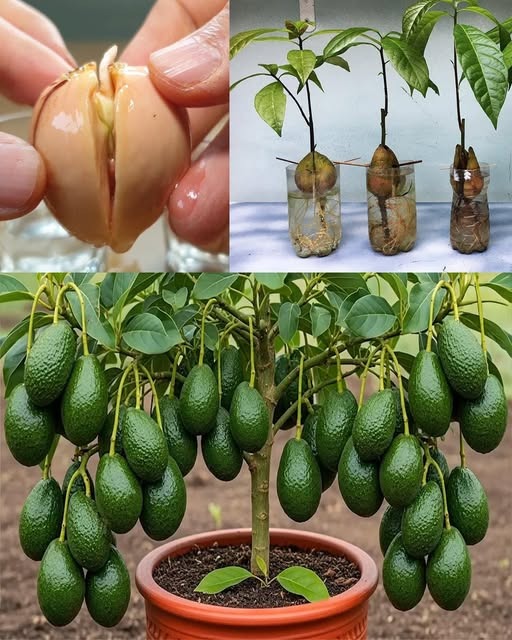
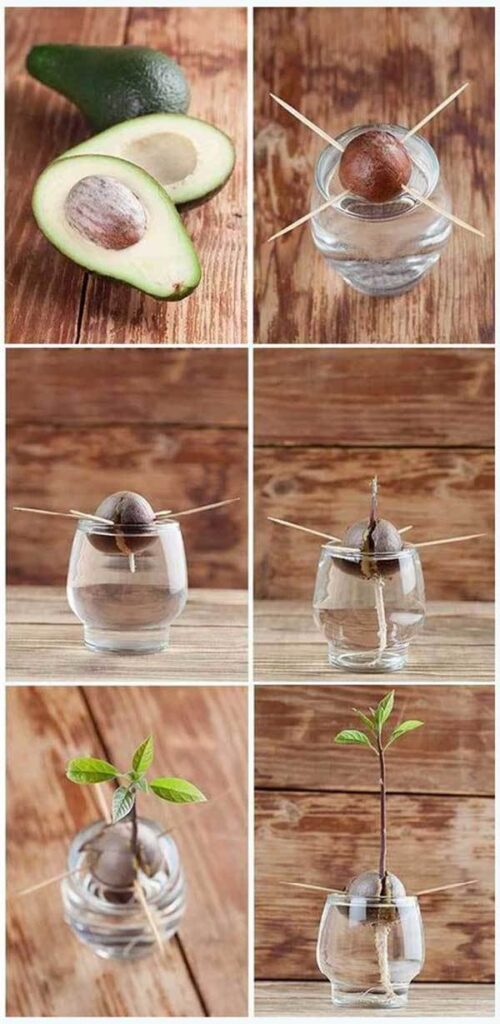
For commercial growers, avocado cultivation often begins with carefully selected rootstock in professional nurseries. For home gardeners, however, the journey usually starts at the kitchen table — with the seed from a freshly eaten avocado.
What makes avocado seeds fascinating is their genetic individuality. Unlike many fruits, avocados grown from seed do not replicate the exact characteristics of the parent fruit. Each seed carries the potential to produce a unique variety, with differences in taste, texture, and yield.
Planting a seed is not simply an act of recycling — it is an experiment in biodiversity.
Preparation and Planting
Choosing the Right Container
A one-gallon pot provides an ideal starting environment. It allows sufficient room for early root development while maintaining manageable water control.
Soil and Fertilizer
Use standard potting soil that is loose and well-draining. Avocado roots are sensitive to excess moisture, and proper drainage prevents root rot.
Mix in approximately one tablespoon of balanced 6-6-6 fertilizer. This formula provides equal parts nitrogen, phosphorus, and potassium — essential nutrients for early growth.
Positioning the Seed
Every avocado seed has a top and bottom. The slightly indented base — often described as the “belly button” — is where roots emerge.
- Place the seed belly button down.
- Leave roughly one-third of the seed exposed above the soil.
Watering
Keep the soil consistently moist, but never waterlogged. In most climates, watering every other day is sufficient, though frequency should be adjusted based on temperature and humidity.
The Invisible Stage: Root Development
Before any green shoot appears above the soil, the seed invests its energy underground. A strong root system forms first, anchoring the plant and enabling nutrient absorption.
This phase requires patience. Disturbing the seed during early root growth can compromise development. Farmers understand that what happens beneath the soil determines what thrives above it.
From Seedling to Young Tree
As the avocado plant begins to sprout and grow, ongoing care becomes essential.
Sunlight
Young avocado plants thrive in partial sunlight. Too much direct sun can scorch tender leaves, while too little light slows growth. A balance of filtered sun and shade promotes steady development.
Structural Support
As the plant grows taller, it may require a stake or bamboo support to maintain upright growth and prevent bending.
Nutrition
Apply balanced fertilizer approximately every 60 days. Place it around the edge of the pot rather than directly against the trunk to prevent root burn.
Pruning
To encourage a strong structure, pinch or prune the top growth periodically. This promotes lateral branching, creating a sturdier framework capable of supporting future fruit.
The Long Road to Fruit
Growing an avocado tree from seed is an exercise in long-term commitment.
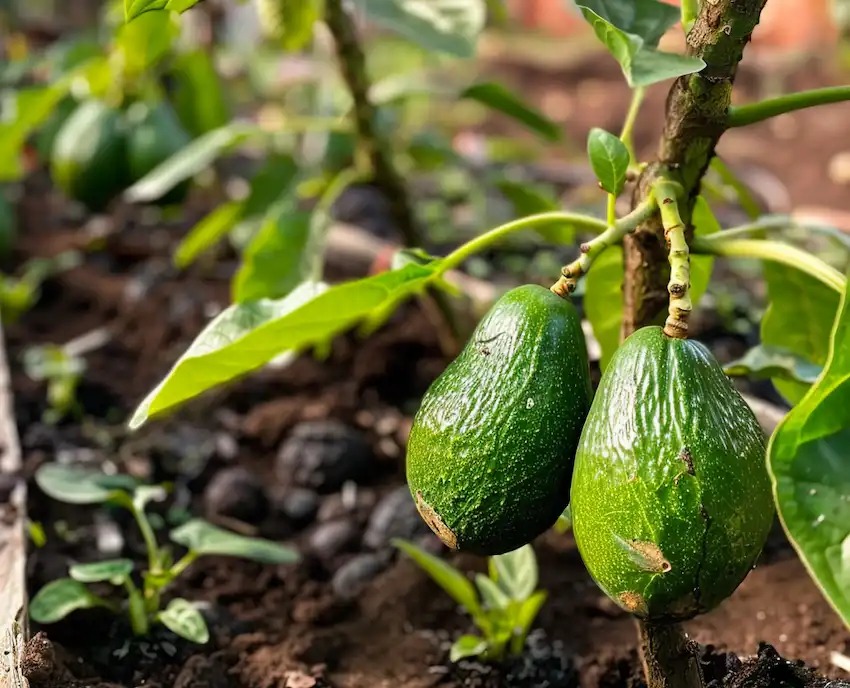
A seed-grown tree can take 10 to 12 years to bear fruit — and even then, the fruit’s quality may vary significantly from the original avocado.
For commercial farmers and serious growers, grafting offers a more predictable and efficient alternative.
The Science of Grafting
Grafting involves attaching a branch (known as a scion) from a mature, fruit-producing avocado tree onto a young seedling rootstock.
This technique combines:
- The vigor and adaptability of the rootstock
- The proven fruit quality of the mature parent tree
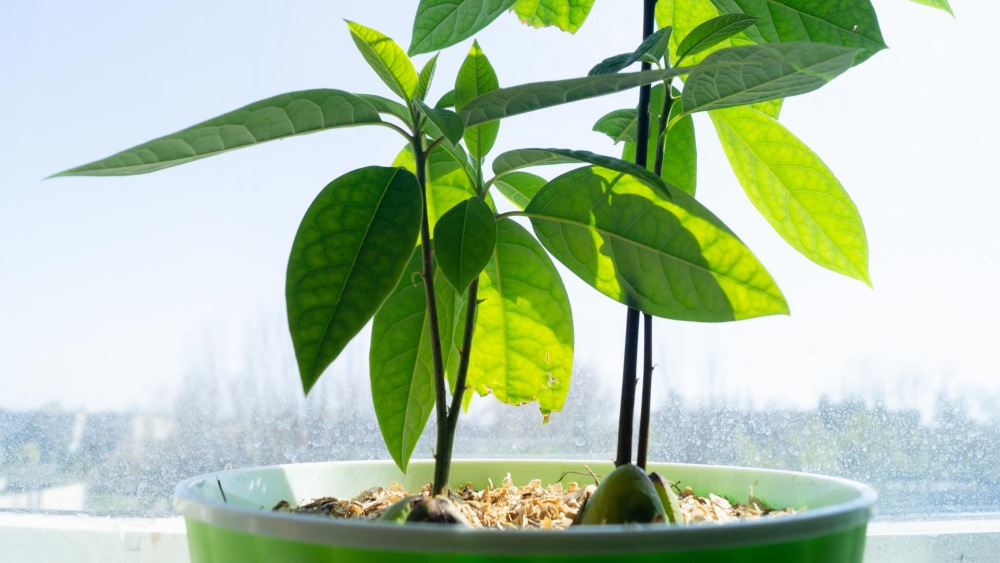
With grafting, an avocado tree can begin producing fruit in as little as 3 to 4 years — dramatically shortening the timeline compared to seed-grown trees.
For farmers, grafting ensures consistency in size, flavor, yield, and disease resistance. It transforms uncertainty into agricultural reliability.
Sustainability and Self-Sufficiency
The surge in backyard avocado cultivation reflects a broader movement toward food resilience and environmental awareness. Growing your own fruit reduces dependence on industrial supply chains, lowers transportation emissions, and reconnects individuals with seasonal cycles.
Beyond economics, it fosters ecological literacy.
Tending an avocado tree requires observing soil health, water management, and plant response — lessons in environmental stewardship rooted in daily practice.
A Harvest Worth Waiting For
The first homegrown avocado — whether harvested after years of care or from a carefully grafted tree — carries significance beyond flavor.
It represents patience. Adaptation. Dedication.
Farmers understand this rhythm intimately: planting in hope, nurturing through seasons of vulnerability, and trusting the slow mathematics of growth.
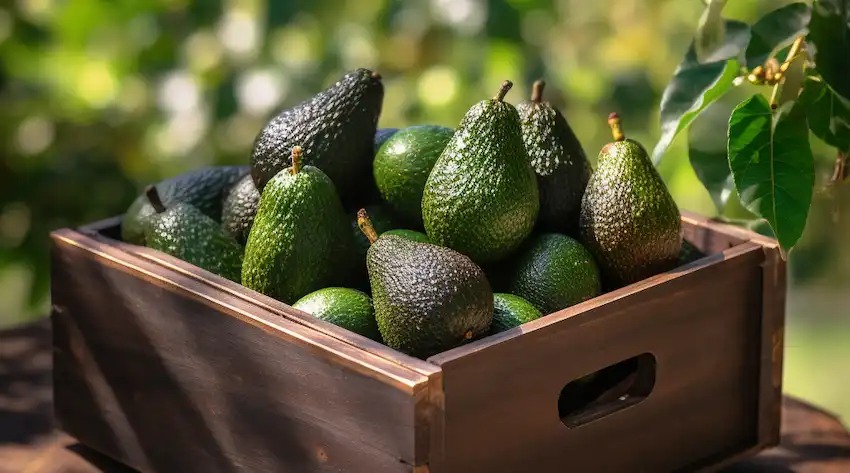
For home gardeners, the reward is not merely a box of green fruit — it is the experience of having participated in nature’s long, deliberate process.
Growing an avocado tree, whether in a commercial orchard or a modest backyard, is a lesson in time and trust. From the unseen work of root formation to the careful science of grafting, each stage reflects the intricate balance between human guidance and natural design. In an age of instant gratification, cultivating an avocado tree reminds us that some of life’s richest rewards — like the fruit itself — cannot be rushed. They must be grown.
Leave a Reply