
Elephants are among the most intelligent and emotional creatures on Earth, which makes it deeply heartbreaking to see them trapped in concrete enclosures, far from the open wild they were born to roam.
For Kaavan, known worldwide as “the world’s loneliest elephant,” that pain lasted more than three decades.
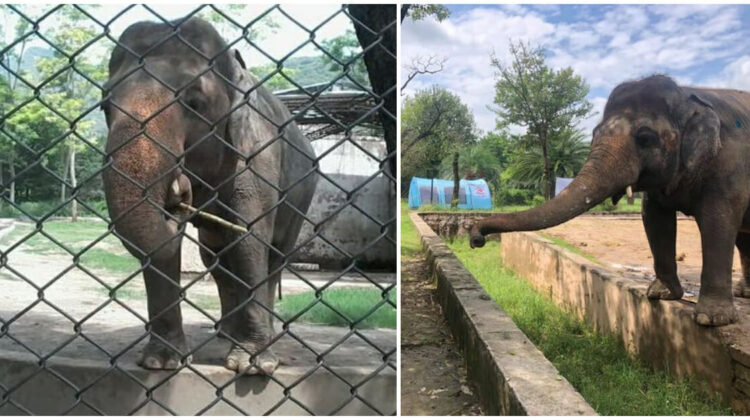
Kaavan was brought to Marghazar Zoo in Islamabad, Pakistan, back in 1985, a gift from Sri Lanka when he was only a year old. For much of his life there, he lived in isolation, surrounded by noise, walls, and loneliness. His only comfort was another elephant — his companion Saheli — but when she died in 2012, Kaavan was left utterly alone. From that day forward, he spent his years chained, confined to a space far too small for a creature of his size, and deprived of the companionship elephants need to survive emotionally.
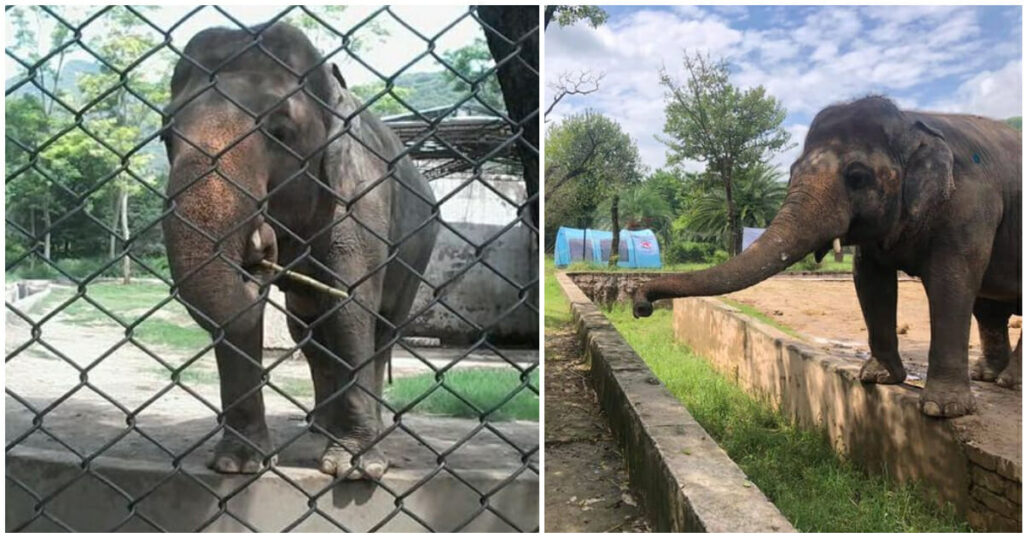
Over time, Kaavan’s mental and physical health began to deteriorate. According to Four Paws International, the zoo had a long history of neglect and tragedy: two lions burned to death after a fire in their enclosure, and more than 500 animals had mysteriously disappeared. Kaavan himself suffered from cracked nails, malnutrition, and severe obesity — the direct result of inactivity, poor flooring, and emotional trauma.
Despite official denials, photos published by activists in 2015 showed Kaavan still shackled by his legs, standing on bare concrete. The world began to take notice. Animal welfare organizations, journalists, and volunteers launched global campaigns under the banner “Free Kaavan.” Social media exploded with support, and the movement caught the attention of global figures, including Cher, who later helped fund and support the mission to rescue him.

Finally, in 2020, the long-awaited news arrived: Kaavan would be freed. After years of petitions, protests, and medical evaluations, the Four Paws International team confirmed that Kaavan was healthy enough to travel.
“Due to malnutrition and lack of physical exercise, Kaavan shows visible signs of obesity,” explained Dr. Amir Khalil, the lead veterinarian. “But his blood tests are good, and his general health allows him to be relocated,” added Dr. Frank Göritz of the Leibniz Institute for Zoo and Wildlife Research.
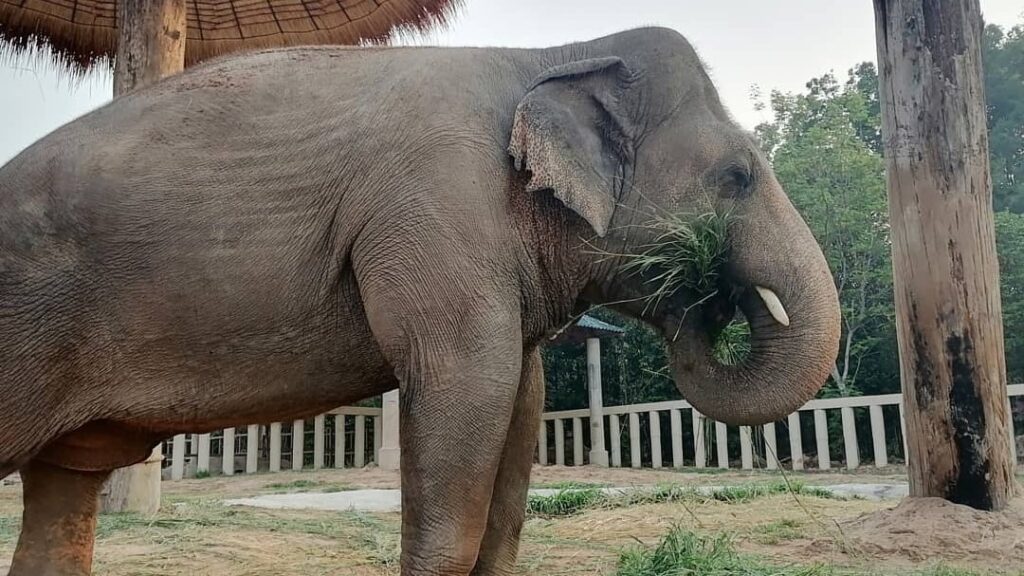
Later that year, Kaavan embarked on a journey of freedom, flying thousands of miles to a wildlife sanctuary in Cambodia, where more than 600 Asian elephants live freely among forests and rivers. When he arrived, locals said he immediately began exploring, playing, and showing affection — signs of joy and relief after 35 years of captivity.
Today, Kaavan’s story stands as a symbol of hope — proof that compassion and persistence can end even the longest suffering. After spending nearly his entire life behind bars, the world’s loneliest elephant is lonely no more.
Watch Kaavan’s emotional rescue and his first steps into freedom below:
Leave a Reply