

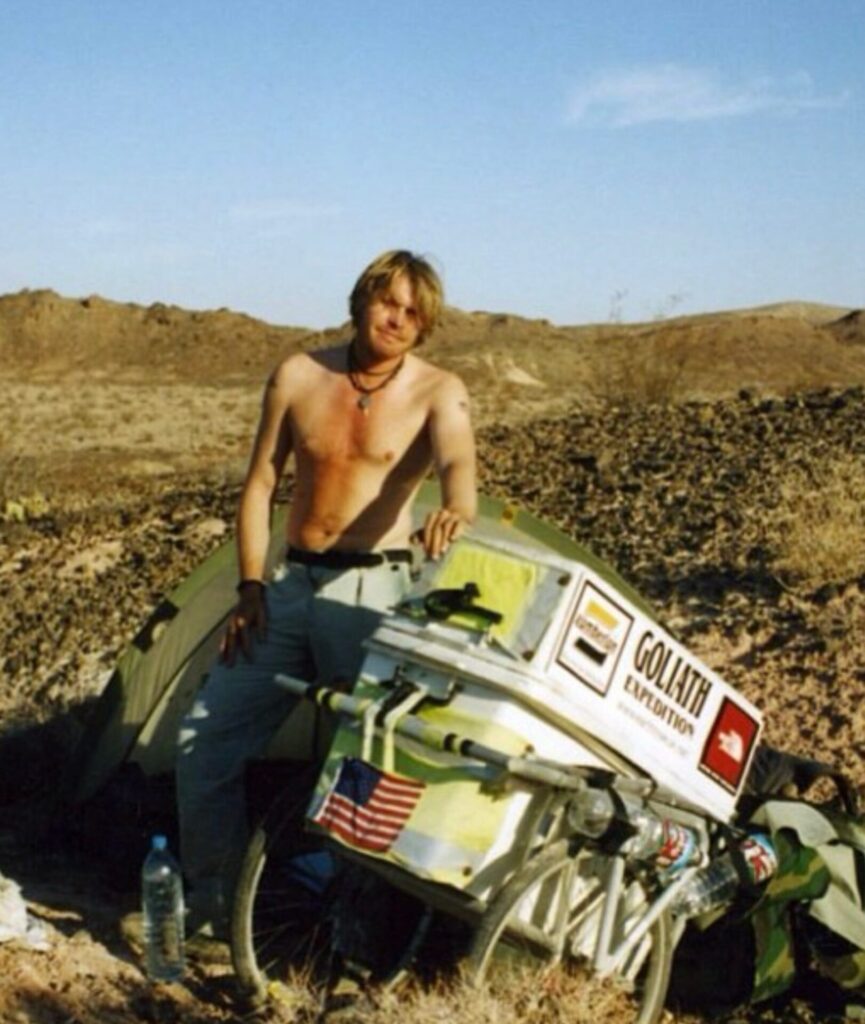
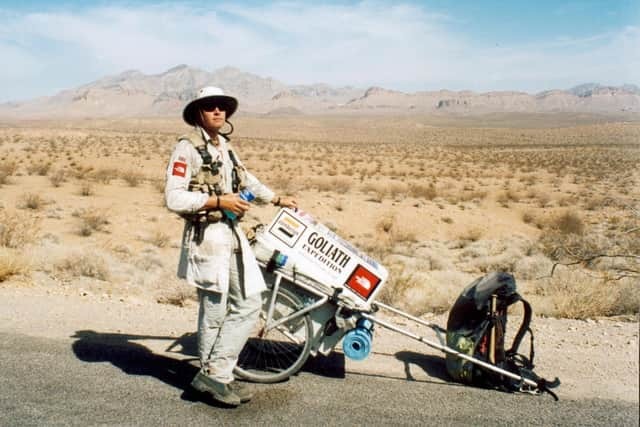
In a world built on convenience, where cars, planes, and high-speed trains make distance feel small, one man chose to challenge the planet on foot. His name is Karl Bushby, and his mission is unlike anything attempted in modern history—a 36,000-mile walk across the globe, without using a single form of transportation.
His journey began on November 1, 1998, at the southern tip of South America in Punta Arenas, Chile. His goal: reach his home in Hull, England, entirely on foot, following one unbroken path around the world. What started as an audacious dream quickly became a test of endurance, willpower, and raw human resilience.
Bushby has already achieved one of the rarest and most difficult feats ever recorded:
He became the first person to walk across the frozen Bering Strait from Alaska into Russia.
And nearly three decades later, he is still moving.

The Rules He Refuses to Break
From the first step of his expedition, Bushby created two rules—rules he has never violated:
- No transportation. No hitchhiking, no boats, no flights, no shortcuts. His feet must do everything.
- No returning home until the world walk is complete.
Those rules have guided him across continents, deserts, mountains, war zones, ice fields, and thousands of lonely miles of wilderness.
His journey has taken so long that governments have changed, borders have shifted, and entire cities have transformed—yet he continues forward.
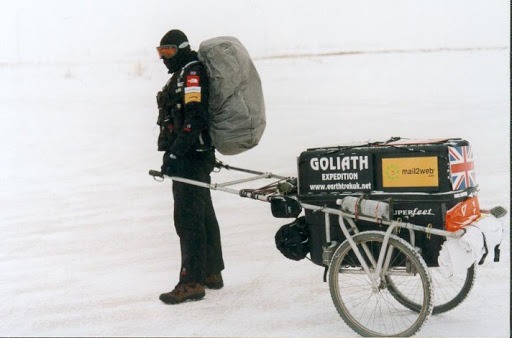
At one point, after Russia issued him a five-year entry ban, Bushby walked from Los Angeles to the Russian Embassy in Washington, D.C., hoping to plead his case in person.
Against all odds, he succeeded.
The visa was approved.
The walk continued.
A Life Built for the Impossible
Understanding Bushby’s journey requires understanding the man.
Born into a military family, the son of a decorated Special Air Services officer, Karl was shaped by competitiveness, discipline, and an early diagnosis of dyslexia that forced him to push harder than most. As a young Paratrooper, he learned what it meant to endure discomfort, isolation, and hostile environments.
After 12 years in the military—and a marriage that eventually collapsed—Bushby felt pulled toward something extreme, something meaningful.
“I guess the idea came from my environment,” he said once. “I needed a challenge big enough to swallow my life.”
Wanderlust, ambition, heartbreak, and a determination to prove what the human body can accomplish all collided into one life-consuming mission.
The Day That Almost Broke Him
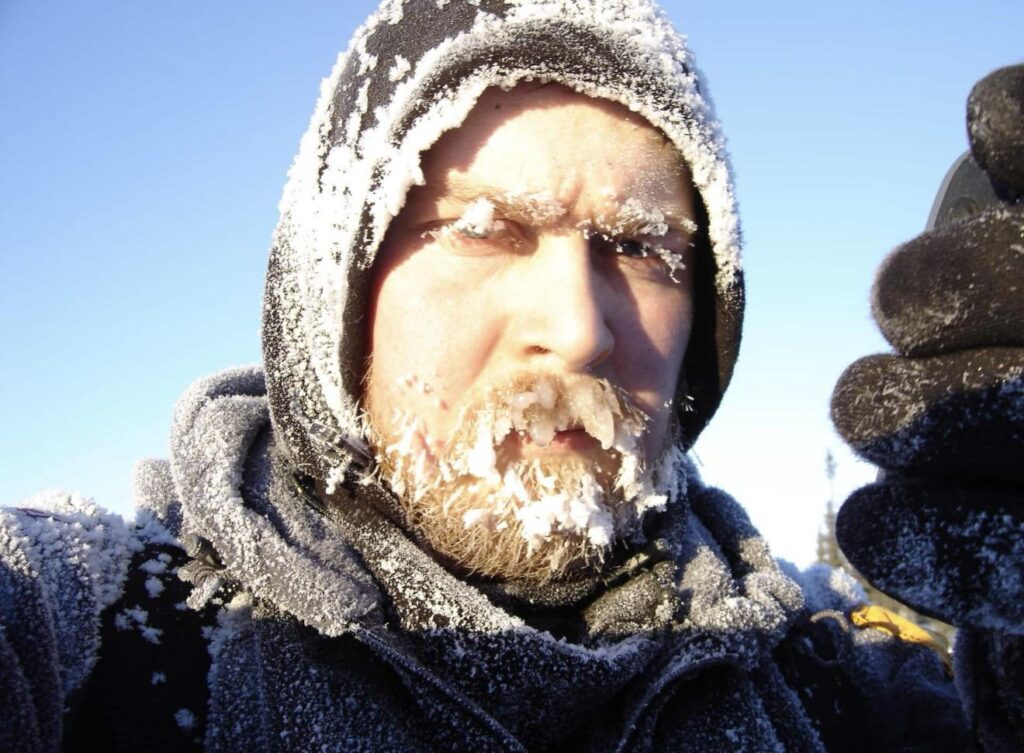
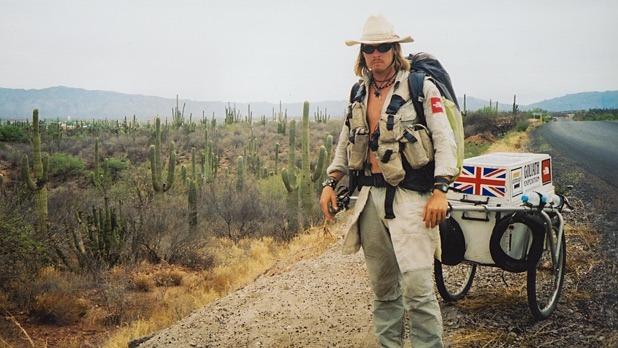
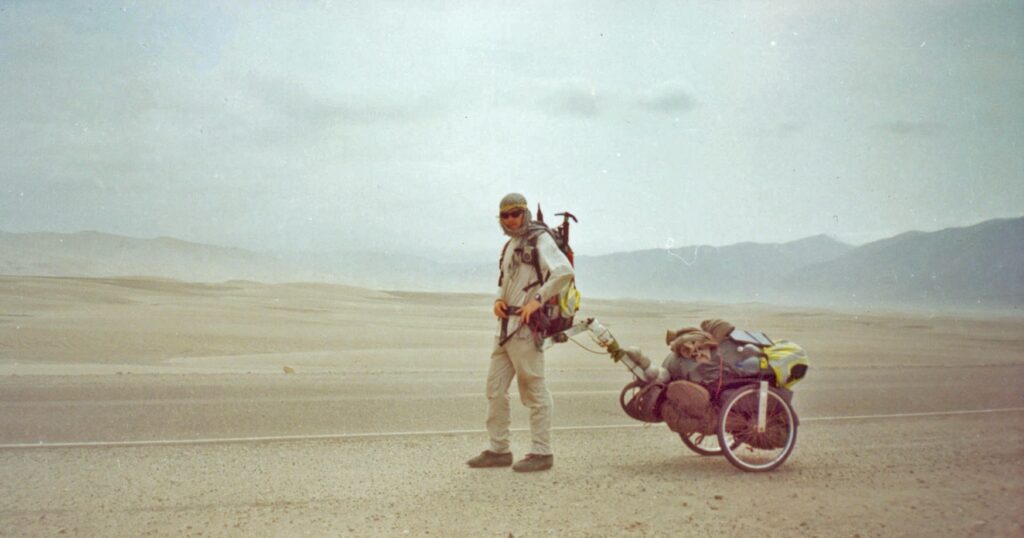
Through Patagonia’s brutal winds, the deserts of Peru, the freezing wastelands of Siberia, and the snow-choked “Road of Bones,” Bushby has faced starvation, frostbite, financial collapse, and danger at every turn.
But the day he nearly quit had nothing to do with nature.
“It was all about a woman,” he said. “What else could bring a man to his knees?”
Nine years after leaving her behind in Colombia, memories of the woman he once believed was his soulmate hit him like a tidal wave on a bitter cold night. For the first time during his entire journey, he could not bring himself to leave his tent.
It wasn’t fear, hunger, or exhaustion that made him stop—it was grief.
Two years later, that emotional storm finally passed. So did the relationship. And Bushby kept walking.
Becoming a Different Man
Travel changes everyone.
But walking across the world alone changes a person in ways that defy explanation.
Bushby admits that the journey reshaped who he is:
- He became more patient.
- He developed a deep trust in humanity.
- He learned that most people, even in places portrayed as dangerous, are kind and willing to help strangers.
“Countries portrayed in the media as violent or intolerant,” he said, “were filled with some of the most generous people I’ve ever met.”
He also discovered the remarkable durability of the human body. After thousands of miles, he expected to break down. Instead:
“My toenails fell off the first week,” he joked. “After that, everything else survived.”
The Price of a Dream
While Karl crossed jungles, ice fields, and deserts, one part of his life moved without him—his only son, Adam.
When Bushby began his walk, Adam was five years old.
When they finally reconnected in person, Adam was twenty-four.
During that time, the boy grew up without a father, struggled with depression, and eventually entered therapy. The emotional distance between them felt impossibly wide.
“Out of everyone in the world,” Karl said, “I knew my son least of all.”
Eventually, Adam joined him for two weeks on the road—a small attempt to rebuild what was lost.
But the cost of Bushby’s mission is clear:
He sacrificed a relationship most fathers treasure more than anything.
A Life Lesson Written Across Continents
Whether people admire his courage or criticize his choices, one truth is undeniable:
Karl Bushby is not an ordinary man.
He represents a rare breed of human—someone willing to risk his life for a dream no one else can fully understand. While most people search for happiness in comfort, stability, or routine, Bushby finds it in motion, hardship, and pushing the limits of human endurance.
His journey teaches us:

- that pain does not mean weakness,
- that fear does not require surrender,
- and that the human spirit can carry us farther than we ever imagined.
Even when your toenails are falling off.
Even when you’re starving in Patagonia.
Even when you’re jailed for 71 days in two different countries.
He kept walking.
And he still is.
Leave a Reply