
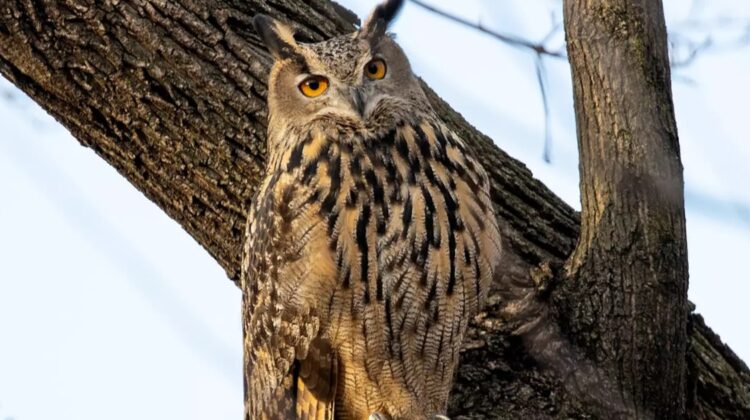
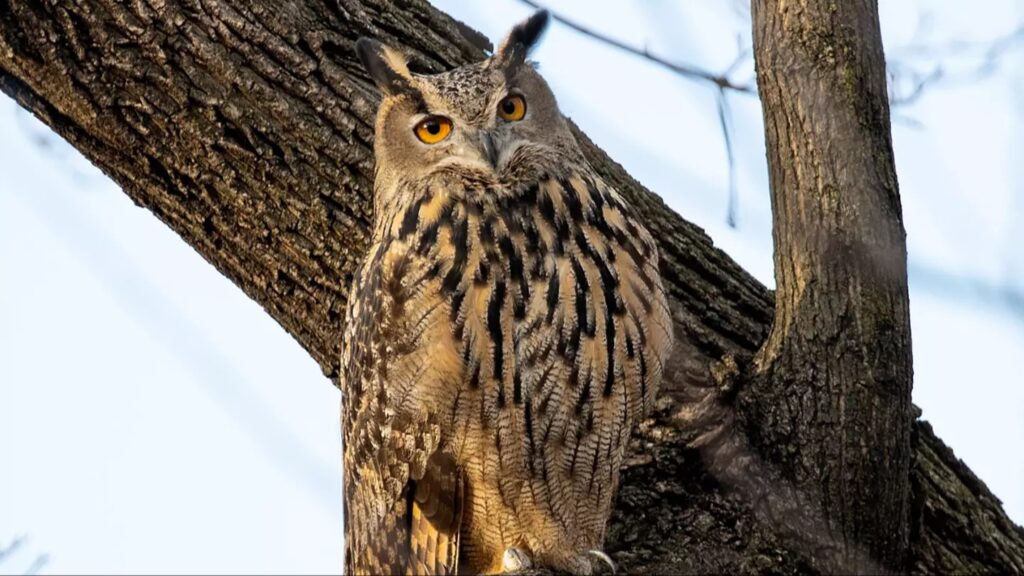
A new federal proposal to cull nearly half a million barred owls across California, Oregon, and Washington has ignited a firestorm of criticism — from lawmakers, scientists, and wildlife advocates alike. Many are calling it one of the most controversial wildlife management plans in modern U.S. history.
Why the Government Wants to Kill the Owls
The plan, introduced under President Joe Biden’s administration, would authorize trained hunters to eliminate 453,000 barred owls over the next three decades.
The reason? These owls, originally native to the eastern U.S., have invaded the territory of the endangered northern spotted owl, outcompeting them for food and nesting space.
Barred owls are stronger, more aggressive hunters — and their spread westward, driven by deforestation and habitat loss, has accelerated the spotted owl’s decline since the 1990s.
To lure them out, hunters would use territorial calls before shooting, or, in restricted zones, capture and euthanize them “humanely.”
“Who Appointed Them God?” – Senator Kennedy’s Furious Response
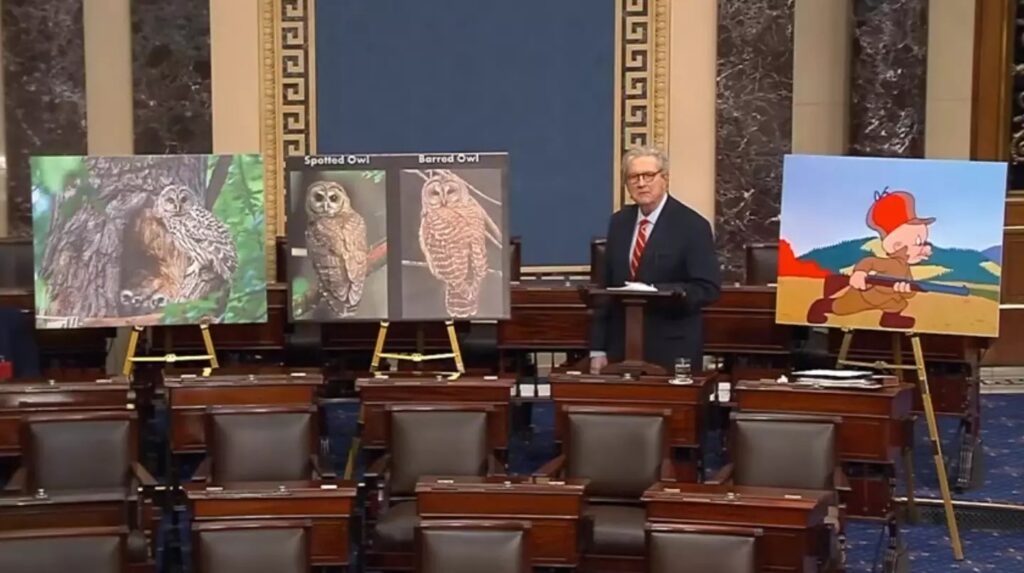
Republican Senator John Kennedy of Louisiana has become the unexpected face of opposition to the cull.
Speaking before Congress with photos of both owl species behind him — and even a cartoon image of Elmer Fudd — Kennedy declared:
“Both of them are God’s creatures. Unless Congress stops them, they’re going to hire hunters to kill nearly half a million barred owls.
Who appointed them God?”
He continued, arguing that the barred owl’s westward expansion is a natural ecological process — not a crime against conservation:
“They’re just adapting to changing forests. That’s how evolution and nature work.
We’re not supposed to control nature to this extent. It’s absurd.”
The Biology Behind the Battle

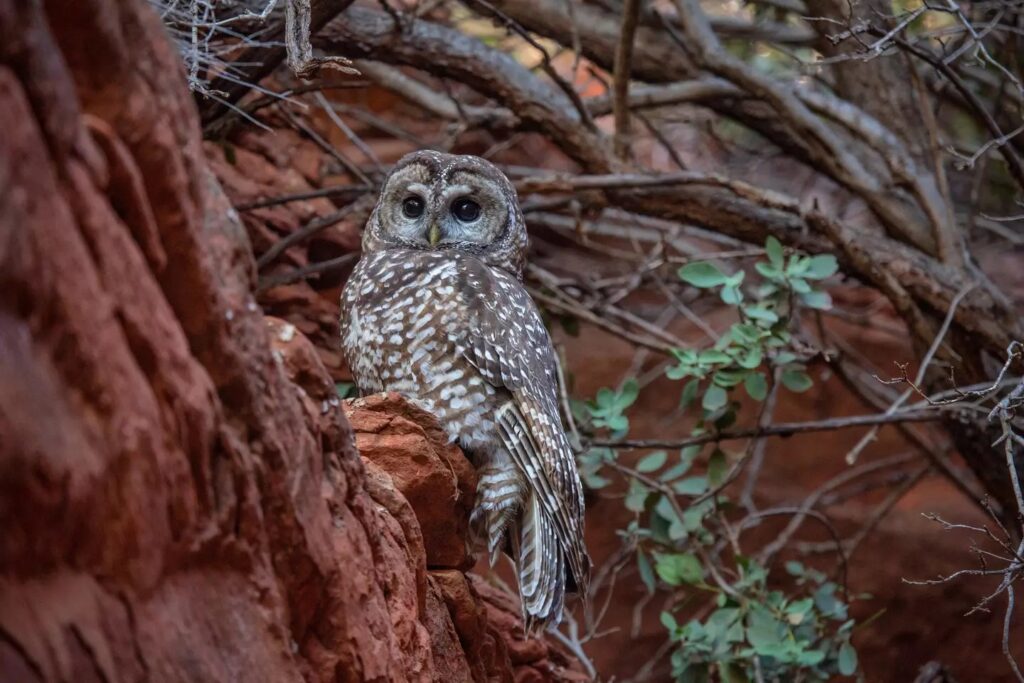
Barred and spotted owls are remarkably similar: both medium-sized, with brown and white plumage, round heads, and dark eyes.
The main difference is beak color and slight body size — which makes “mistaken identity” killings a serious concern among biologists.
The spotted owl, listed under the Endangered Species Act since 1990, continues to lose ground as barred owls move west — a shift linked to logging and climate change.
Conservationists argue that the cull could further disrupt delicate forest ecosystems, while others warn of “ethical overreach” by trying to play God with wildlife populations.
Industry vs. Environment
The debate also has deep economic roots. The timber industry claims that protecting spotted owls restricts logging across millions of acres, threatening jobs and rural economies.
Leaders from the American Forest Resource Council say the cull might allow more flexible timber harvesting — though critics warn it’s a dangerous short-term fix that ignores the deeper issue: habitat destruction.
A Dangerous Precedent for Conservation
This controversy raises a fundamental question: how far should humans go to “correct” nature?
Should we kill one species to save another — or focus instead on restoring forests and reducing habitat loss?
As wildlife biologist Dr. Lacey Moore puts it:
“Killing half a million birds may change the numbers temporarily — but it doesn’t solve the root problem.
The real enemy is human-driven deforestation, not the owl doing what owls do.”
Final Reflection
In the end, this debate isn’t just about owls — it’s about how humanity defines responsibility in a world we’ve already reshaped.
Destroying habitats, then trying to “fix” nature through violence, exposes our deepest contradiction: we love the environment, but only when it obeys us.
If we continue down this path, the real endangered species won’t just be the spotted owl — it will be the idea of balance itself.
Leave a Reply