
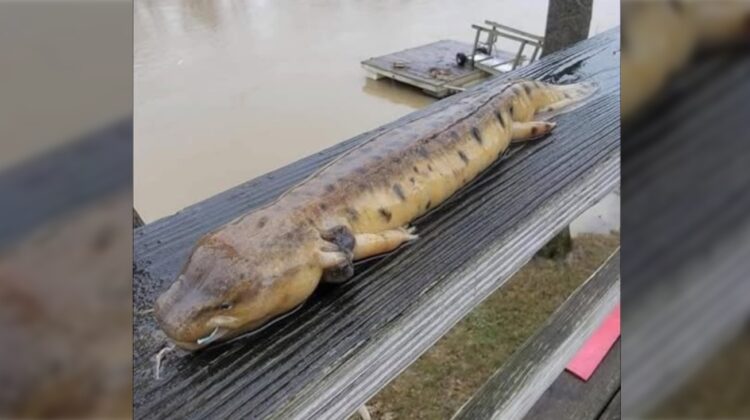
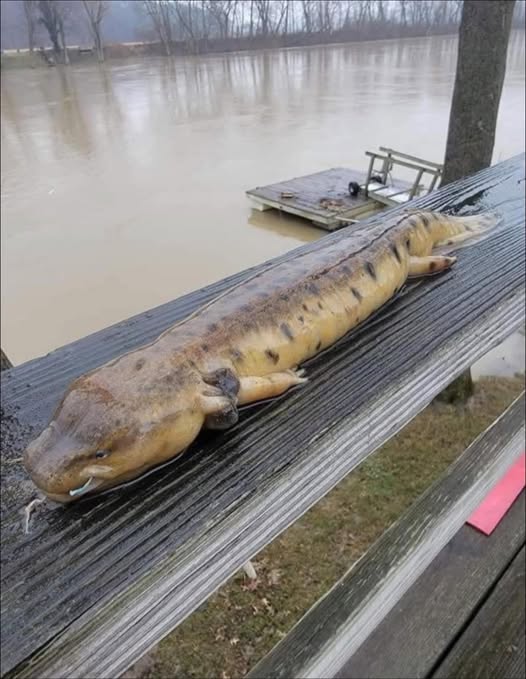
A recent catch-and-release event in Ohio’s Muskingum River has ignited widespread curiosity among biologists and wildlife enthusiasts. The unusually large specimen has led many to believe it could be a state record mudpuppy — with some experts even suggesting it may be over a century old.
Mudpuppies (Necturus maculosus) are most active during fall, which coincides with their breeding season. Interestingly, although courtship occurs in autumn, egg-laying does not take place until spring, making their reproductive cycle one of the most unusual among North American amphibians.
What Makes Mudpuppies So Unique?
Mudpuppies are fully aquatic salamanders that typically measure 20 to 33 centimeters in length. Unlike most amphibians, they retain their external gills for life — large, feathery structures that appear deep red or maroon and protrude from either side of the neck.
They thrive in deep, muddy waters of large rivers, streams, and ponds, spending most of their lives hidden beneath rocks, logs, and submerged debris. Being nocturnal and elusive, sightings are rare. When encountered, their appearance is unforgettable: a broad, flattened head, squared snout, tiny eyes, and their signature bushy gills. Despite their intimidating look, mudpuppies are completely harmless, much like their relative, the hellbender.
A Remarkable Reproductive Strategy
Mudpuppy reproduction is both complex and fascinating. During fall courtship, males deposit a spermatophore on the riverbed. The female collects it using a specialized internal organ and stores the sperm throughout winter.
In spring, fertilization occurs internally. The female then drives the male away from the nest and carefully attaches her eggs to the ceiling of a protected cavity, often beneath rocks or submerged structures. A single clutch can contain 20 to 200 eggs, all of which the female guards until hatching — a rare example of prolonged parental care in amphibians.
Newly hatched mudpuppies are tiny, measuring less than one inch, and require up to six years to reach sexual maturity.
How Long Do Mudpuppies Live?
Most mudpuppies are believed to live around 20 years, but the Muskingum River specimen challenges that assumption. Its size and condition suggest that some individuals may survive several decades longer, raising important questions about longevity, genetics, and environmental stability in freshwater ecosystems.
Environmental Threats and Conservation Status
Despite their resilience, mudpuppies face growing threats. These include habitat loss, declining water quality, pollution, siltation, and exposure to lampricides used in fish management. River modifications such as dams, dredging, shoreline development, and channelization can bury essential shelter sites needed for nesting and protection.
While mudpuppies can tolerate limited siltation, extensive habitat alteration remains a serious concern. Fortunately, in Ohio, mudpuppies are not currently classified as endangered, though continued monitoring is critical to ensure their long-term survival.
Why Freshwater Biodiversity Matters
Healthy river ecosystems support far more than just aquatic wildlife — they are vital for clean drinking water, sustainable agriculture, flood prevention, and long-term environmental stability. Protecting species like the mudpuppy helps safeguard freshwater systems that millions of people depend on every day, reinforcing the importance of responsible land use, pollution control, and conservation-focused development.
Leave a Reply