• Skip to main content
  • Skip to primary sidebar
  • Skip to footer
  • Home
  • About Us
  • Copyright Report
  • Submit Content
  • Terms
  • Privacy Policy
  • Legal Disclaimer

Hasan Jasim

Hasan Jasim is a place where you may get entertainment, viral videos, trending material, and breaking news. For a social generation, we are the largest community on the planet.

Scientists have brought 28,000-year-old woolly mammoth cells back to life

by Hasan Jasim Editorial Team

ShareTweet

During a remarkable scientific experiment, cells from a woolly mammoth that died over 28,000 years ago began displaying “signs of life.”

In 2011, a newborn woolly mammoth was discovered in Siberian permafrost. Finding a substantially intact specimen after the species had been extinct for almost 4,000 years was huge news, especially because this one was 28,000 years old.
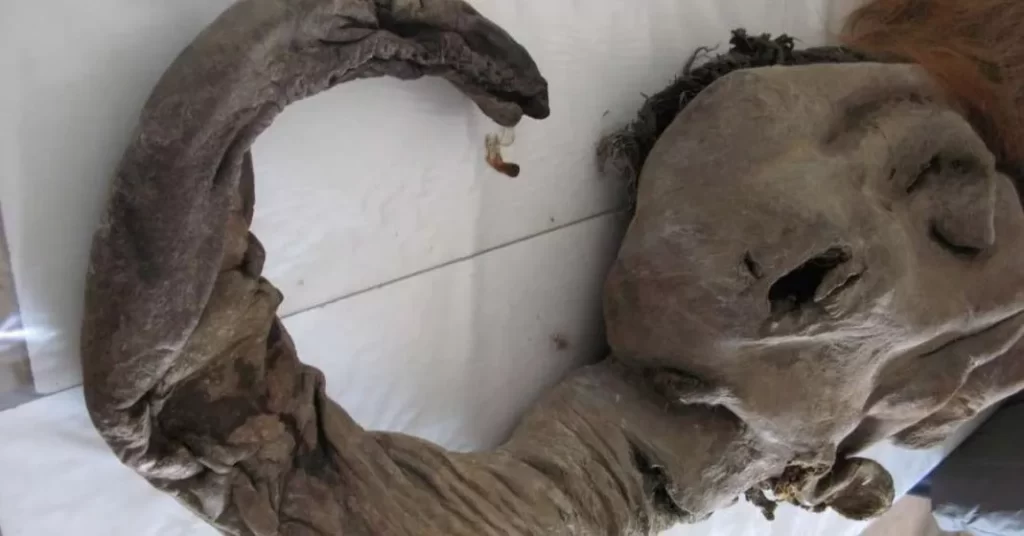
Image credit: Kindai University

Scientists have been keen to learn whether the unearthed mammoth’s biological elements are still viable millennia later. Now, researchers at Japan’s Kindai University have discovered that its DNA is mostly intact, indicating that they are well on their way to resurrecting this massive prehistoric creature.

This is what it may look like if they succeed (at first).
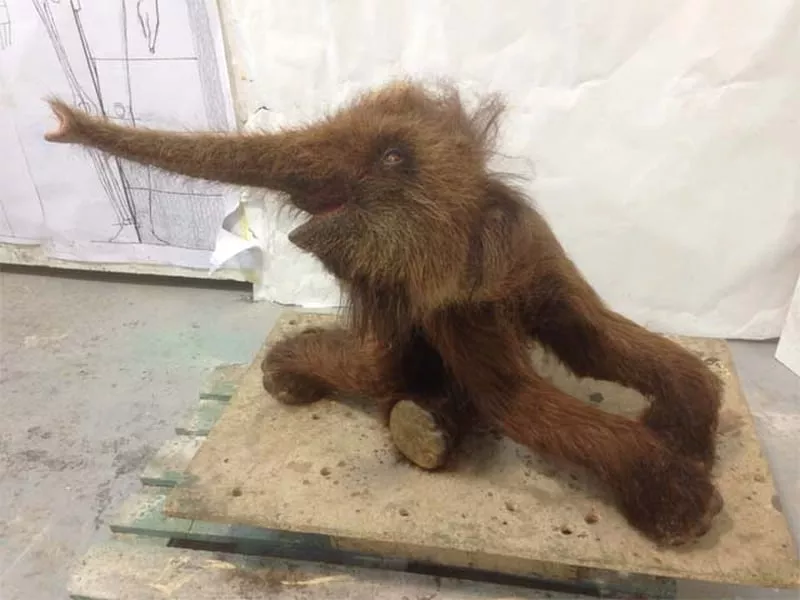
Model depicting mammoth calf, Stuttgart. Image credit: Apotea

In any case, the university’s experts were able to harvest nuclei from mammoth cells and transplant them into mouse oocytes, which are cells present in the ovaries and capable of generating an egg cell following genetic division.

The cells from the 28,000-year-old specimen began to display “evidence of biological processes” after that.
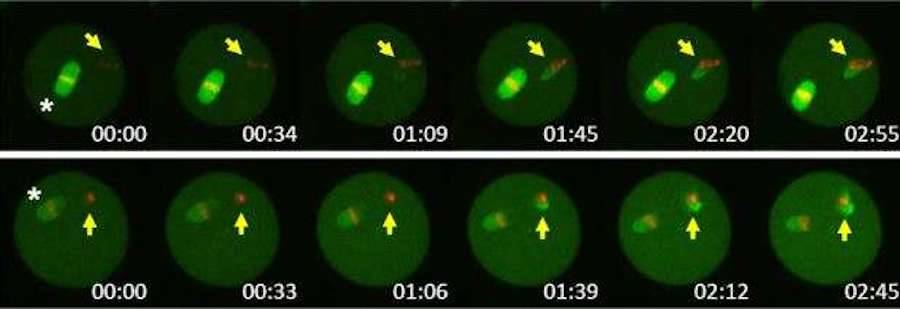
A time-lapse of mouse oocyte cells injected with mammoth nuclei. Kindai University/Scientific Reports

“This shows that cell activity may still exist and parts of it can be replicated even after years have gone,” said research author Kei Miyamoto of Kindai University’s Department of Genetic Engineering.

Five of the cells even displayed very unexpected and intriguing outcomes, such as signals of activity that are normally typically seen just before cell division.

Frozen mammoth calf “Lyuba” – it still had food in its stomach, Royal BC Museum. Image credit: Ruth Hartnup

It wasn’t simple determining whether the mammoth DNA could still operate. The scientists started by extracting bone marrow and muscle tissue from the animal’s leg. These were then examined for the existence of intact nucleus-like structures, which were then removed once discovered.

After combining these nuclei cells with mouse oocytes and adding mouse proteins, it was discovered that some of the mammoth cells were entirely capable of nuclear reconstitution. Finally, this demonstrated that active nuclei might be found in 28,000-year-old mammoth bones.

That is to say, reviving a creature like this one is a distinct possibility.

Royal Victoria Museum, Victoria, British Columbia, Canada, 2018

While Miyamoto recognizes that “we are very far from reconstructing a mammoth,” many academics who are attempting to do it through genome editing are optimistic that success is on the horizon. Recent attempts, which employ the contentious CRISPR gene editing technique, are likely the most promising.

But do we really need to bring a long-extinct species back to life?

Sources: 1, 2, 3

Filed Under: Trends Worldwide

Primary Sidebar

More to See

Man given reward after beating up tourist who threw rock at beloved seal

By Hasan Jasim Editorial Team

The Giant Goliath Penguin Hoax That Tricked Florida For 10 Entire Years

By Hasan Jasim Editorial Team

A Hairless Mexican Dog With More Than 3,500 Years Of History

By Hasan Jasim Editorial Team

The Flat Earthers’ Attempt To Sail To The Edge Of The World Fails Miserably

By Hasan Jasim Editorial Team

“Mini Antlers” Grown On Mice Heads After Scientists Implant Deer Cells

By Hasan Jasim Editorial Team

Diver Has His Teeth Cleaned On A Weekly Basis By The Same Friendly Little Shrimp

By Hasan Jasim Editorial Team

A courageous dog is captured on camera plunging into a lake to save a drowning cat

By Hasan Jasim Editorial Team

Footer

ABOUT HASANJASIM.ONLINE

Hasanjasim.online is a digital platform dedicated to publishing well-researched articles about the animal kingdom, nature, and the environment. Our editorial team works to source stories from credible outlets, scientific research, and verified reports, aiming to inform as much as we entertain. From wildlife conservation and animal behavior to natural wonders and environmental science, we cover the topics that help readers better understand and appreciate the natural world. Whether you're a lifelong nature lover or simply curious about the planet we share, Hasanjasim.online aims to be a trustworthy destination for stories worth reading — and worth citing.

Recent

  • Euphorbia Hirta (“Asthma-Plant”): What Traditional Use and Real Research Actually Show
  • A Mystery Animal Has Been Randomly Attacking People in New Hampshire — Here’s What We Know
  • A Woman Was Filmed Sharing Her Ice Cream With Her Dog — Here’s What Vets Actually Say About It
  • Dolphin Calf Incident in Ceuta Sparks Outrage After Disturbing Beach Footage Emerges
  • Lactuca Serriola Root: Traditional Uses of Prickly Lettuce (Wild Lettuce) Root
  • The Puppy a Firefighter Couldn’t Leave Behind — and the Story Didn’t End There
  • A Mother Dog Dove Into Floodwater Again and Again — Until All 7 of Her Puppies Were Safe

Search