
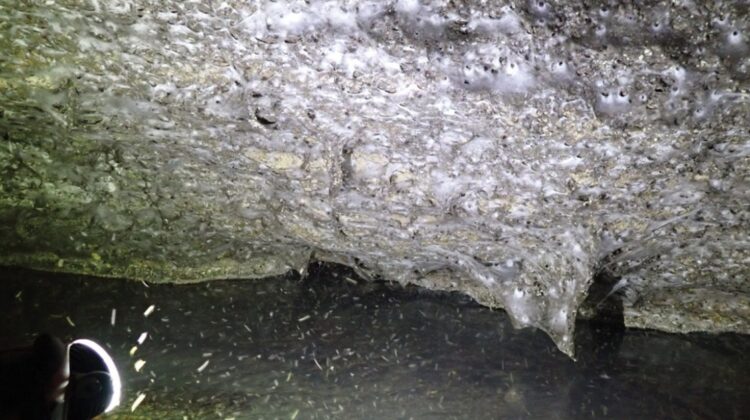
Scientists have identified what may be one of the largest interconnected spiderweb systems ever recorded, deep inside a cave along the border between Albania and Greece.
The discovery, documented in the journal Subterranean Biology, describes a dense colony of more than 111,000 spiders living within a shared web structure spanning approximately 1,140 square feet.
Located in an underground chamber known as Sulfur Cave, the colony exists in complete darkness and in an environment rich in hydrogen sulfide — conditions considered hostile to most life forms.
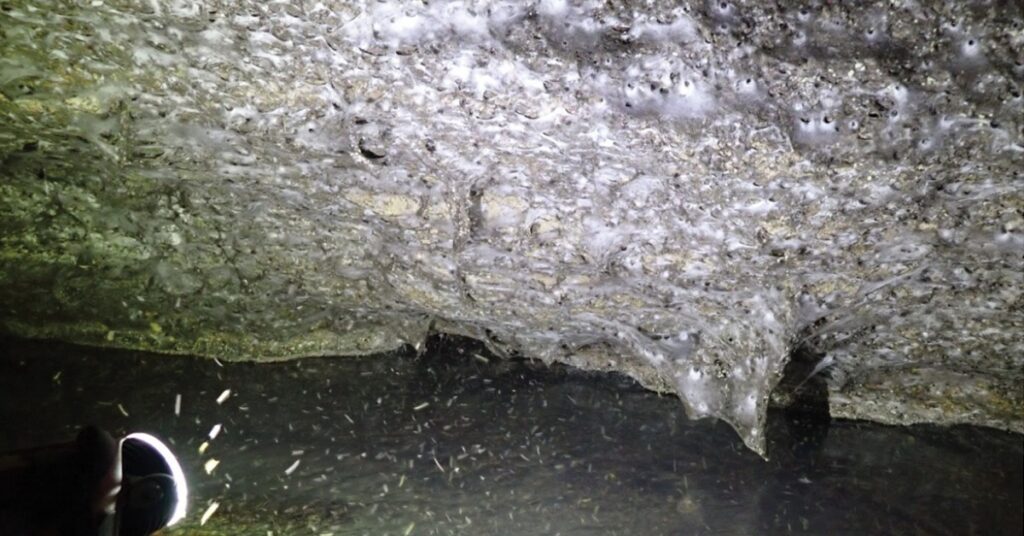
Researchers identified two main species within the colony: Tegenaria domestica and Prinerigone vagans. Together, they form a complex, interconnected web that supports the entire population.
Scientists say the ecosystem inside the cave operates independently of sunlight. Bacteria thrive on sulfur compounds, forming a layer along the cave walls. These microorganisms are consumed by small insects, which in turn become prey for the spiders, creating a self-sustaining food chain.
One of the most notable aspects of the discovery is the apparent coexistence between the two spider species. Under normal conditions, such species would compete, but researchers believe the extreme environment may have altered their behaviour, reducing aggression and allowing them to share the same space.
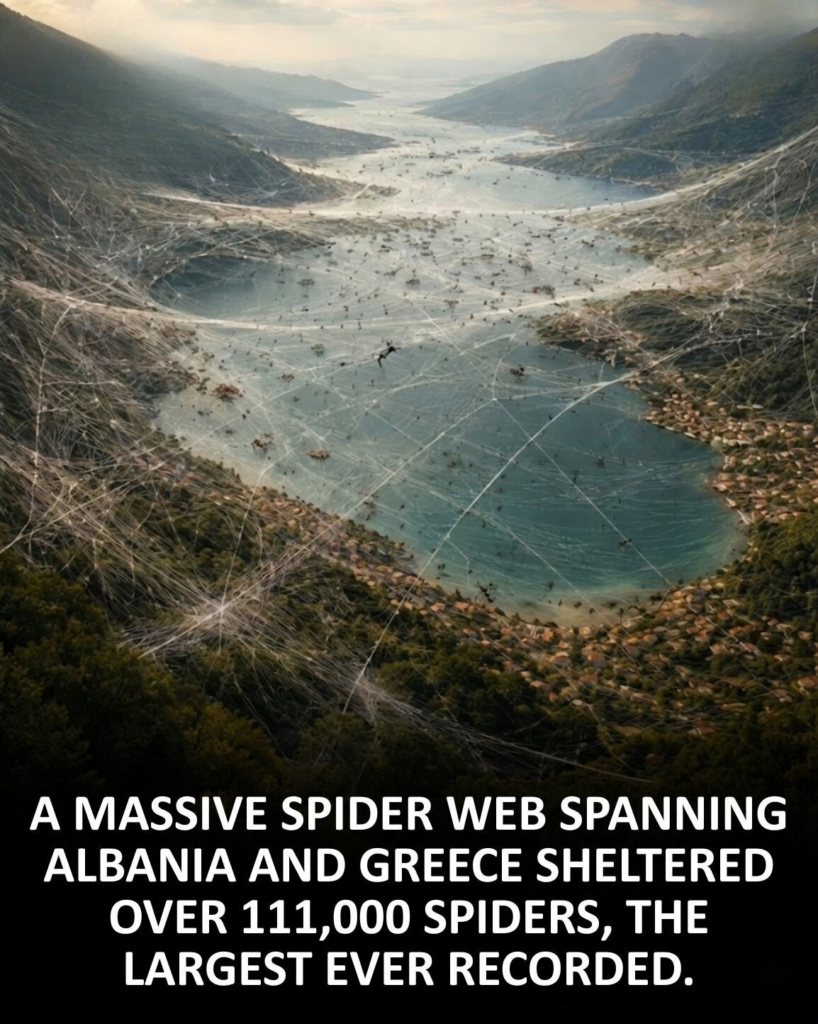
Further analysis revealed that the spiders have developed distinct biological adaptations. Their internal microbial systems differ from those of similar species found above ground, suggesting long-term adjustment to the cave’s unique chemical conditions.
Experts say the site may require protection due to its ecological significance, though conservation efforts could be complicated by its location across national borders.
The findings highlight how life can adapt to extreme environments, offering new insights into biological resilience and the complexity of underground ecosystems.
Breakthrough discoveries in extreme environments are driving innovation in biotechnology, environmental research, advanced laboratory equipment, scientific publishing, and academic funding sectors, as global interest grows in understanding how organisms adapt to harsh conditions—opening doors to medical, industrial, and ecological advancements.
Leave a Reply