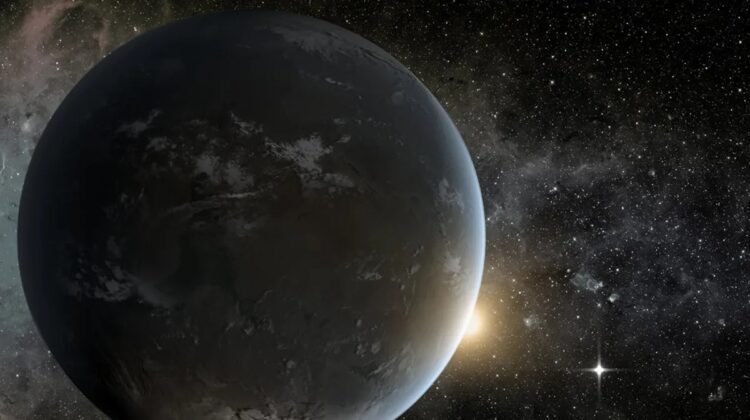
As sci-fi as it sounds, the project has already reached phase III at NASA’s Institute for Advanced Concepts program.
In 1936, Albert Einstein published what he described as a “little calculation,” showing how the Sun could one day be used as a gigantic telescope. Incredible as it may sound, the concept is not so far out of our reach, and one idea for how to practically achieve it is at phase III of NASA’s Institute for Advanced Concepts.
“Some time ago, R. W. Mandl paid me a visit and asked me to publish the results of a little calculation, which I had made at his request,” Einstein wrote in the journal Science. “This note complies with his wish.”
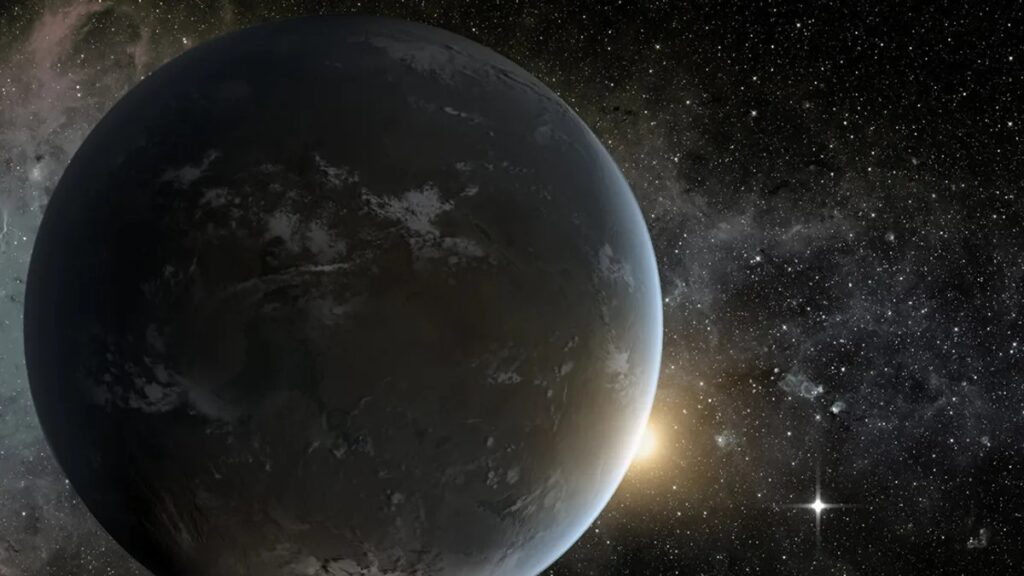
Image credit: NASA Ames/JPL-Caltech/Tim Pyle
As implied by Einstein’s general theory of relativity, giant objects in the universe bend space-time, altering the path of light. This isn’t some abstract idea, but something we can do fairly regularly using telescopes such as JWST, essentially extending the telescope’s range by viewing light that has been bent by massive objects on its path to Earth.
Einstein realized—though clearly only calculated it under duress from Mandl—that this meant there is a region of our Solar System where light from behind the Sun is focused, having been bent by our star’s gravity.
The region where this effect takes place is around 550 Astronomical Units (AU) from the Sun, with one AU being the distance between the Earth and the Sun. Place a telescope in that region, and we could use it to view the surfaces of exoplanets, without the need for engineering mind-bogglingly huge space telescopes (or telescope arrays) that would otherwise entail.
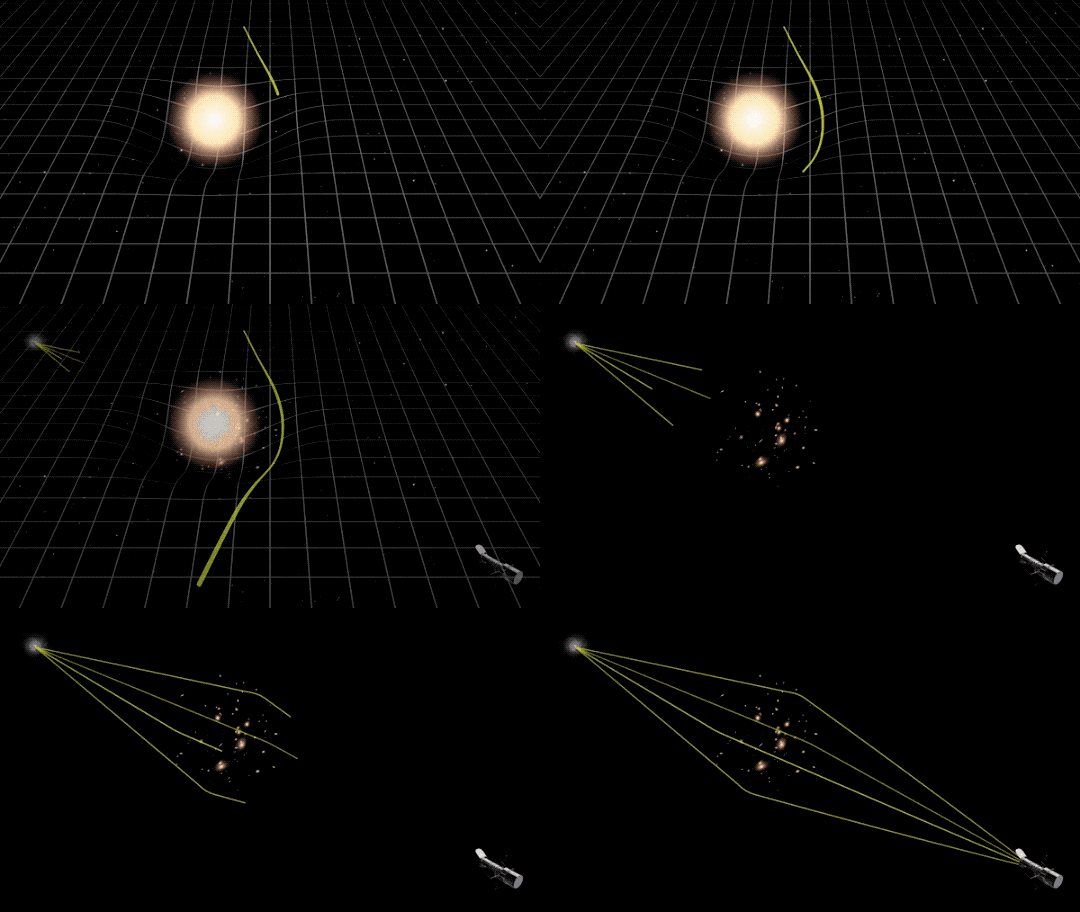
Image credit: NASA, ESA, and Goddard Space Flight Center/K. Jackson
“The gravitational field of the Sun acts as a spherical lens to magnify the intensity of radiation from a distant source along a semi-infinite focal line,” Von Russel Eshleman, who first proposed a mission to make such a telescope, wrote in a paper. “A spacecraft anywhere on that line in principle could observe, eavesdrop, and communicate over interstellar distances, using equipment comparable in size and power with what is now used for interplanetary distances. If one neglects coronal effects, the maximum magnification factor for coherent radiation is inversely proportional to the wavelength, being 100 million at 1 millimeter.”
Right now we can use gravitational lensing to see incredibly distant objects, but we are limited by the location of these objects, and objects that happen to be behind them. Using spacecraft, we could place our telescope on the opposite side of the Sun to the distant object we want to view, dramatically upping our viewing distance. It has been proposed in a project in phase III of NASA’s Institute for Advanced Concepts that using this method, we could image the surface of exoplanets in our stellar neighborhood.
“Even in the presence of the solar corona, the [signal-to-noise ratio] is high enough that in six months of integration time one can reconstruct the exoplanet image with ~25 km [15.5 mile]-scale surface resolution,” NASA explains, “enough to see surface features and signs of habitability.”
“Of course, there is no hope of observing this phenomenon directly,” Einstein added. “We shall scarcely ever approach closely enough to such a central line.”
While that is still a huge distance—Voyager I has reached a little over 160 AU since its launch in 1977—it is looking a lot more achievable than it was when Einstein ruled such a mission out. The NASA project proposes using a “swarm architecture” of smallsats using solar sails to propel them to the required position in under 25 years.
Though there are still astronomical challenges ahead for such a mission (including significant distortion introduced by gravitational lensing and moving spacecraft vast distances to observe the object behind it that you are interested in), it is possible we could build up images of the actual surfaces of alien exoplanets within our lifetimes. Which is pretty cool, even if Einstein thought of it as a distracting chore to note down and publish.
Leave a Reply