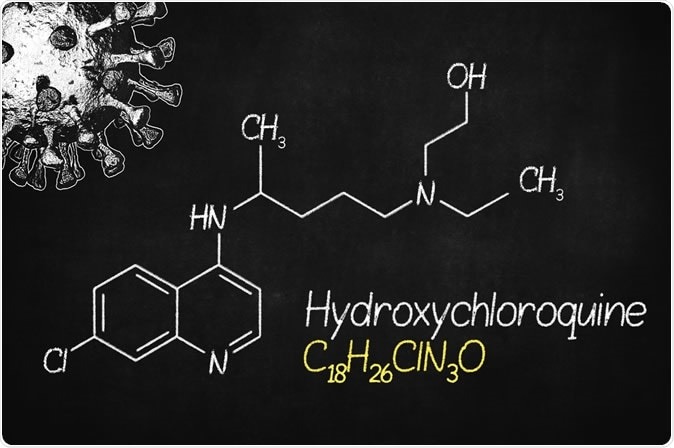
A controversial 2020 study that claimed the malaria drug hydroxychloroquine showed promise for treating COVID-19 has finally been retracted, after sparking widespread criticism from scientists ever since its publication.
The study was originally published online in the International Journal of Antimicrobial Agents on March 20, 2020. With a small sample size of just 36 total participants, the trial had involved treating 20 COVID-19 patients with 600 milligrams of hydroxychloroquine, a drug best known as an antimalarial. Some of the patients were also given the antibiotic azithromycin.
Based on the results, the authors concluded that hydroxychloroquine was “significantly associated with viral load reduction/disappearance in COVID-19 patients” and that this positive effect was improved further by adding azithromycin into the mix.
Think back to March 2020. COVID-19 had only been officially declared a pandemic towards the start of that month. Travel restrictions, social distancing orders, and lockdowns were only just beginning in most places, and there was still a huge amount that scientists and the general public alike did not know about this new disease.
Against that backdrop, this study emerged, claiming that a cheap and readily available drug might be one of the answers people had been desperately searching for. Almost immediately, the hype around hydroxychloroquine took off.
However, almost as quickly, scientific criticism of the study also began rolling in. The small sample size was an immediate red flag for many, as was the strikingly fast turnaround from submission of the initial manuscript to online publication – with a submission date of March 16, it appeared that the entire publication process must have been completed within just four days, which anyone who’s ever tried to get a paper published will struggle to believe.
Prominent microbiologist and science integrity advocate Elisabeth Bik was quick to lay out concerns about the study on her blog, Science Integrity Digest. “On the same day as the preprint appeared, 16 March, the manuscript was submitted to the International Journal of Antimicrobial Agents, where it was accepted within a day, on 17 March, and published online on 20 March. That suggests that peer review was done in 24h, an incredibly fast time,” Bik wrote on March 24, 2020.
Other concerns flagged included suspicions around the timeline between attaining ethical approval and actually commencing the study, the fact that the trial was not randomized – considered by many to be the gold standard for clinical trials – and the removal of four treated patients from the final dataset, three of whom were escalated to intensive care and one of whom died.
As the debate raged on, other studies investigated the potential of hydroxychloroquine as a COVID treatment and failed to see any benefit. But getting the genie back into the bottle proved impossible; stockpiling of the drug began in several US states. Even when the FDA warned in April of the risk of heart rhythm abnormalities in patients being treated with hydroxychloroquine off-label, excitement around the drug didn’t fully dissipate.
You’ll still find people today who claim, against all available evidence, that the drug is a panacea against COVID-19. The now-retracted study was not the only one fueling the hype, but it was the most highly cited. In fact, it’s now become the second most-cited paper ever to be retracted, as you can see on the leaderboard maintained by Retraction Watch.
It’s also the 28th retracted paper for senior author Didier Raoult, a now-retired microbiologist who worked at Marseille’s L’Institut Hospitalier Universitaire Méditerranée Infection.
In a translated statement, the Société Française de Pharmacologie et de Thérapeutique said, “[The retraction] must mark the beginning of a broader questioning of the work carried out under the supervision of Professor Didier Raoult, in particular on hydroxychloroquine. This work is suspected of not respecting ethical and scientific standards and is, for some, the subject of ongoing legal proceedings.”

After years of criticism, including a 2023 letter raising serious concerns about methodological flaws in the study and an editorial conflict of interest (one of the co-authors was also editor-in-chief of the journal), the journal finally issued a lengthy retraction notice. It details numerous flaws and inconsistencies, and confirms that three of the authors themselves also flagged issues.
“This is incredibly good news,” Bik told Nature News. “This paper should never have been published – or it should have been retracted immediately after its publication.”
Leave a Reply