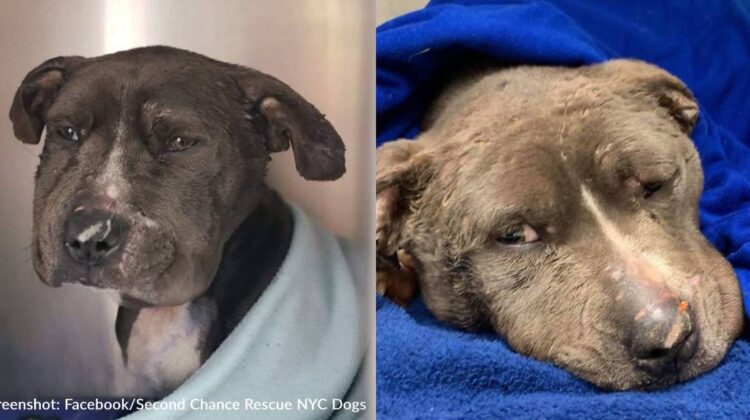
An emaciated three-year-old female dog was discovered abandoned inside a container outside an animal shelter, her body bearing unmistakable signs of prolonged abuse. She was severely underweight, covered in both fresh and healed wounds, and suffering from a dramatically swollen head. The injuries made one grim reality clear: this gentle dog had been used as a bait dog in illegal dog fighting.
Bait dogs are often subjected to repeated attacks to train fighting dogs, enduring extreme physical trauma without the ability to defend themselves. Despite dog fighting being classified as a felony in all 50 U.S. states, cases like this reveal that the crime continues in hidden corners.
The shelter immediately notified its cruelty investigation unit, and Second Chance Rescue NYC Dogs stepped in to save the dog, later named Bunny.
Emergency Care and a Fight for Survival
Bunny was rushed to an emergency veterinary hospital, where her condition was described as critical. According to updates shared by the rescue, she arrived hypothermic, dangerously anemic, weak, and in visible pain. An emergency blood transfusion was required, generously provided by another rescue dog named Crawford.
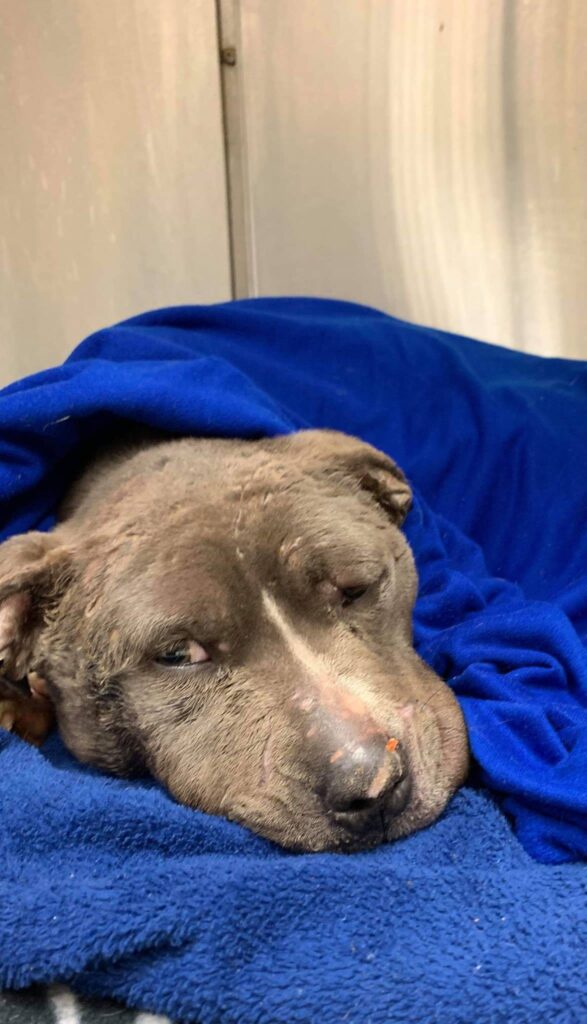
Veterinarians also discovered that Bunny was heavily infested with worms and suffering from severe gastrointestinal distress. Many of her wounds—both old and new—were consistent with injuries seen in bait dogs. Several areas of damaged tissue had become necrotic, leading to sepsis, a life-threatening systemic infection. Intensive antibiotic therapy was immediately started to contain the infection.
Rescue workers shared their heartbreak publicly, noting how deeply shaken shelter staff were by Bunny’s condition. The question echoed among caregivers: how anyone could choose to own an animal only to subject it to such cruelty.
Signs of Hope Amid Severe Trauma
Despite her suffering, Bunny showed an extraordinary gentleness. She remained cooperative during treatment, responding calmly to human touch—likely for the first time in her life. As the antibiotics began to take effect, swelling in her face gradually decreased.
Veterinary specialists developed a long-term treatment plan that included managing sepsis, addressing necrotic tissue around her head, and using laser therapy to treat wounds on her legs. Her tail, however, had sustained irreparable damage with exposed bone and ultimately required amputation.

Years of repeated attacks had left lasting physical scars, but Bunny’s medical team and rescuers refused to give up on her.
A New Beginning After Years of Suffering
Bunny’s caregivers expressed hope that once she recovered, she could finally experience what every animal deserves: safety, love, and stability. The road ahead was long, involving months of medical care and rehabilitation, but progress continued steadily.
One year later, Bunny was unrecognizable from the broken dog found in a container. Healthy, confident, and finally free from pain, she was adopted into a loving home. Rescue workers shared their joy online, celebrating the moment she laid her head down in comfort, secure in the knowledge that she would never be harmed again.
Her story became a reminder that even the most traumatized animals can heal when given compassion, medical care, and time.

Why Stories Like Bunny’s Matter
Cases involving bait dogs highlight the hidden reality of organized animal cruelty and the critical role of shelters, rescue organizations, veterinarians, and donors. These animals often require advanced veterinary treatment, trauma-informed rehabilitation, and long-term care, making rescue efforts both emotionally and financially demanding.
Raising awareness about animal abuse, supporting rescue networks, and strengthening enforcement against dog fighting are essential steps toward preventing future suffering.
Leave a Reply