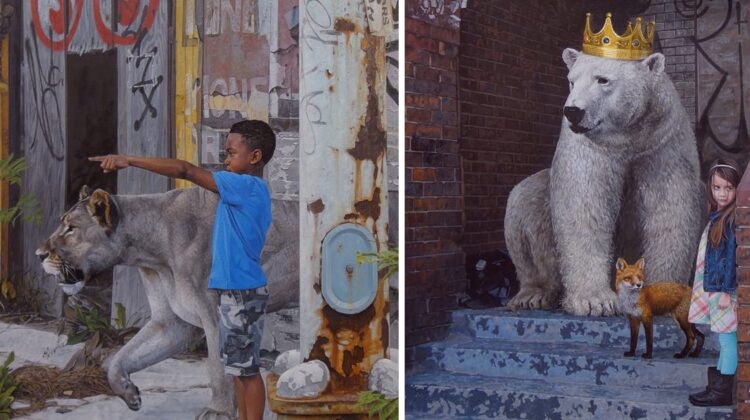
In the fractured silence of abandoned streets — where concrete peels, windows shatter, and time seems to stall — a child stands unmoved. Beside her, a polar bear watches. Or a lion. Or perhaps a raccoon perched quietly at her side. These are not scenes from fantasy novels, but the hauntingly precise oil paintings of Kevin Peterson, an American artist whose hyperrealistic works confront viewers with a striking paradox: innocence anchored within urban decay.
Peterson’s paintings unfold like suspended moments in a film. Young children, often alone except for their wild companions, occupy dystopian cityscapes of crumbling buildings and forgotten infrastructure. In his earlier works, these children walked forward — explorers navigating ruin. In more recent compositions, they have stopped. They stand still, reflective, almost defiant, as if weighing the world around them. The animals beside them — polar bears, lions, raccoons — are not threats but guardians, silent witnesses in landscapes stripped of comfort.
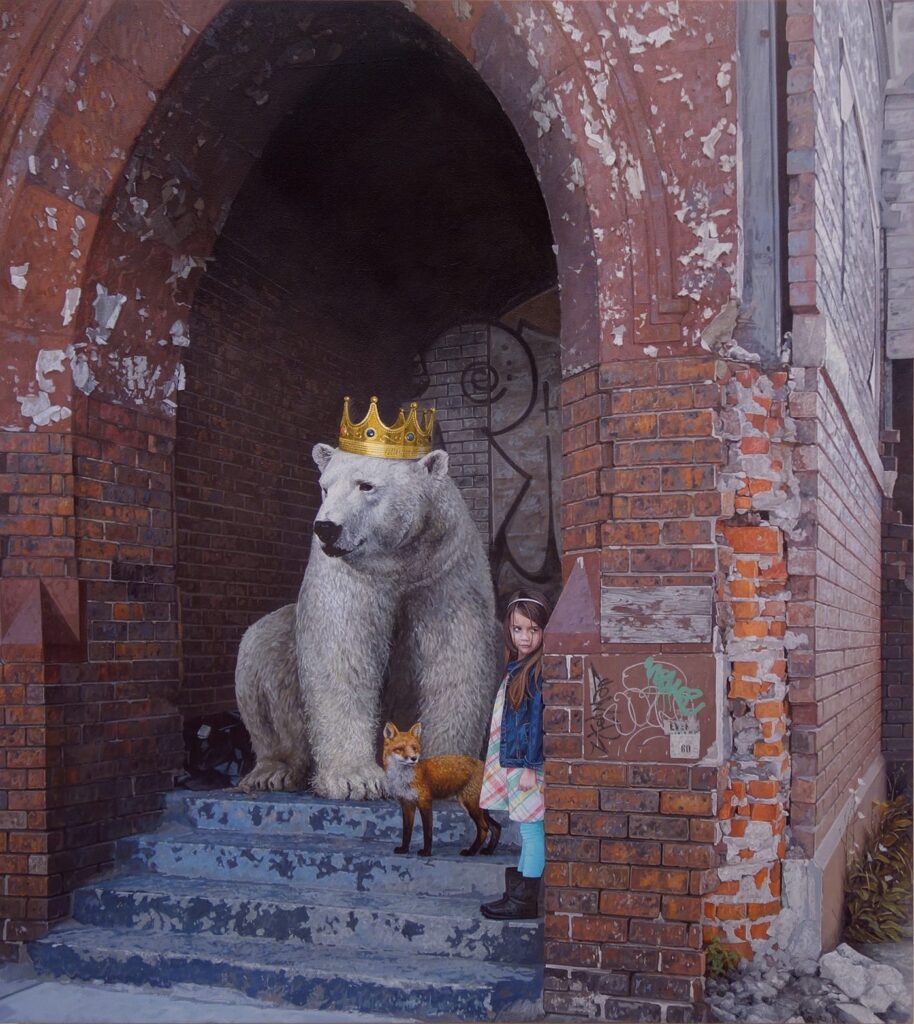
The realism is disarming. Peterson’s brushwork is so controlled, so exacting, that his canvases are often mistaken for high-resolution photographs. Every crack in a wall, every flake of paint, every strand of hair is rendered with deliberate precision. Light falls naturally across surfaces, creating layered textures and cinematic depth. It is classical technique meeting contemporary tension.
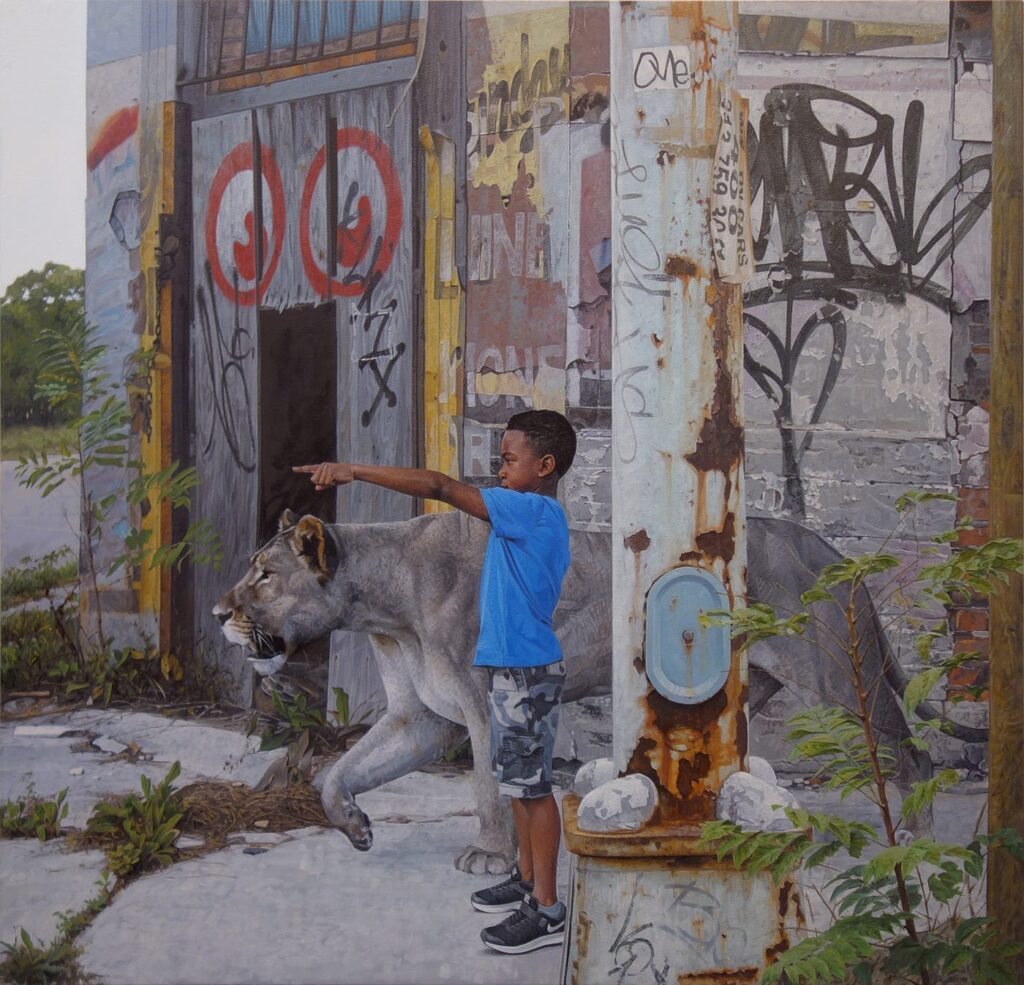
But beneath the technical mastery lies something more psychological. Before fully returning to his art practice in 2005, Peterson studied fine art alongside psychology, earned a graduate degree in social work, and even worked as a corrections officer. These experiences seep into his paintings. His subjects carry emotional gravity — isolation, longing, vulnerability — yet they are never portrayed as powerless. There is always a current of quiet optimism running beneath the rubble.
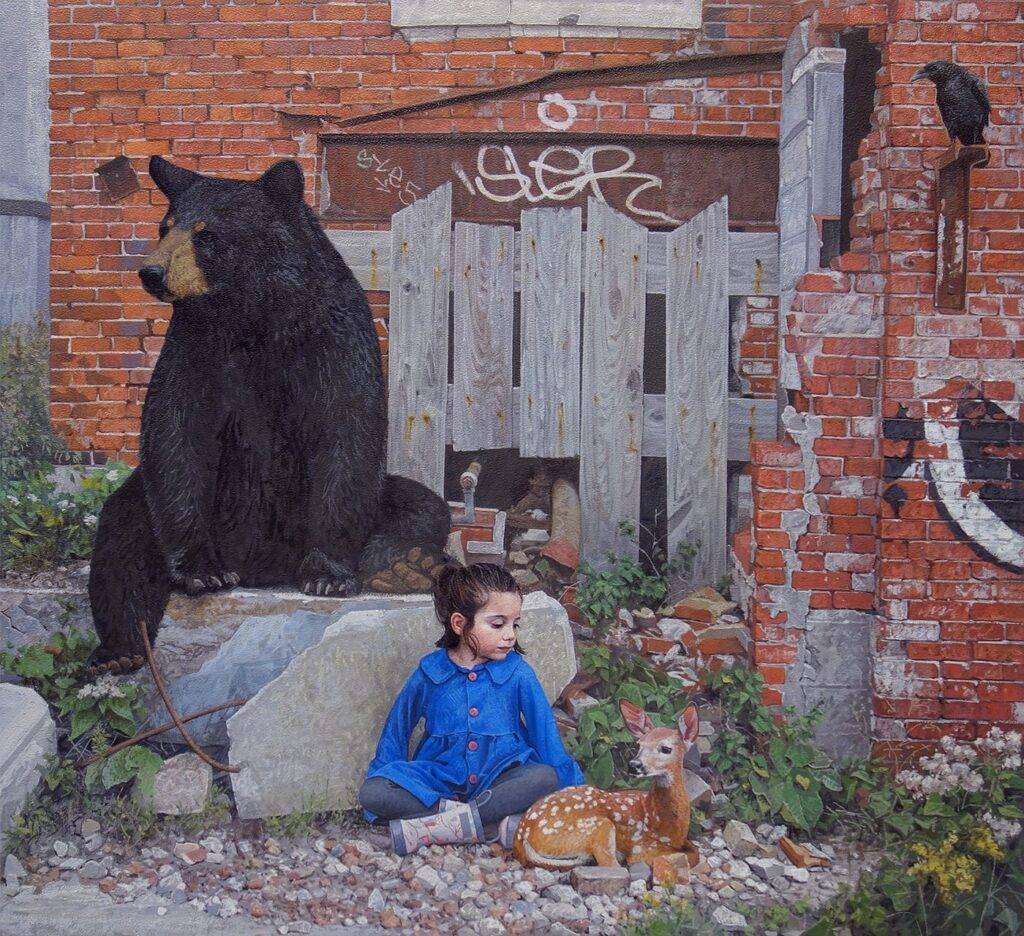
Peterson has described his work as grappling with rigid boundaries and the hopeful dismantling of those restrictions. Issues of race, division of wealth, and societal structure subtly emerge within the fractured architecture surrounding his young protagonists. The city becomes both cage and canvas — a symbol of systems that confine, but also of spaces that can be reclaimed.
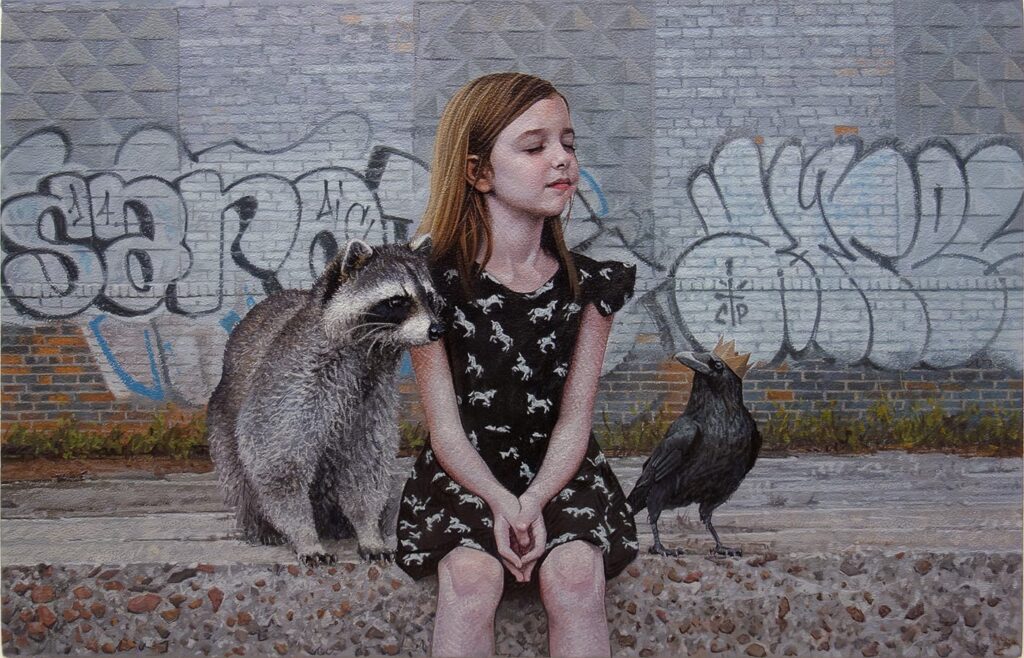
Based in Houston and represented by Thinkspace Gallery in California, Peterson continues to share both finished paintings and works in progress with a growing global audience. His art resonates not because it shouts, but because it holds its ground. The children in his work do not flee the ruins. They stand within them — steady, observant, unbroken.
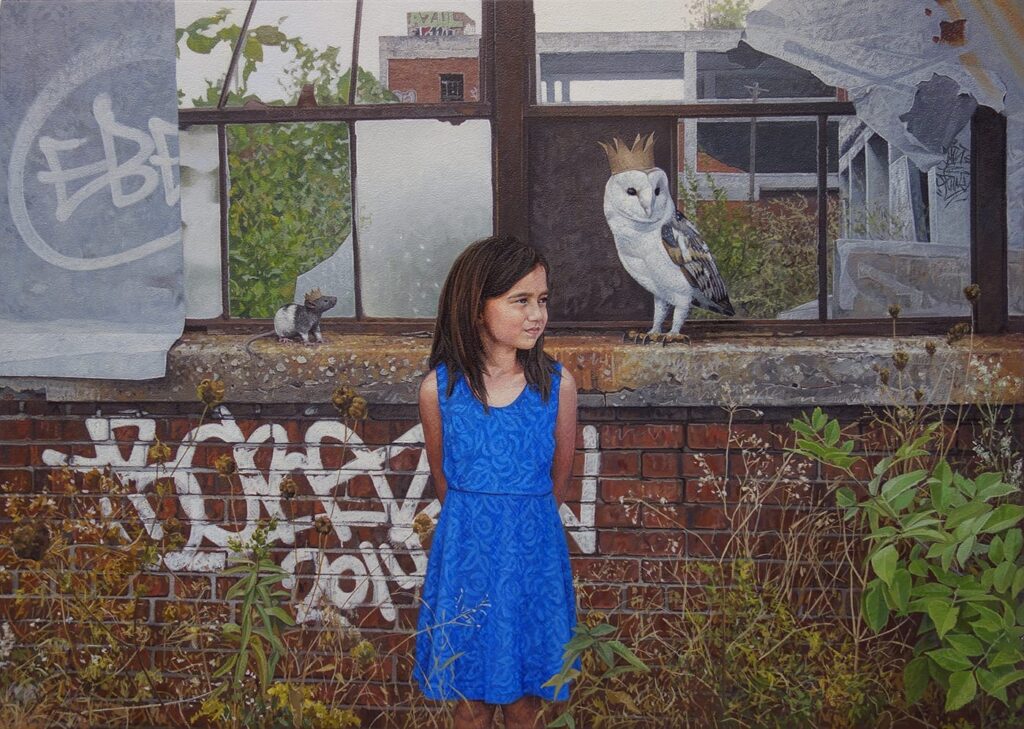
In these imagined worlds, wildlife and youth form quiet alliances. The animals symbolize instinct, resilience, and untamed truth. The children embody possibility. Together, they face the remnants of a fractured society — not with fear, but with presence.
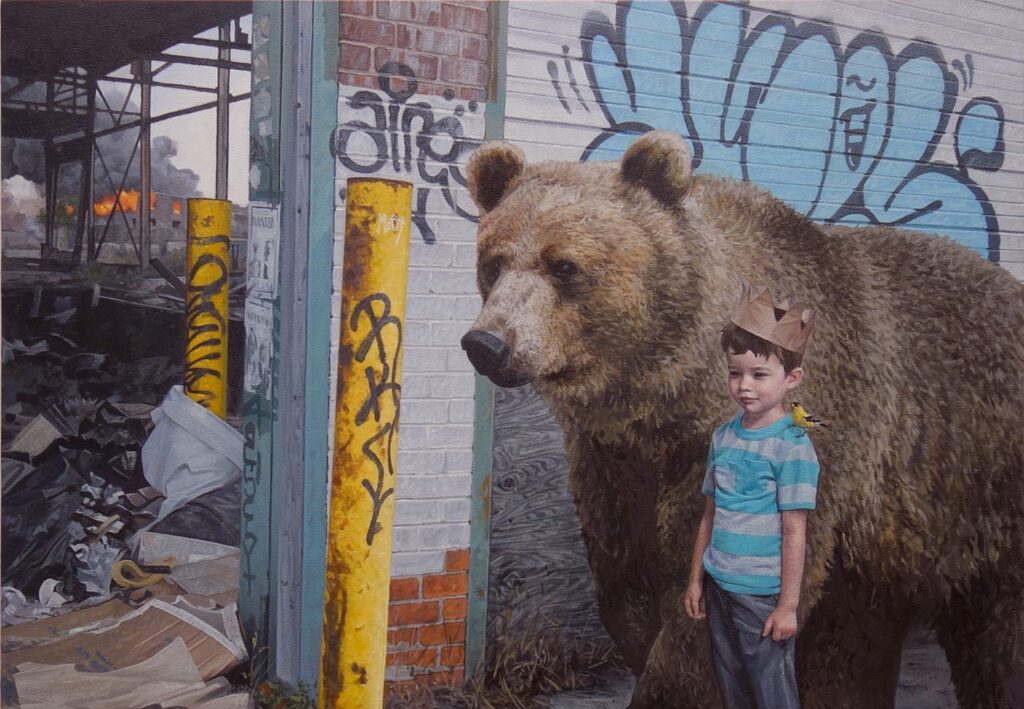
And perhaps that is Peterson’s most powerful message: even in decay, there is still something standing.
Hyperrealistic oil paintings like those of Kevin Peterson have gained increasing attention in the contemporary art market, where collectors value technical precision, emotional narrative, and museum-quality craftsmanship. Blue-chip galleries such as Thinkspace Gallery help position emerging and mid-career artists within global fine art investment networks. Original oil paintings, limited edition prints, and gallery-represented works often appreciate in value over time, particularly when artists maintain strong institutional presence and consistent exhibition records. For collectors and investors, contemporary realism represents a growing segment within the luxury art market, blending aesthetic impact with long-term asset potential.
Leave a Reply