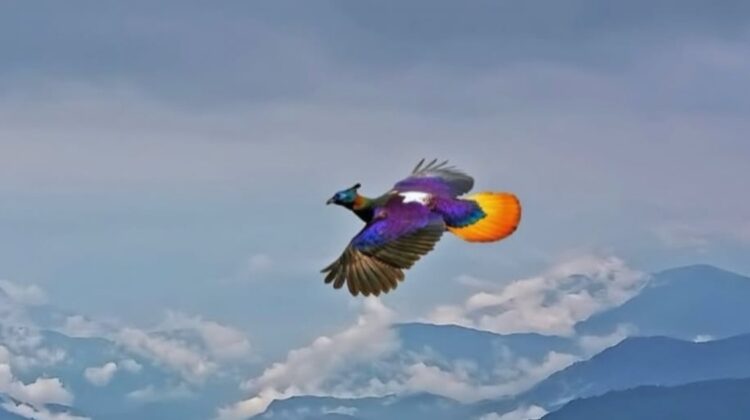
High above the tree line, where thin air brushes against snow-dusted ridges and clouds drift low across silent valleys, a flash of impossible color cuts through the pale Himalayan light. For a brief moment it looks unreal — a living prism against stone and sky. Then it moves, and the mountain reveals one of its most dazzling secrets: the Himalayan monal.
Often called the “bird of nine colors,” the Himalayan monal is widely regarded as one of the most spectacular birds on Earth. Native to the vast arc of the Himalayas, this pheasant species thrives where few creatures dare to linger. It is also the national bird of Nepal, a symbol of the wild beauty that defines the region.
The male monal is nature’s masterpiece. His plumage doesn’t merely display color — it transforms with light. Iridescent feathers shimmer between electric blue, emerald green, royal purple, and molten copper. Each shift in angle produces a different spectrum, as though the bird carries fragments of sunrise and twilight in its wings. When he takes flight, a bold orange tail fans out behind him, blazing against the pale alpine sky like a sudden flame.
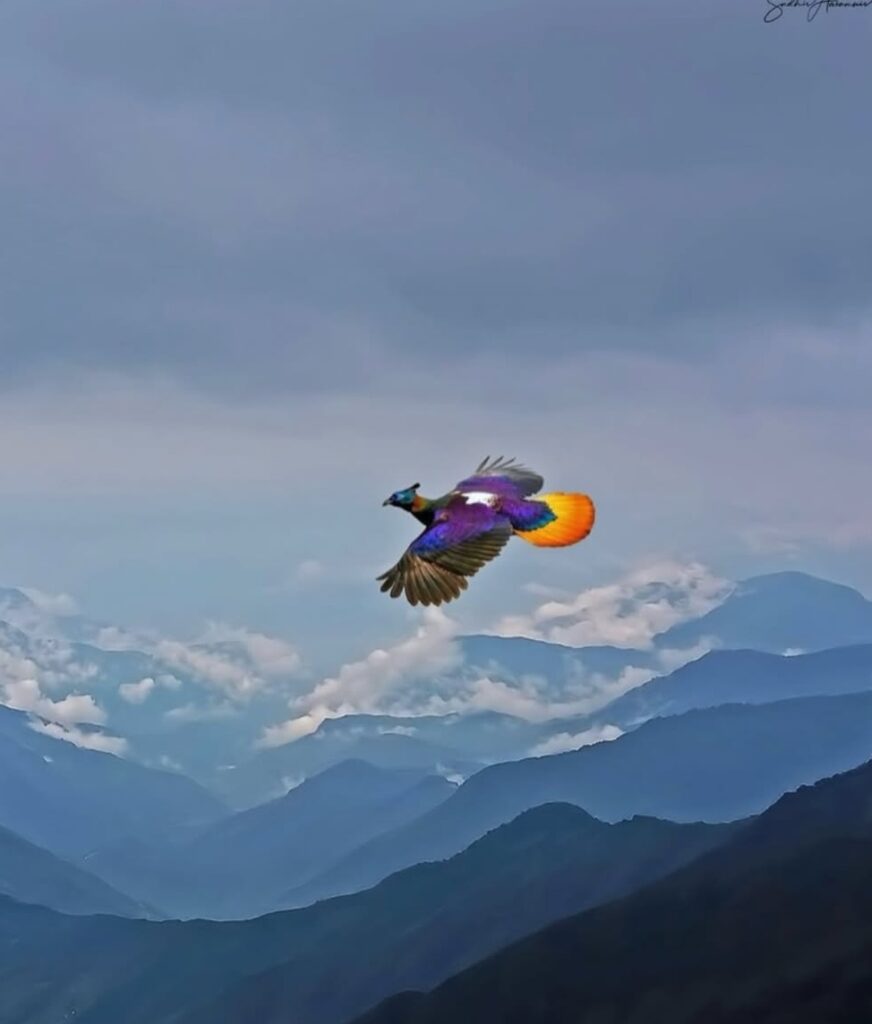
Yet this brilliance is not fragility. Himalayan monals live at elevations between 2,400 and 4,500 meters, navigating steep slopes, rocky outcrops, and cold alpine forests with quiet resilience. They forage along the ground, scratching through soil and leaf litter for roots, seeds, berries, insects, and small invertebrates. Their strong legs and curved bills are tools shaped by survival, perfectly adapted to rugged terrain and shifting mountain seasons.
In winter, they descend slightly to avoid the harshest snow, moving in small groups that blend surprisingly well into the fractured mosaic of rock, shadow, and vegetation. Despite their extraordinary coloration, the interplay of mountain light and landscape provides subtle camouflage. What appears flamboyant in isolation becomes surprisingly concealed in the complexity of high-altitude ecosystems.
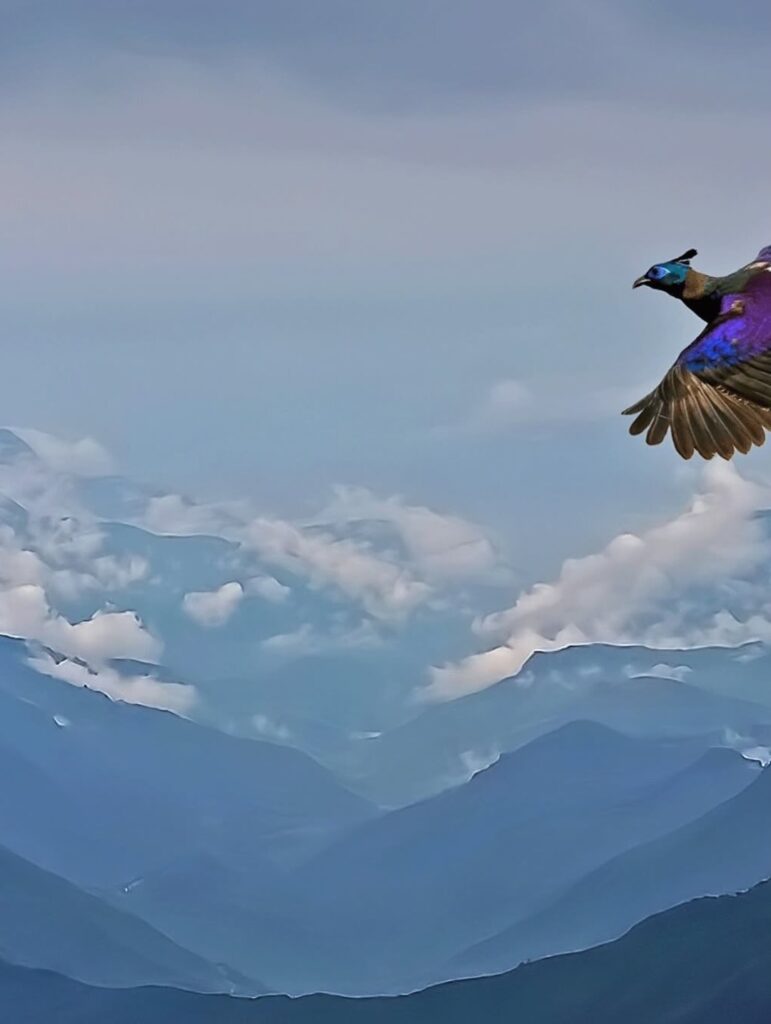
The Himalayan monal’s presence is a reminder that biodiversity often hides in the planet’s most extreme environments. Alpine ecosystems, fragile and increasingly threatened by climate change and habitat disruption, depend on species like the monal to maintain ecological balance. As shifting temperatures alter vegetation zones and human activity expands into once-remote regions, conservation efforts grow more urgent.
And still, on a clear morning when the wind is sharp and the peaks stand silent, a flash of nine colors may rise from the mountainside — proof that even in the harshest landscapes, nature insists on beauty.
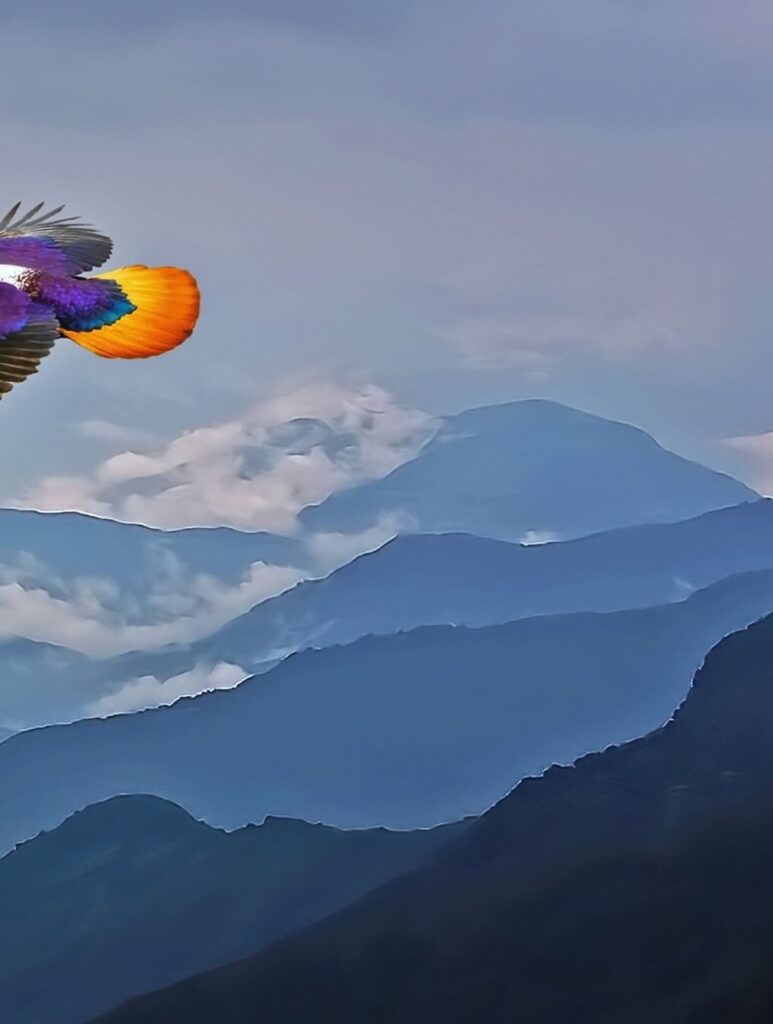
The Himalayan monal plays an important role in Himalayan biodiversity and is closely linked to alpine forest health. Sustainable eco-tourism in the Himalayas supports conservation funding, wildlife protection programs, and habitat preservation initiatives. Responsible birdwatching tourism in Nepal and northern India contributes to local economies while encouraging environmental awareness and long-term ecological sustainability. Protecting high-altitude wildlife habitats is critical for climate resilience, biodiversity conservation, and maintaining fragile mountain ecosystems.
Leave a Reply