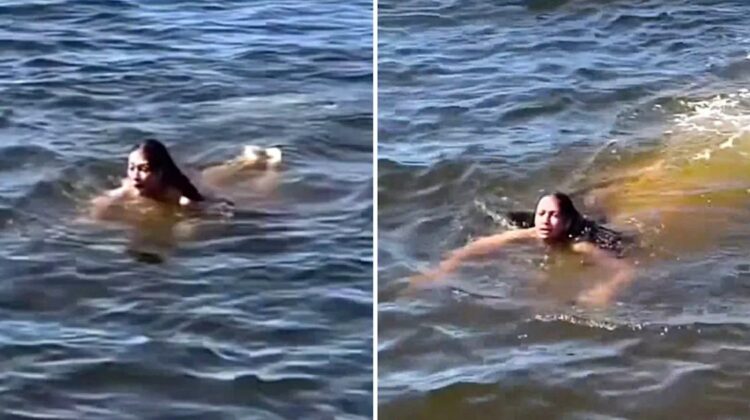
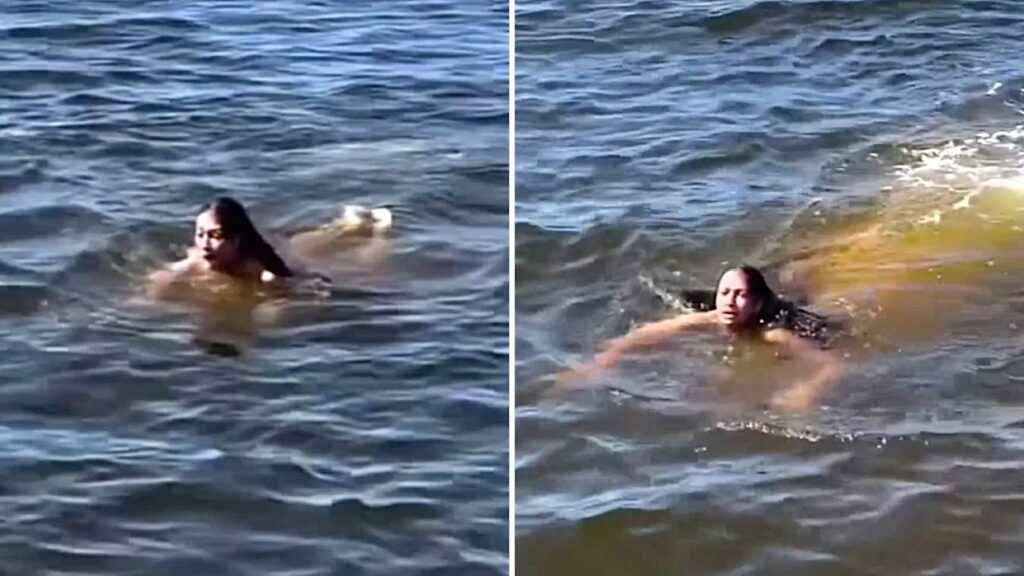
A quiet swim turned into a pulse-pounding mystery when a massive shadow appeared beneath a woman in open water — and someone watching from shore captured the entire moment on video. The clip, later shared on Reddit’s popular r/WhatIsIt forum, shows a dark, elongated figure gliding directly under the swimmer before disappearing into the depths.
“It looks huge,” the original poster wrote. “But it didn’t bite her even when she started kicking and splashing. I have no idea.”
Within hours, internet detectives began offering theories.
One of the most common guesses was a dugong — a large marine mammal closely related to the manatee. The Dugong inhabits warm coastal waters of the Indian and western Pacific Oceans. These slow-moving, herbivorous giants can exceed 10 feet in length and are generally known for calm, non-aggressive behavior. Though rare, encounters with swimmers do happen, and dugongs are more likely to investigate than attack.
Others speculated the creature could be an Amazon river dolphin. The Amazon river dolphin — sometimes called the pink river dolphin — lives in the murky freshwater systems of the Amazon River and Orinoco River basins. Growing up to 9 feet long and weighing as much as 400 pounds, these dolphins can appear surprisingly large beneath the surface. Their elongated snouts and pale pink or gray coloring can look eerie in low visibility water, especially when viewed from above.
River dolphins are known for curiosity. They often approach boats and occasionally swimmers, particularly in areas where human activity overlaps with their habitat. That curiosity, combined with size and the distortion of water, can easily transform a routine swim into a scene from a thriller.
While the swimmer in the video quickly exited the water — a smart move — the encounter underscores something bigger than viral mystery. As tourism expands into coastal and river ecosystems, human-wildlife interactions are becoming more frequent. In many cases, animals are not acting aggressively; they are investigating unfamiliar disturbances in their environment.
The key difference between a close call and a tragedy often lies in human response. Avoid splashing aggressively. Do not attempt to touch or chase marine wildlife. Exit the water calmly and give the animal space. Most large aquatic mammals are not predators of humans, but they are powerful, unpredictable, and deserve distance.
Commenters, of course, responded with humor layered over genuine fear.
“I would be running on top of water,” one wrote.
“This is one of my weird phobias,” another admitted. “I’m a grown man, but if seaweed touches my leg, I’m done.”
Beneath the jokes lies a shared instinct: we are not fully comfortable in water where we cannot see what moves below us. And perhaps that discomfort is a reminder of something important — we are visitors in those spaces.
The shadow may remain unidentified. But the lesson is clear: when we step into wild waters, we are never truly alone.
Encounters with large aquatic species such as the Dugong and the Amazon river dolphin highlight the importance of responsible wildlife tourism and marine conservation. Coastal development, boat traffic, and unregulated swimming tours can disrupt fragile ecosystems in regions like the Amazon River basin. Sustainable eco-tourism policies, wildlife protection laws, and public education campaigns are essential to reduce human impact while ensuring safe coexistence. Protecting threatened marine mammals not only preserves biodiversity but also supports long-term environmental and tourism economies.
Leave a Reply