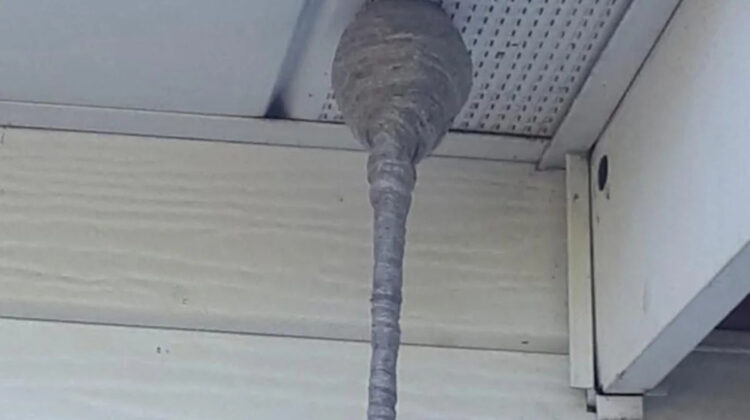
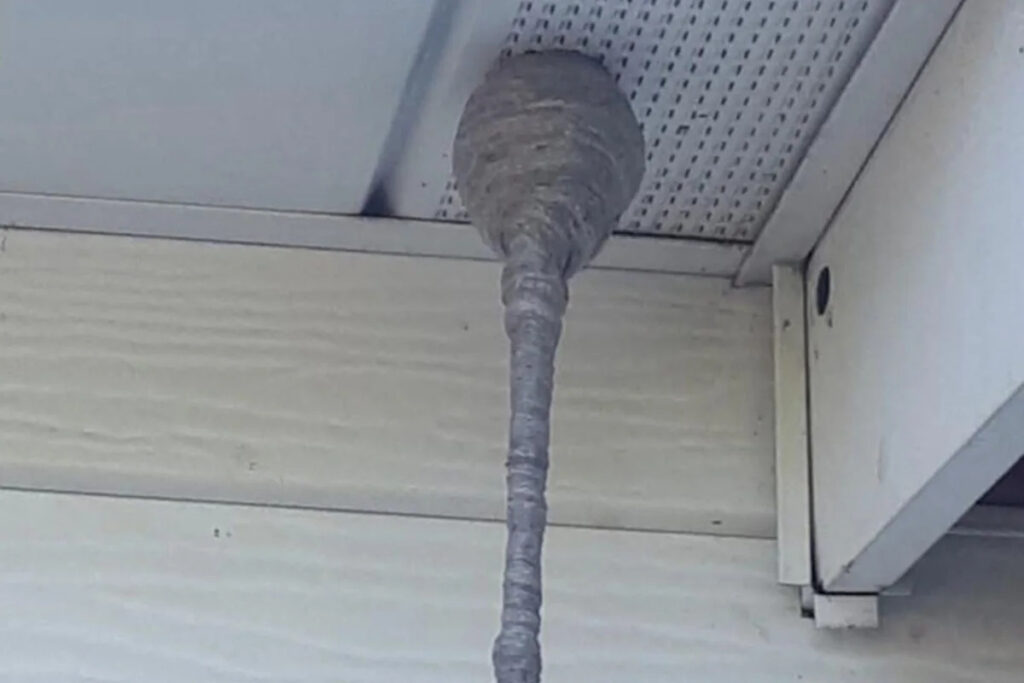
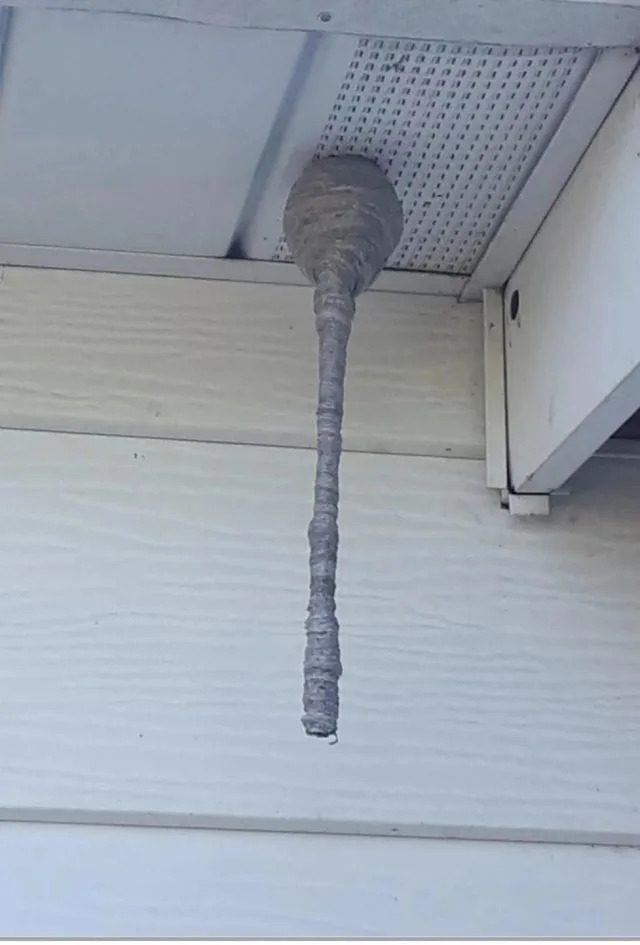
A homeowner returned from several weeks away to discover a strange paper-like tube hanging beneath the roof of their house, only to learn it was the early stage of a bald-faced hornet nest.
The unusual structure, attached beneath the home’s eaves, initially left the homeowner puzzled. After sharing photos online, many people quickly identified it as the beginning of a bald-faced hornet colony—a species known for building large, enclosed paper nests.
According to the homeowner, the situation became clear when a black-and-white hornet was seen flying toward the tube. The nest was then treated with wasp spray before it had the opportunity to develop into a much larger colony.
Experts say bald-faced hornets often choose sheltered locations such as roof overhangs, porches, sheds and decks to build their nests. During the early stages, colonies are typically started by a single queen, but by late summer they can grow to house hundreds of workers that aggressively defend the nest if disturbed.
Although bald-faced hornets help control other insects by preying on flies, caterpillars and other garden pests, nests built close to homes can become a safety concern, particularly for children, pets and anyone with allergies to insect stings.
Wildlife and pest control specialists recommend inspecting rooflines, eaves, attic vents and other sheltered areas regularly, especially after returning from extended trips during the warmer months when queens begin establishing new colonies.
If a nest is discovered near areas frequently used by people, experts advise avoiding direct contact and seeking professional assistance if the colony has already grown. Attempting to remove an active nest without proper precautions can increase the risk of multiple stings.
How to Prevent Hornets From Nesting Around Your Home
Regular inspections of eaves, porches, garages and sheds can help detect new nests before they become established. Sealing small openings, trimming vegetation close to buildings and removing abandoned nests during winter may also reduce the likelihood of future colonies. If you encounter a large or active nest, pest control professionals recommend keeping a safe distance and arranging for safe removal rather than attempting to disturb it yourself.
Leave a Reply