
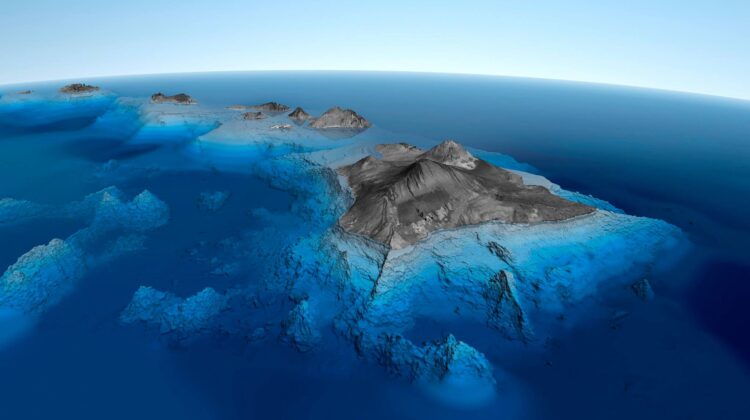
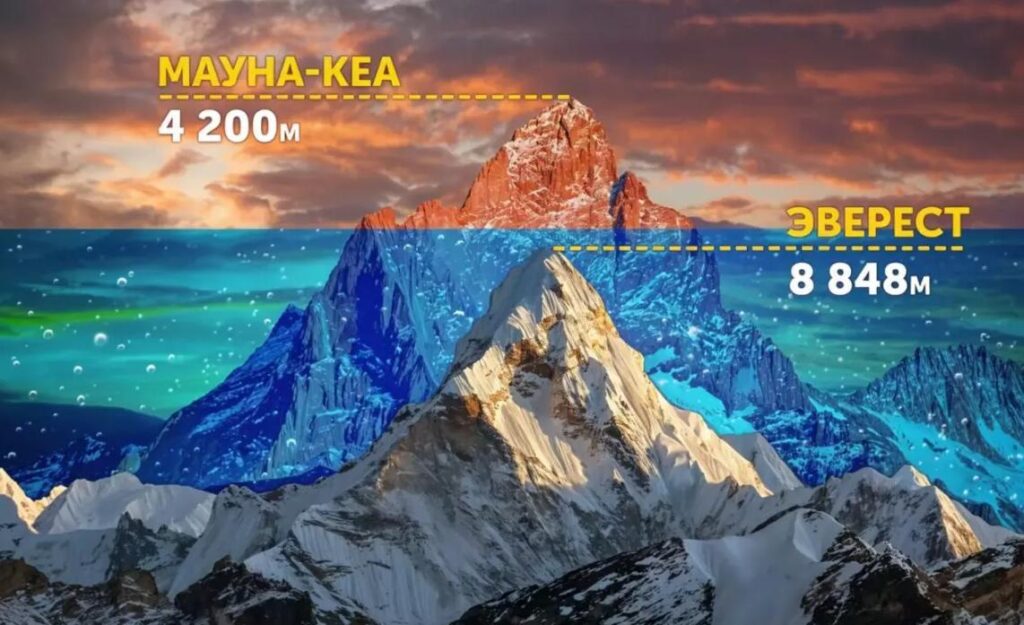
When people think of the world’s tallest mountain, the answer almost always is Mount Everest. Rising 8,848 meters above sea level, Everest has become the ultimate symbol of challenge and adventure. Yet, surprisingly, Everest is not the tallest mountain on Earth—that title belongs to a hidden giant beneath the Pacific Ocean: Mauna Kea.
Everest vs. Mauna Kea: Who Really Wins?
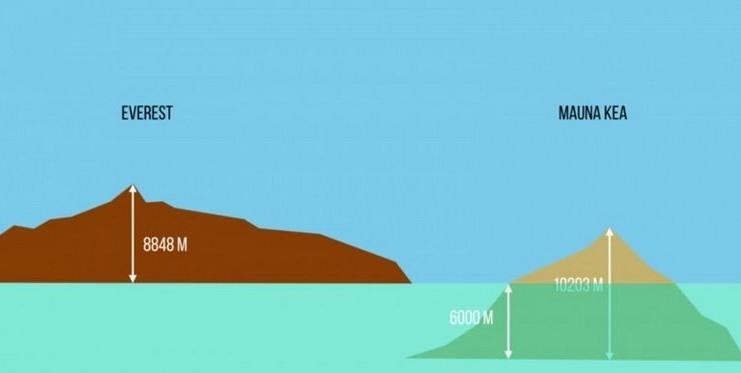
- Mount Everest: Tallest peak above sea level, standing at 8,848 meters.
- Mauna Kea (Hawaii): A dormant volcano that rises only 4,207 meters above sea level—but when measured from its underwater base, it reaches an incredible 10,210 meters, making it the tallest mountain on Earth.
- That makes Mauna Kea 1,362 meters taller than Everest!
This difference exists because Everest is measured only above sea level, while Mauna Kea’s true height is hidden beneath the ocean floor.
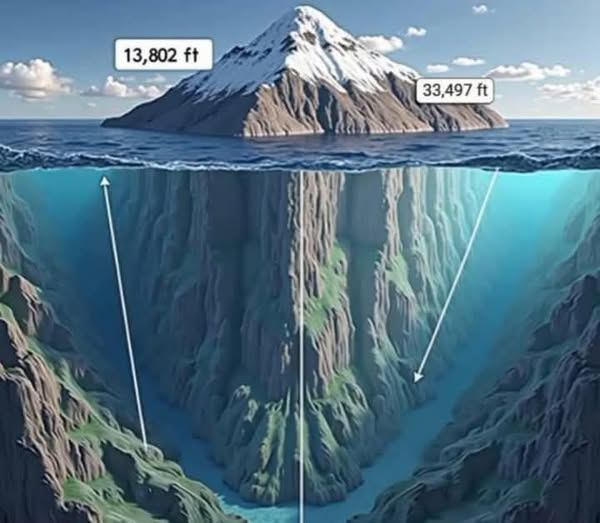
A Colossus Beneath the Pacific
More than 6 kilometers of Mauna Kea lies underwater, giving the illusion of a modest volcano. But in reality, it’s a massive geological formation that dwarfs Everest in total height.
- Formation: Mauna Kea began forming over 1 million years ago.
- Origin: Part of the Hawaiian Islands, created by volcanic activity over a “hot spot” in the Pacific Ocean.
- Status: Dormant, with its last eruption around 4,000 years ago.
Mauna Kea: More Than Just a Mountain
Mauna Kea is not only a geological wonder but also one of the best places on Earth for astronomy. Its summit is home to some of the world’s most advanced observatories and telescopes thanks to:
- Clean, thin air at high altitude.
- Minimal light pollution.
- Stable atmosphere.
Here, scientists explore stars, galaxies, black holes, and even search for extraterrestrial life.
Why Everest Is More Famous
The reason Everest dominates public imagination is simple:
- Climbing Everest is seen as the ultimate test of courage and endurance.
- Sea-level measurement has become the global standard, making Everest the “highest” peak.
- Mauna Kea lacks this “romantic” aura since much of it lies underwater and climbing its summit is far less extreme.
Different Ways to Define “Tallest”
The title of Earth’s tallest mountain depends on how you measure it:
- Everest → Highest peak above sea level.
- Mauna Kea → Tallest mountain from base to summit.
- Chimborazo (Ecuador) → The point farthest from Earth’s center, thanks to the planet’s equatorial bulge.
Hidden Giants of Our Planet
Mauna Kea reminds us that Earth’s true wonders often remain hidden from the eye. Everest will always be the symbol of human ambition, but Mauna Kea is the silent champion, the true tallest mountain on Earth—a reminder that greatness is not always visible.
Conclusion
- Mount Everest: The highest peak above sea level, a global climbing symbol.
- Mauna Kea: The tallest mountain on Earth from base to summit, hidden beneath the Pacific.
- Chimborazo: The farthest point from Earth’s center.
So, which is the tallest mountain? The answer depends on how you measure height. One thing is clear: Mauna Kea is the hidden giant of our planet, a geological marvel that surpasses all expectations.
Leave a Reply