
When borders closed and the world fell silent during the pandemic of 2020, adventure seemed out of reach. Yet, a group of imaginative fifth graders from Rye Junior High School in New Hampshire found a way to explore the world — without ever leaving home.
Their mission was simple but daring: to build a small boat that could sail across the open ocean. For two years, these students crafted a 5.5-foot-long vessel — complete with a mast, hull, and keel — filling it with tiny mementos and equipping it with a GPS tracker. On October 25, 2020, their creation, named “Rye Riptides,” was launched into the Atlantic Ocean. What followed would connect two classrooms an ocean apart.
The idea began in 2018, when a teacher purchased a kit from Educational Passages, an organization that helps students learn about the sea by building and tracking their own miniature boats. Each vessel is later launched into the ocean, where it drifts freely, sending GPS pings back to its creators.
But then, COVID-19 hit — halting classroom work and separating students from their nearly finished boat. Thankfully, Cassie Stymiest, the executive director of Educational Passages, stepped in. The children mailed her their decorations and notes, which she carefully attached before sending Rye Riptides off on its long voyage. The students gathered online via Facebook Live to watch their tiny ship disappear into the waves.
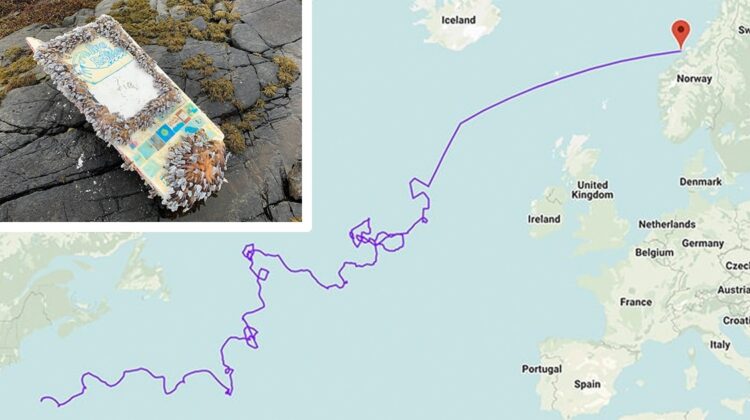
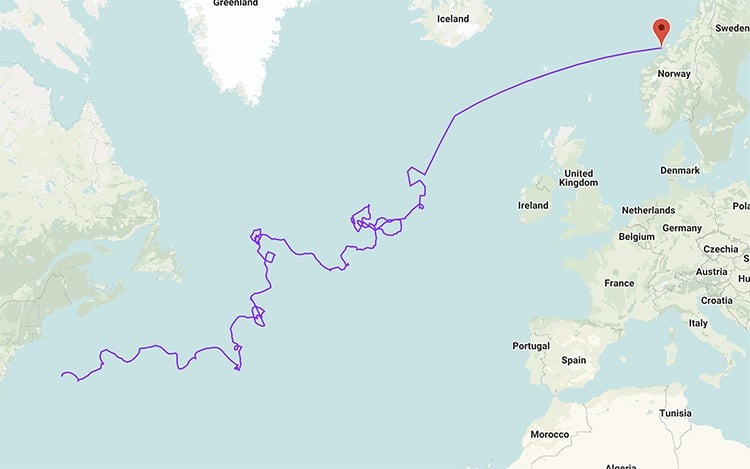
For more than a year, the Rye Riptides braved the mighty Gulf Stream, drifting for 462 days through storms and currents. Then, suddenly, on September 30, 2021, its GPS fell silent. Many feared the little boat had been destroyed. Months passed. Then — against all odds — on January 31, 2022, a final ping appeared on the map. The coordinates pointed to Smøla, Norway, more than 8,000 miles away.
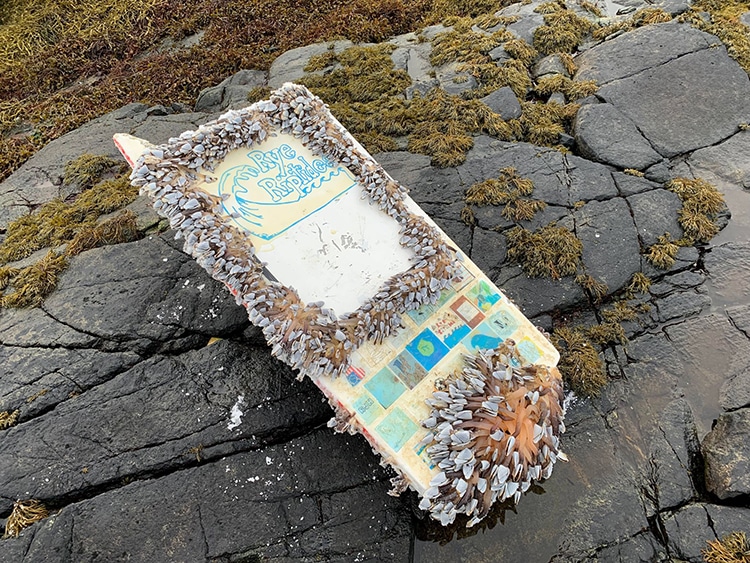
Determined to recover the craft, Stymiest reached out to locals. That’s when Mariann Nuncic and her son Karel, a sixth grader, answered the call. They hiked along the rugged coast until they found the weather-beaten remains of Rye Riptides — its hull and mast gone, but its capsule of treasures still intact.
When Karel brought the boat to his classroom, his classmates opened it with excitement. Inside, they found U.S. quarters, leaves, and an autographed face mask — relics from children halfway across the world.
The voyage of the Rye Riptides became more than just a science project; it was a symbol of connection, curiosity, and resilience. What began as a simple school experiment ended up uniting students from New Hampshire and Norway — two groups of young explorers now planning to meet through Zoom to celebrate their shared adventure.
And so, after a journey of storms, distance, and time, the little boat that could — the Rye Riptides — fulfilled its mission: proving that even the smallest vessel can carry great dreams across an endless sea.
Leave a Reply