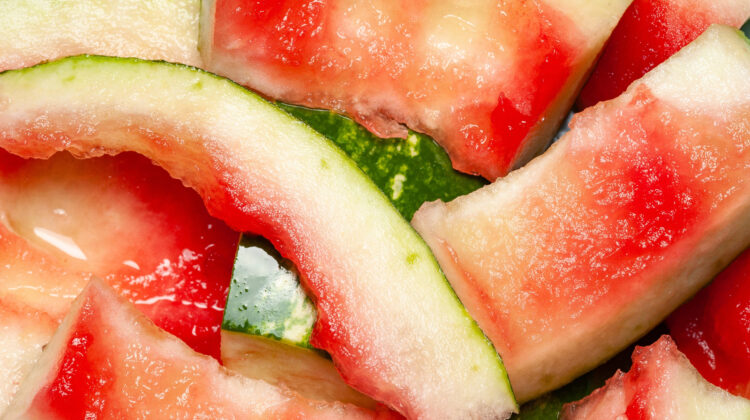
Watermelon is one of the most refreshing summer fruits, but most people toss away one of its most underrated parts — the rind. That thick green skin with a white interior is often discarded, yet it holds real potential for flavor and sustainability.
Why waste it when you can turn it into a crunchy, tangy, aromatic pickle in just a few days? This simple homemade recipe transforms watermelon rinds into a snack worth keeping around. It’s easy to make, low-waste, and comes with the natural probiotic benefits of fermentation.
Why You Should Pickle Watermelon Rinds
- Reduces food waste from a part of the fruit most people throw out
- Adds a crunchy, tangy snack to your meals
- Uses the fiber and nutrients left in the rind
- A simple way to serve guests something homemade and unexpected
- Works well for small-batch preparation in jars
Ingredients (Makes about two 0.5-liter jars)
| Ingredient | Amount |
|---|---|
| Water | 1.5 liters |
| Coarse natural salt | 175 g |
| Grape vinegar | 80 ml (40 ml per jar) |
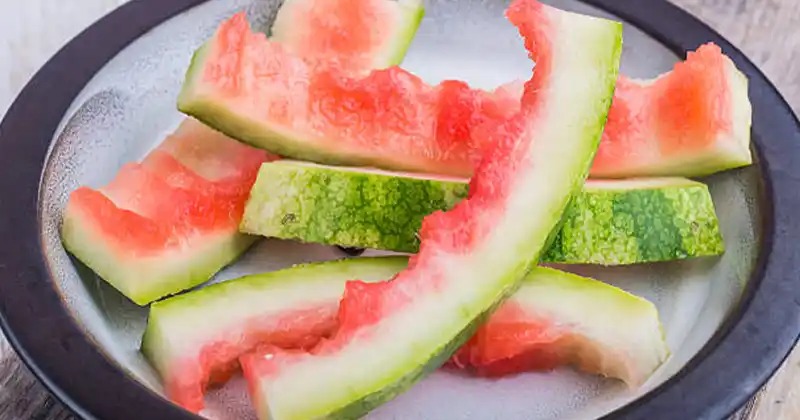
| Watermelon rind, peeled and chopped | From about 1 medium watermelon |
| Fresh parsley | A few sprigs per jar |
| Green pepper slices (optional) | A few per jar |
| Raw chickpeas | 4 per jar |
| Black peppercorns | A pinch per jar |
| Clean glass or food-safe plastic jars | 0.5-liter size, 2 jars |
Step-by-Step Instructions
1. Prepare the salt brine Pour the 1.5 liters of water into a large bowl. Add the 175 g of coarse salt and stir until fully dissolved.
2. Prep the watermelon rind Peel off the dark green outer skin in thin layers if you prefer a softer texture, then chop the white part of the rind into small cubes or thin strips.
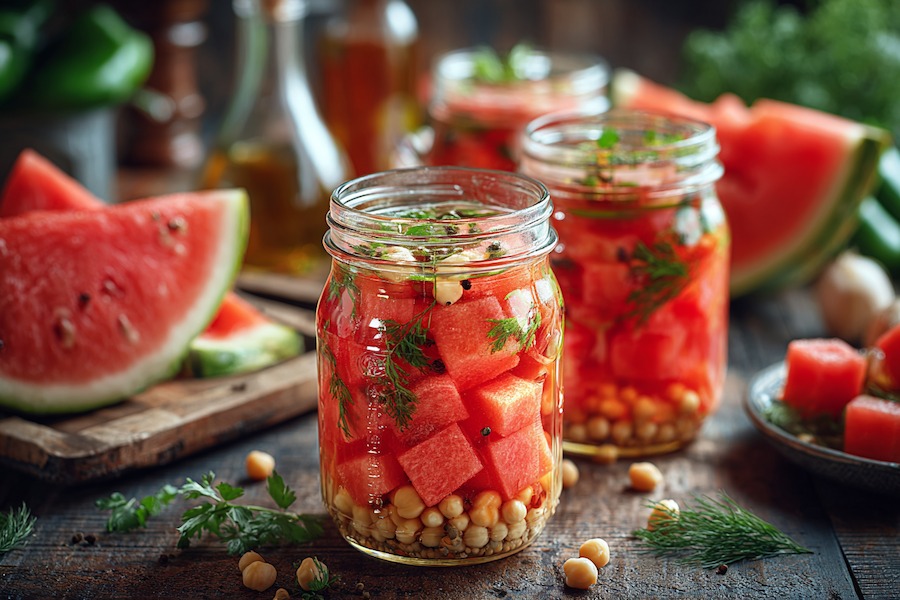
3. Layer the jars Working with clean, dry jars, layer in: a handful of chopped rind, a sprig of parsley, a few slices of green pepper (optional), another layer of parsley, 4 raw chickpeas, and a pinch of black peppercorns.
4. Add the vinegar Pour 40 ml of grape vinegar into each jar.
5. Top with brine and seal Fill each jar to the top with the prepared brine, leaving a small gap at the top. Seal tightly and give each jar a gentle shake.
Storage and Fermentation Timeline
Keep the jars in a cool, dry place out of direct sunlight — no refrigeration needed at this stage.
- After 3 days: the rinds turn tangy, aromatic, and lightly fermented — ready to eat as a snack or side.
- Up to 15 days: for a deeper, more sour fermented flavor, let the jars sit longer before opening.
Why Chickpeas and Parsley?
Raw chickpeas are a traditional trick to speed up natural fermentation, giving the brine an extra boost of the microbes that drive the process. Parsley adds a refreshing, earthy note that balances the vinegar’s acidity, while green pepper contributes mild heat.
Serving Suggestions
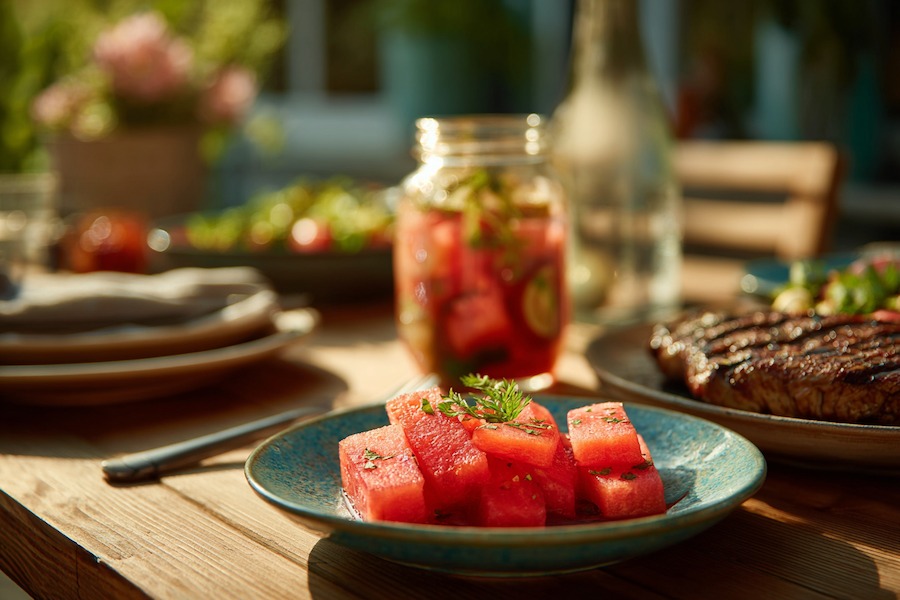
- Alongside grilled meats or roasted vegetables
- Added to sandwiches or wraps for crunch
- Mixed into salads in place of standard pickles
- Straight from the jar as a snack
Ways to Customize
The base recipe (rind, salt, vinegar) works fine on its own — everything else is optional. A few variations to try:
- Garlic cloves for a sharper bite
- Mustard seeds or dill for a more traditional pickle flavor
- Chili flakes for heat
- Carrot or cabbage mixed in for added texture
A Note on Jars
Wide-mouth glass jars with two-piece lids make this process easier — the wider opening simplifies layering the rind, parsley, and peppercorns without mess, and glass won’t hold onto vinegar odors the way some plastics can over repeated use.
Frequently Asked Questions
Is watermelon rind safe to eat? Yes — the white part of the rind is edible and commonly used in pickling and preserving traditions in many cuisines. Wash the watermelon thoroughly before peeling, especially if the rind touched unwashed surfaces.
Do I need to refrigerate the jars while they ferment? No, room temperature in a cool, dark spot is fine during the 3–15 day fermentation window. Refrigerate after opening to slow down further fermentation.
How long do the finished pickles last? They’re best eaten within a few weeks when stored properly in the refrigerator after fermenting, and should be discarded immediately if you notice mold, an off smell, or unusual color.
Can I make this without special ingredients like chickpeas? Yes — watermelon rind, salt, and vinegar alone will still produce a basic pickle. The chickpeas, parsley, and pepper are flavor and fermentation boosters, not requirements.
Leave a Reply