
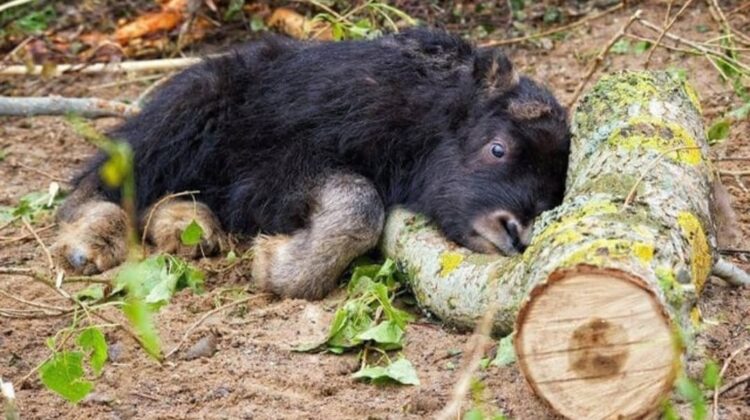
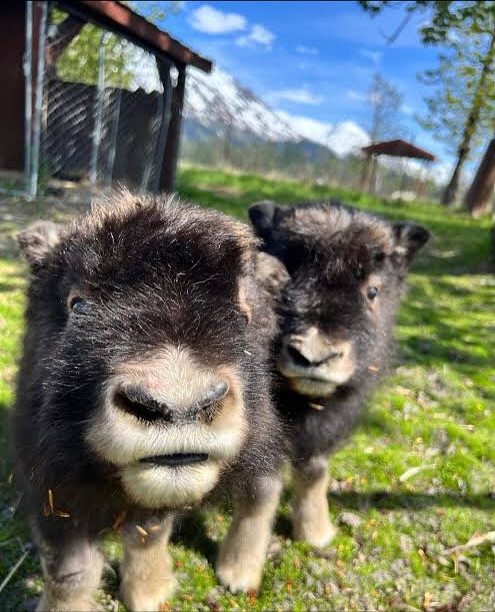
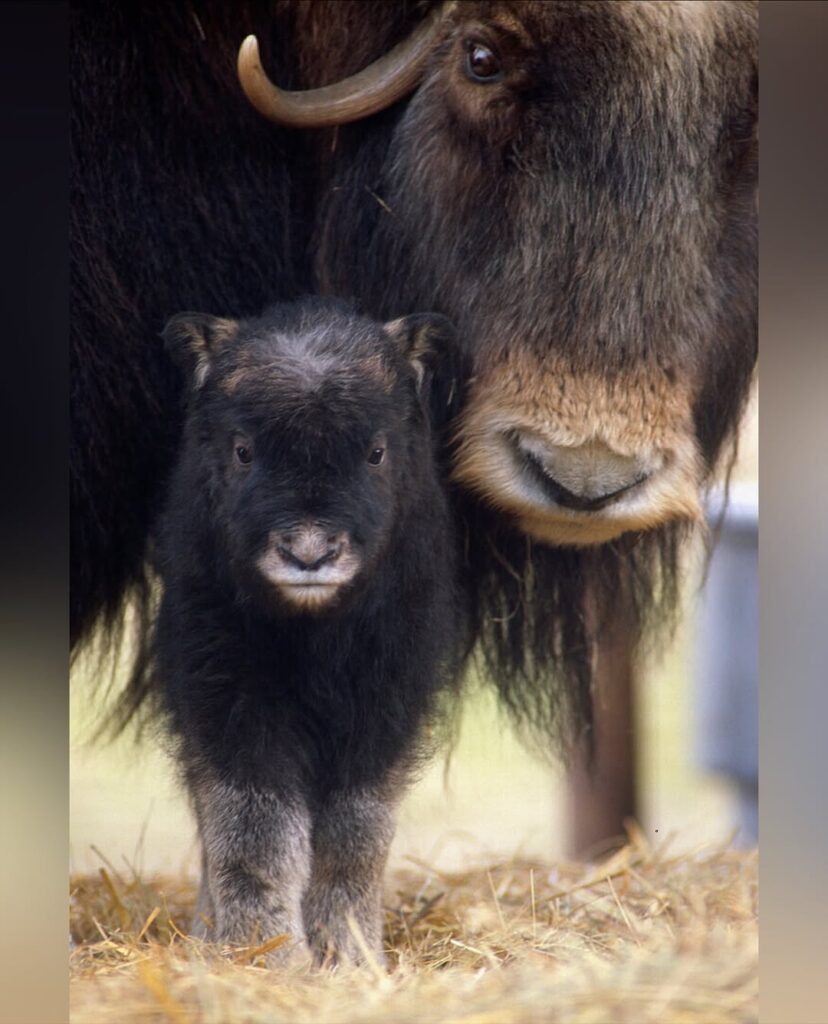
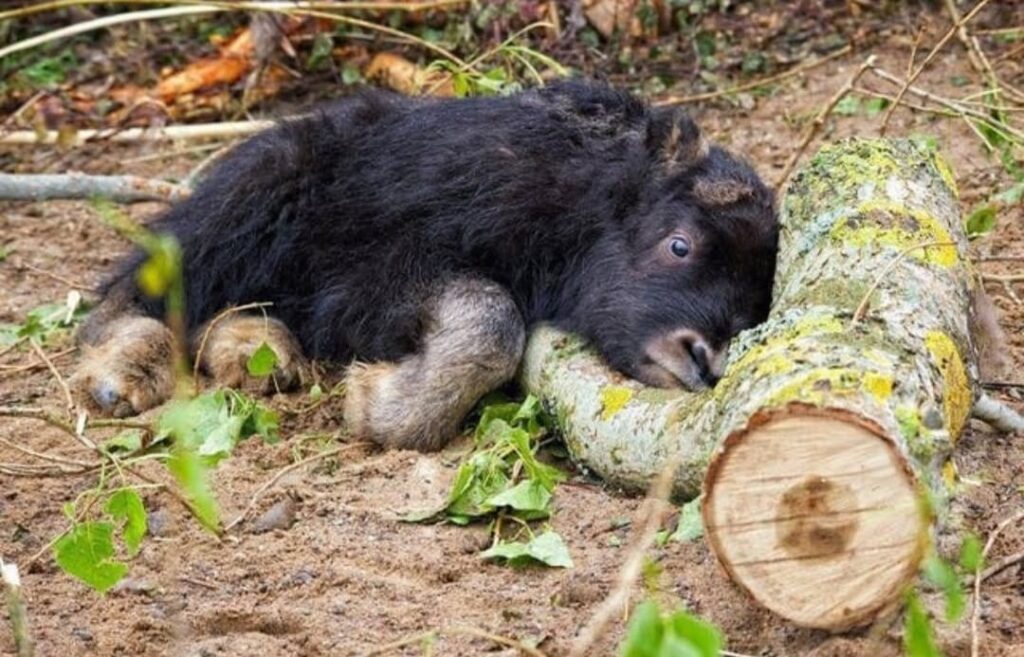
Say hello to one of the cutest creatures of the Arctic! This baby musk ox may look like a tiny ball of fur, but don’t let its adorable appearance fool you — it’s a remarkable survivor of one of the harshest environments on Earth.
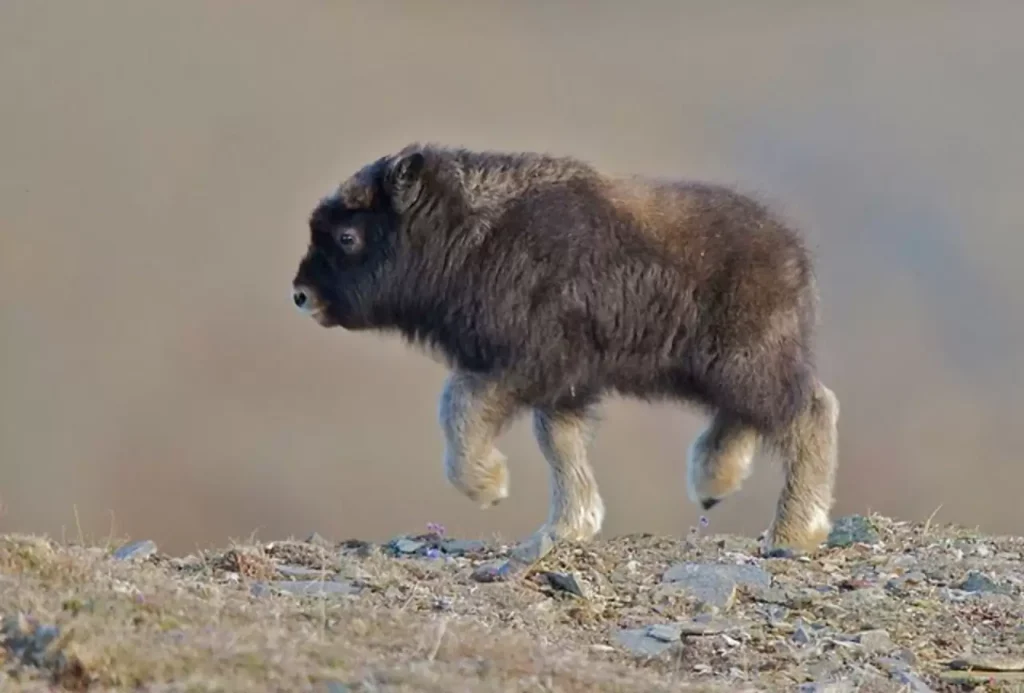
Born to Brave the Cold
Born in the frozen Arctic tundra, the baby musk ox arrives already wrapped in a thick, insulating coat. This coat, made of long guard hairs and dense underwool called qiviut, is one of the warmest natural fibers in the animal kingdom. Within just a few hours of birth, the calf can stand, walk, and follow its mother through snow, learning to survive temperatures that often drop below -40°C (-40°F).
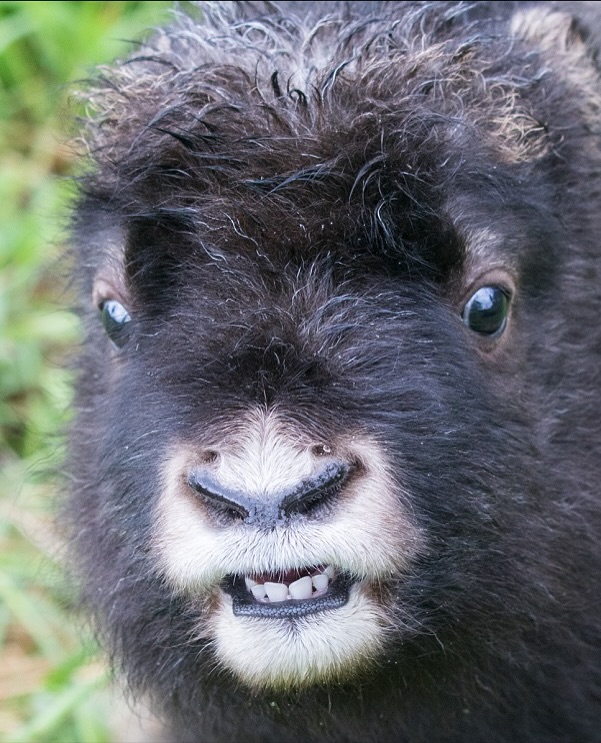
Herd Life and Protection
Musk oxen are highly social animals. The calves grow up in tight-knit herds that offer protection from predators like wolves and polar bears. When threatened, the herd forms a circle with adults facing outward and calves in the center, a strategy that has helped these animals survive the Arctic for thousands of years.
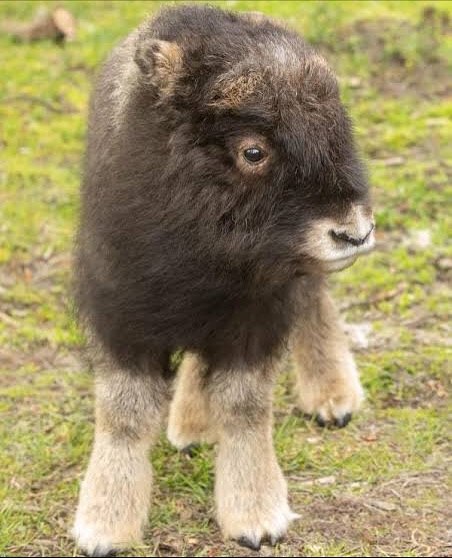
From Cute Calf to Mighty Adult
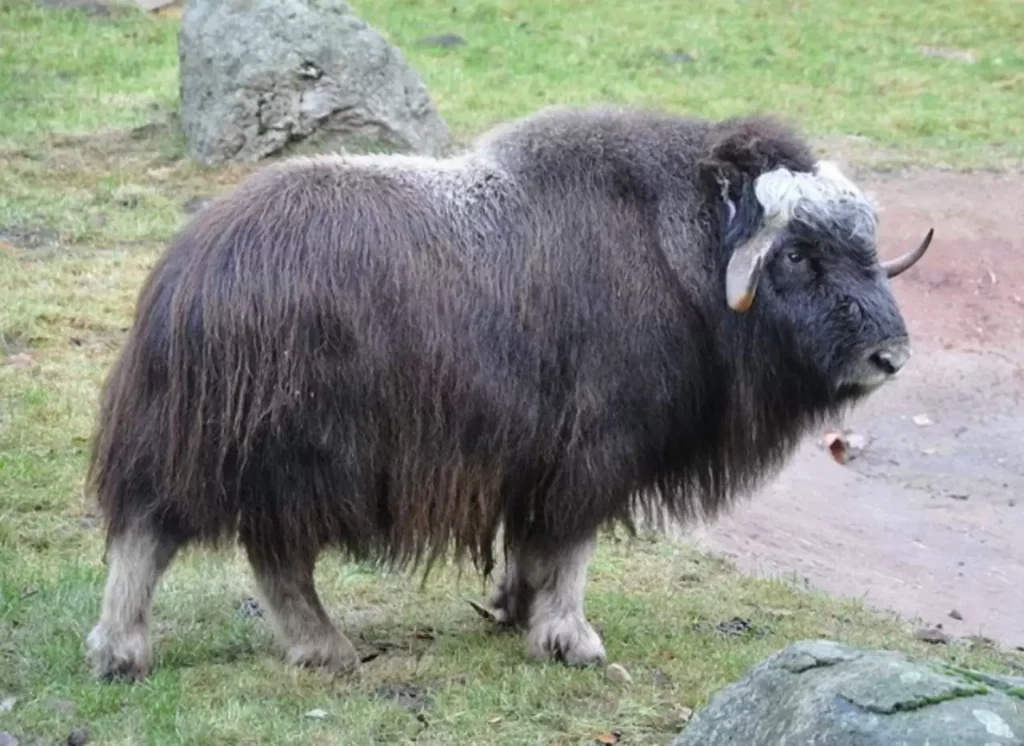
Although the calves are tiny and fluffy, they grow into powerful adults weighing between 400–600 kg (880–1,320 lbs). Adults have massive horns used for defense and dominance battles within the herd. Musk oxen are built for endurance in extreme cold, with short legs, compact bodies, and layers of fat to conserve heat.
Diet and Arctic Adaptations
Baby musk oxen start nursing immediately, and as they grow, they graze on grasses, mosses, lichens, and Arctic shrubs. Their hooves are perfectly adapted to dig through snow to reach food during long winters.
A Symbol of Resilience
The musk ox is a living reminder of resilience and survival, thriving in one of the planet’s most unforgiving landscapes. Beneath the layers of Arctic fluff, they embody the perfect mix of strength, social cooperation, and tenderness — a tiny calf today, a formidable Arctic survivor tomorrow.
Leave a Reply