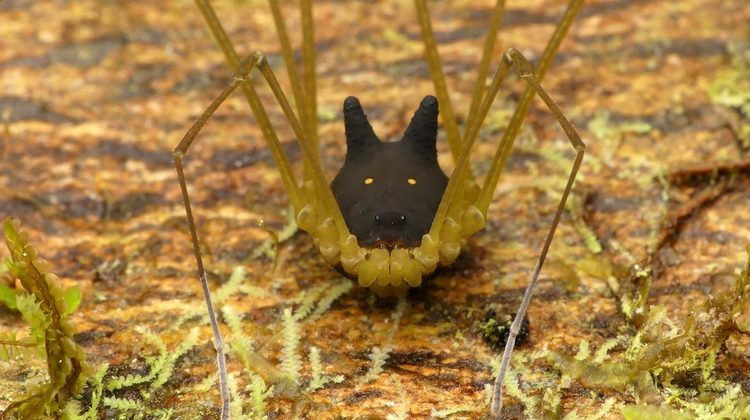
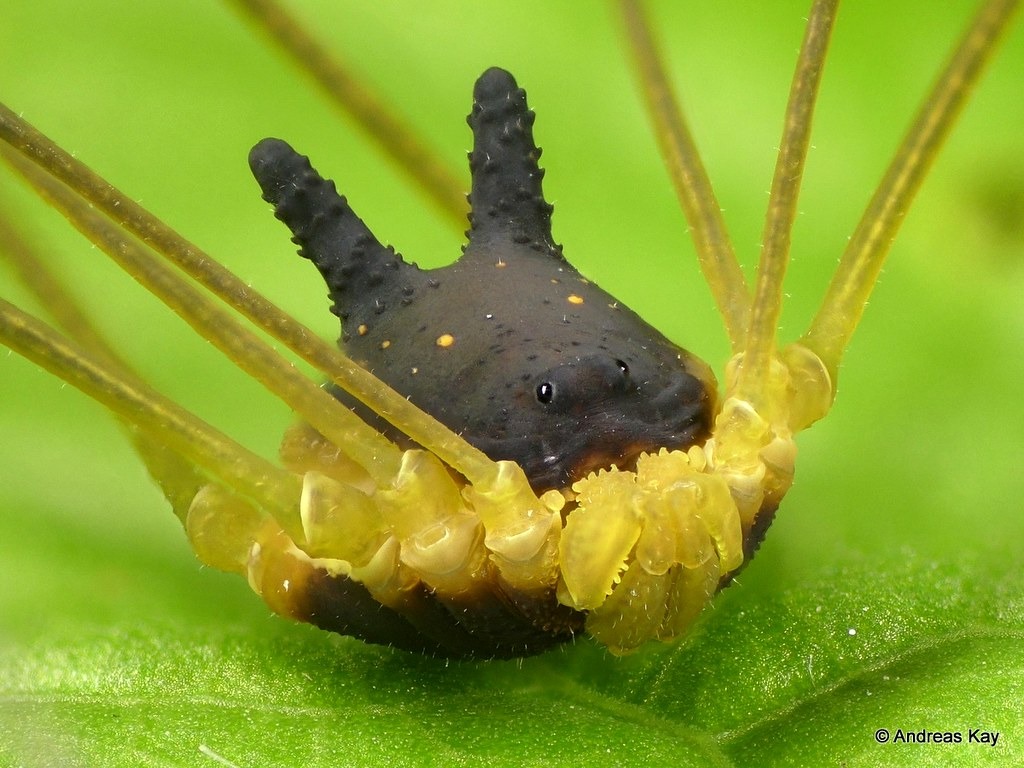
At first glance, it looks like someone glued a tiny black bunny’s head onto a set of spider legs. It isn’t a hoax, a costume, or an AI-generated image — it’s a real arachnid, and one of the more unexpectedly charming discoveries to come out of the Amazon.
Discovered in 1959, Made Famous Decades Later
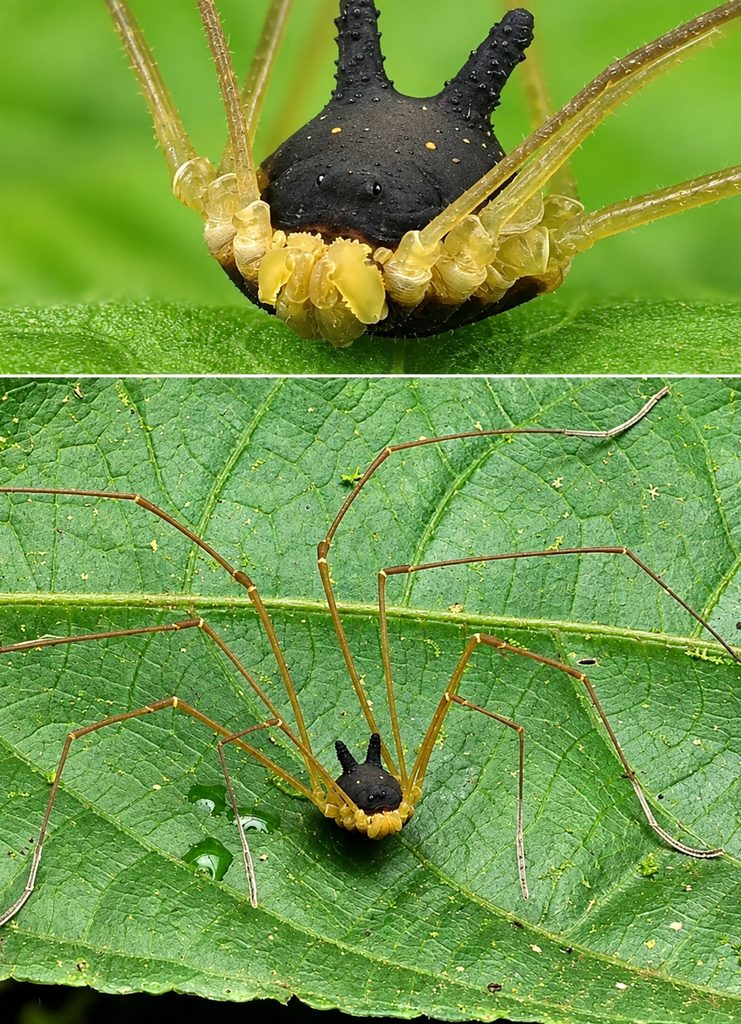
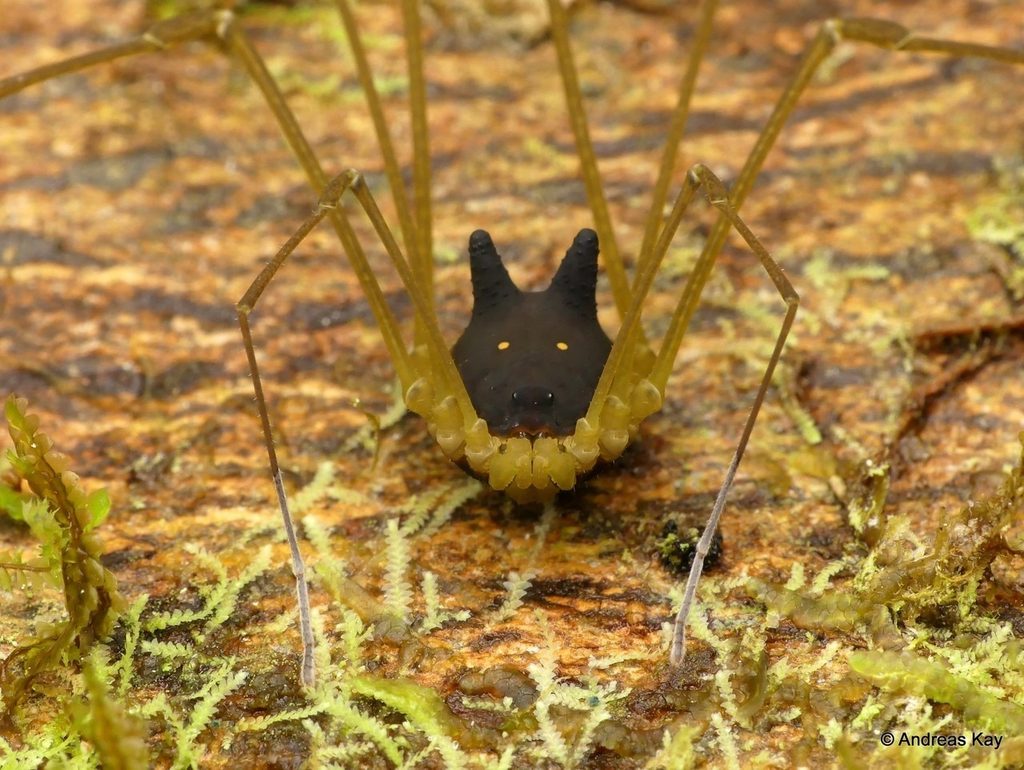
The bunny harvestman (Metagryne bicolumnata) was first formally described in 1959 by German arachnid specialist Carl Friedrich Roewer — a scientist responsible for identifying roughly a third of all currently known harvestman species worldwide. For decades it remained a scientific footnote, known mostly to specialists, until independent scientist and photographer Andreas Kay captured detailed photos and video of the species in eastern Ecuador’s Amazon rainforest in 2017, sending it viral practically overnight.
Not a Spider at All
Despite its eight legs, the bunny harvestman isn’t a spider — it belongs to the order Opiliones, commonly known as harvestmen or daddy longlegs, a group with more than 6,650 described species worldwide. Harvestmen are more closely related to scorpions than to true spiders, can’t produce silk, and — contrary to a common assumption — have no venom glands or fangs at all, making them completely harmless to humans.
The order has an extraordinary evolutionary pedigree: fossil evidence shows harvestmen have existed for at least 400 million years, meaning this tiny creature’s lineage predates the dinosaurs by a wide margin.
Why the Bunny Face?
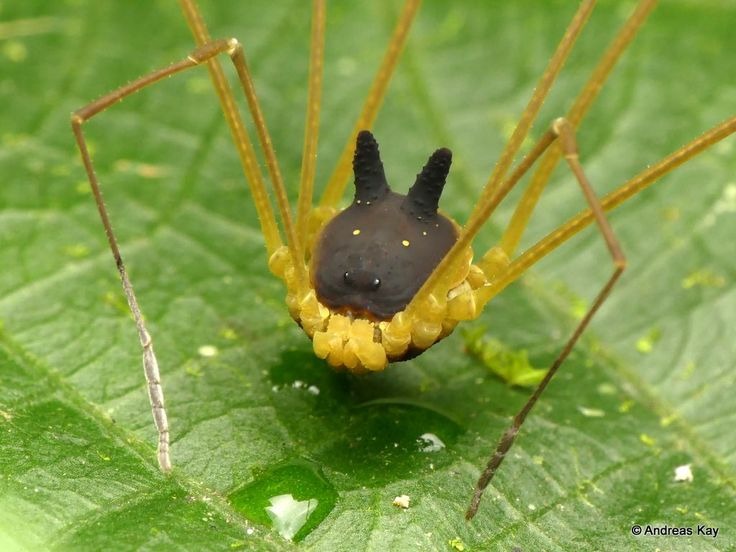
The bunny harvestman’s dark, rounded body features two upright protrusions resembling rabbit (or, depending who you ask, dog) ears, along with two bright yellow spots positioned exactly where a face’s eyes would be. Its actual eyes are located lower on its body, near what looks like the “nose” of the illusion.
Scientists still aren’t entirely certain why the species evolved this striking appearance. The leading hypothesis is that the exaggerated head shape and false “eyes” may help the harvestman appear larger or more intimidating to potential predators — but this remains unconfirmed, since the species hasn’t been extensively studied since its original description.
A Harmless Scavenger
Like most harvestmen, M. bicolumnata is a scavenger rather than an active hunter, feeding primarily on decomposing plant and animal matter, with occasional opportunistic predation. It’s genuinely tiny — smaller than an adult human’s thumbnail — and while harmless to people, it can display defensive behavior if directly provoked.
Why It’s Found Where It’s Found
Ecuador, where the species is documented, is recognized by Conservation International as one of the world’s 17 “megadiverse” countries, and holds the highest biodiversity per square kilometer of any nation on Earth — a distinction tied to its unique position spanning Amazon rainforest, Andean mountains, and the Galápagos Islands within a relatively small national footprint. That density of unstudied habitat is likely part of why an arachnid this visually striking went largely unnoticed by the wider public for nearly 60 years after its formal discovery.
Frequently Asked Questions
Is the bunny harvestman dangerous to humans? No — harvestmen lack venom glands and fangs entirely, making them harmless to people despite their unusual and somewhat startling appearance.
Is the bunny harvestman a type of spider? No — it belongs to the order Opiliones, a separate arachnid lineage from true spiders, and can be distinguished by its single fused body segment (spiders have two) and inability to produce silk.
Why did it take so long for the bunny harvestman to become well known? It was formally described back in 1959, but remained largely unknown outside specialist circles until detailed photographs taken by Andreas Kay in Ecuador’s Amazon rainforest went viral in 2017, decades after its initial discovery.
Sources: ScienceAlert, Newsweek, All That’s Interesting, and Oddity Central, cited above.
Leave a Reply