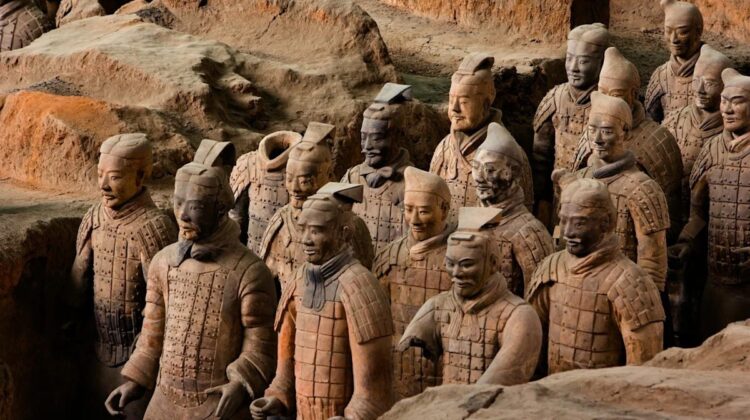
For more than 2,200 years, the clay soldiers of China’s first emperor have stood guard in silence. Now, tiny ridges pressed into their surfaces by long-dead hands are changing who we think made them: not only adult men, but also women and children.
Who Built the Terracotta Army?
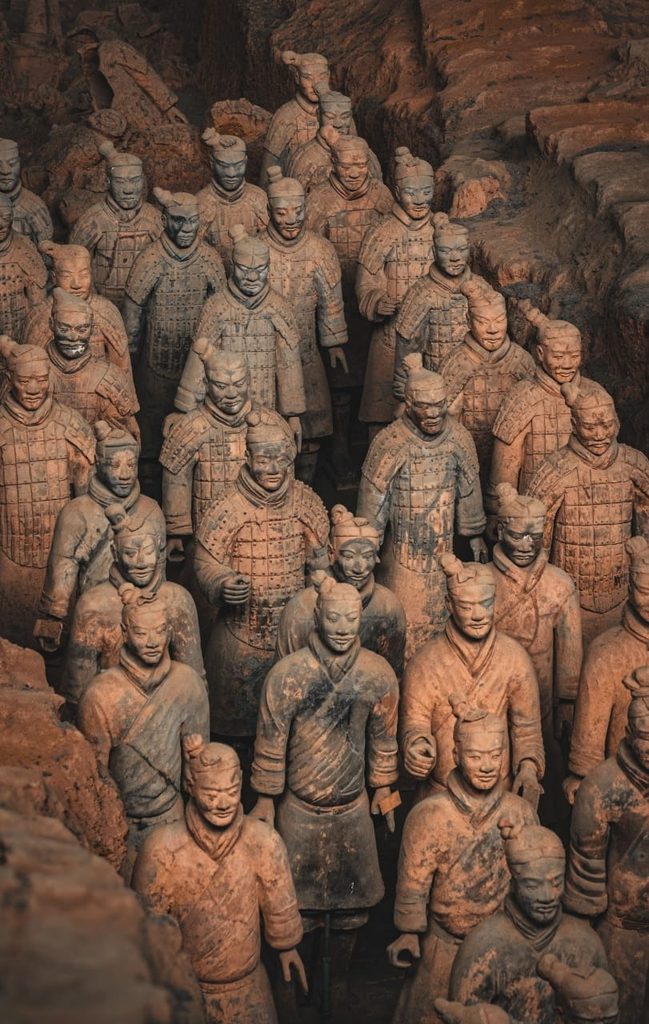
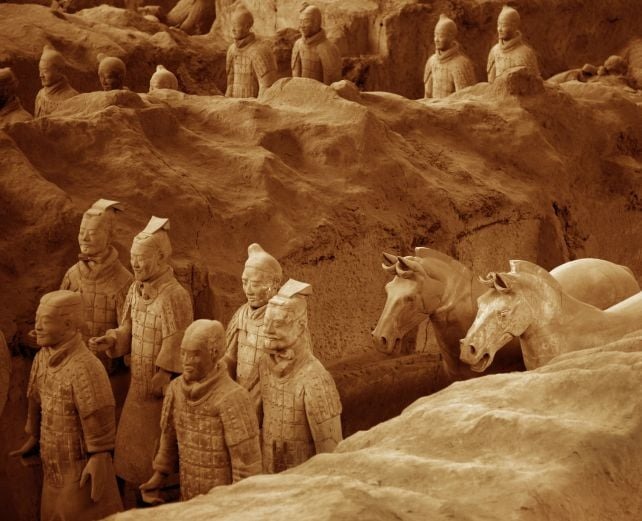
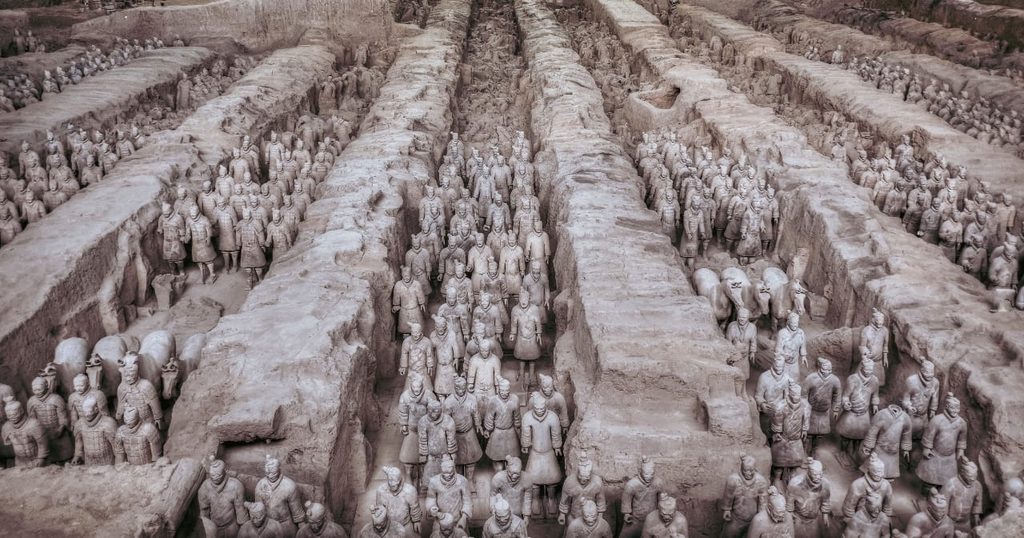
Emperor Qin Shihuang’s tomb complex holds roughly 8,000 life-sized warriors, along with 130 chariots pulled by 520 horses and another 150 cavalry horses. Building something on that scale took years of organized labor, and historians have long focused on how the Qin state pulled it off rather than on the individual workers.
What little was known came from workshop stamps, either the character for “Gong” (宫) or “Xianyang” (咸阳), and from differences in clay composition, which suggest different body parts were made in separate workshops. The people behind the work stayed anonymous. Scholars generally assumed they were adult men conscripted by the state, although lacquerware inscriptions from the same era mention women, boys and girls doing labor.
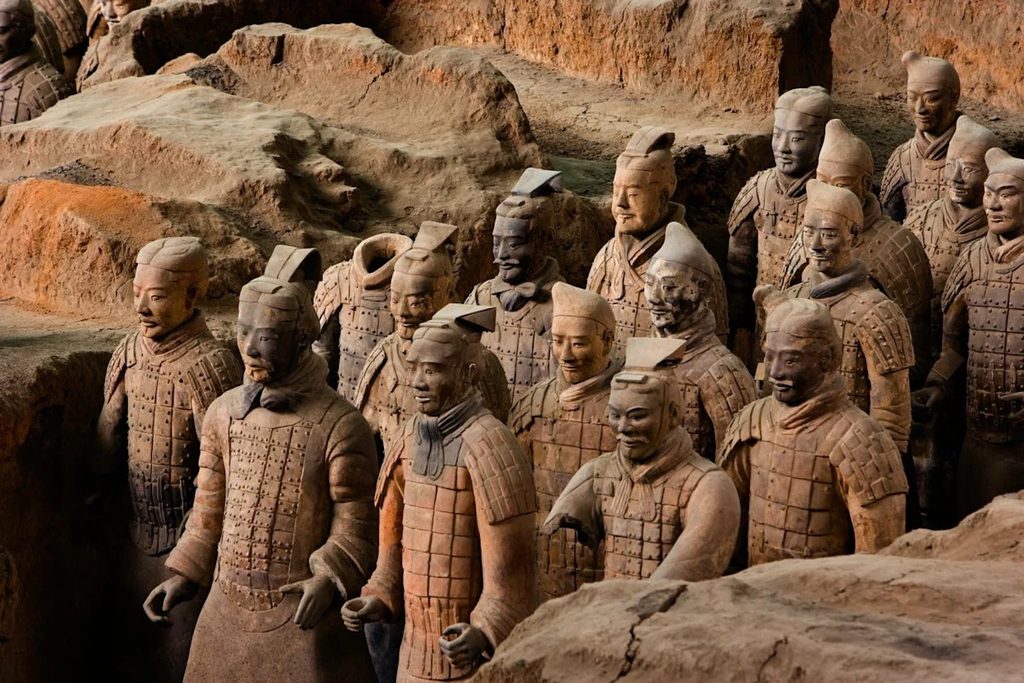
What the Fingerprints Show
A team led by archaeologist Xiaoxi Li of Emperor Qinshihuang’s Mausoleum Site Museum set out to test that assumption. Their study appeared in the Journal of Cultural Heritage. Earlier researchers had noticed fingerprints on the figures, but this team was the first to extract biological information from them.
The researchers worked on figures from a single excavation unit of the tomb complex. They photographed the prints, kept only the clear, undamaged ones, and digitally enhanced the images so the ridges could be measured. After removing duplicates from the same body part, they were left with 79 prints on 36 figures. Most were on heads and arms, likely left while those parts were being joined to the bodies. A few appeared on armor details such as rivets and waistbands.
How Ridge Spacing Hints at Age and Sex
The key clue was the distance between fingerprint ridges. Ridge spacing grows as the body grows, so narrower spacing points to younger hands, and it also tends to differ between adult men and women. Based on that measurement, the team estimated who left each print:
- About 45% appeared to come from adult men
- Nearly 33% appeared to come from adult women
- About 22% appeared to come from children under 15, the age of adulthood in Qin China
The children may have been apprentices learning the craft. Surviving Qin legal manuscripts describe how long new apprentices had to train before being recognized as skilled artisans, which fits that reading.
In the researchers’ words, the work gives the first quantitative biological evidence of a more diverse workforce than previously assumed.
What We Still Don’t Know
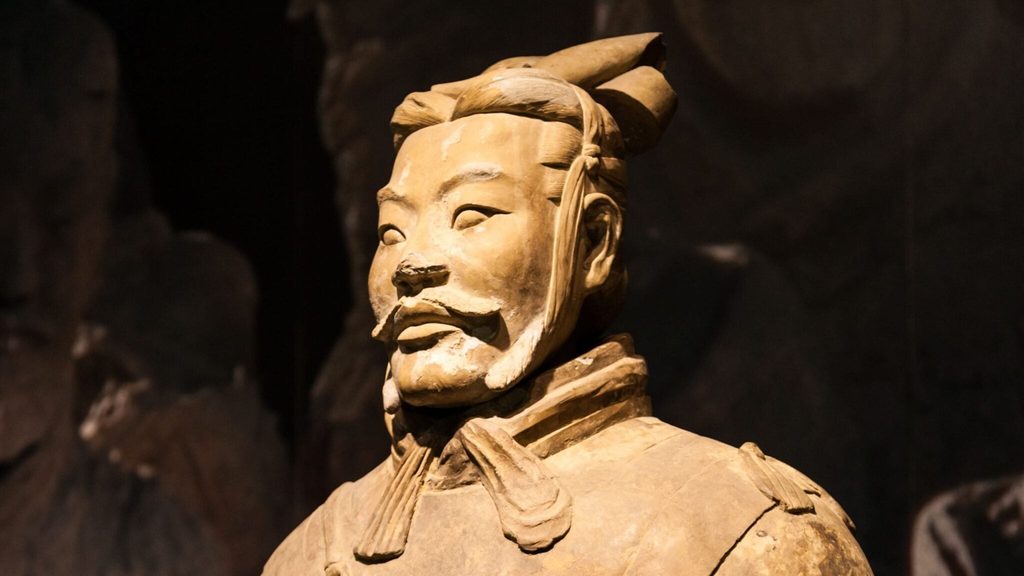
The authors are open about the limits of the method. Some prints could belong either to a boy or to an adult woman. Clay shrinks as it dries and is fired, so the prints may have shrunk too, though by how much is unclear. Only a small share of the army was examined, so the 45/33/22 split may not hold for the rest of the statues, which took over a decade to complete.
Another possibility is that less experienced workers were simply more likely to forget to smooth the clay after attaching heads and arms, leaving more prints behind. In other words, the numbers show who left marks, not necessarily who did the most work.
Why This Discovery Matters
The finding adds a human layer to one of the world’s best-known archaeological sites. It also shows that a technique as simple as measuring fingerprint ridges can answer questions that decades of excavation could not, and archaeologists can now apply it to other ancient pottery and craft traditions. Studying the remaining statues should show whether this mix of workers was typical or limited to one workshop.
Planning a Visit to the Terracotta Army
The site lies near the city of Xi’an in China’s Shaanxi province, and it remains one of the country’s most visited historical attractions. If seeing the figures in person is on your list:
- Book museum tickets in advance. Check the official museum website for current entry rules and opening hours.
- Compare Terracotta Army tours from Xi’an. Guided tours often include transport and an expert who can explain the excavation pits.
- Get travel insurance for international trips. It can cover cancellations, medical costs and lost luggage.
- Pack a camera with good low-light performance. The exhibition halls are large and dimly lit.
- Read first. Books and documentaries on Qin Shihuang and the tomb complex make the visit far more meaningful.
Frequently Asked Questions
Who made the Terracotta Army? Craftspeople working in state workshops under the first emperor. The new study suggests they included adult men, adult women and children.
How can fingerprints show age and sex? Ridge spacing widens as a person grows, so narrower spacing suggests a younger person. Spacing also tends to differ between men and women.
How many fingerprints were analyzed? The team studied 79 usable prints on 36 figures from a single excavation unit.
Does this prove women and children made most of the statues? No. The sample is small, and the authors say more statues must be studied before drawing broader conclusions.
Sources: Popular Mechanics, Journal of Cultural Heritage, Smithsonian Magazine
Leave a Reply