
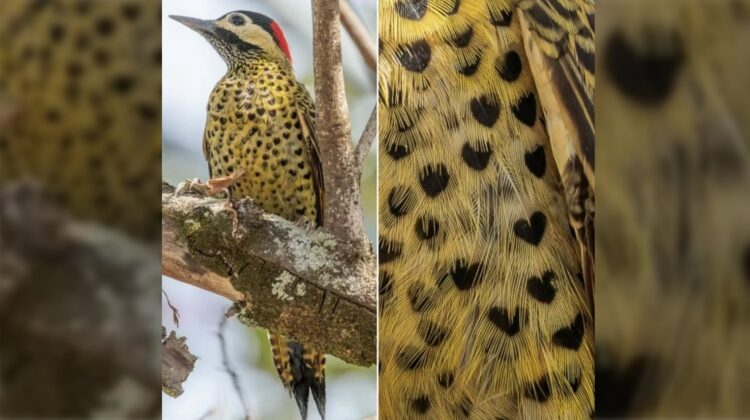
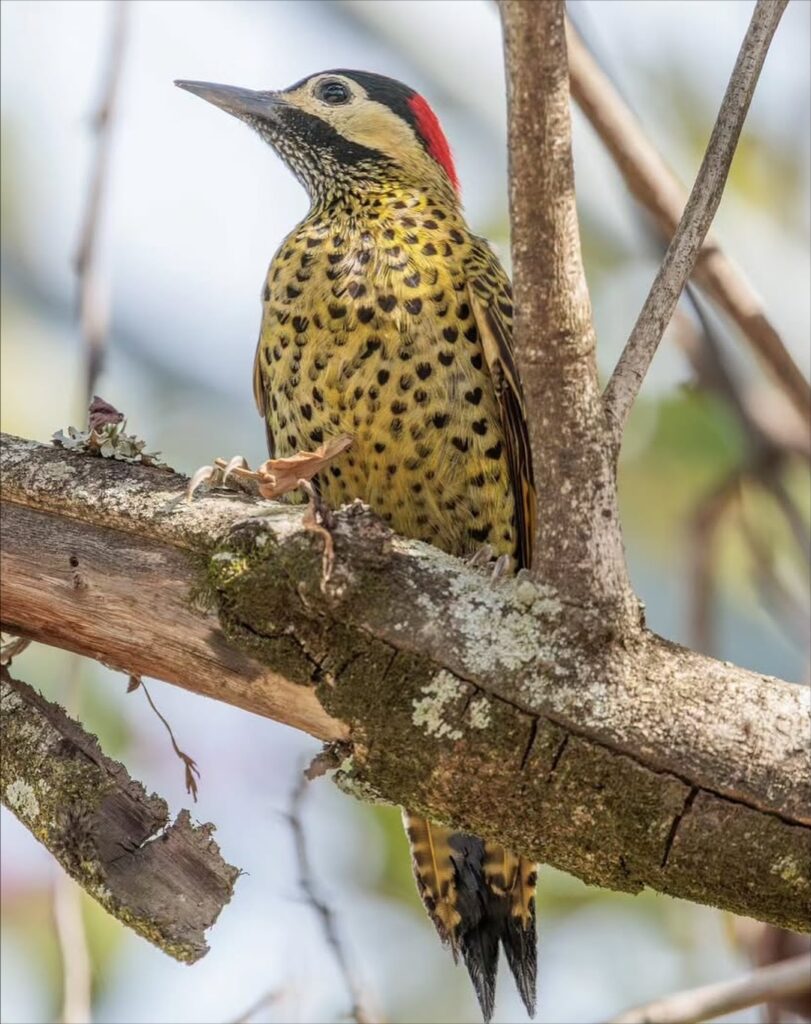
A photographer’s lens captures a rare moment: a golden-toned woodpecker whose feathers appear to carry delicate, heart-shaped markings—an accidental masterpiece shaped by evolution.
The Green-barred Woodpecker (Colaptes melanochloros) is a striking bird native to South America, commonly found across Brazil, Argentina, Paraguay, and Uruguay. It thrives in open woodlands, forest edges, savannas, and even human-modified landscapes such as gardens and farmland, demonstrating an impressive ability to adapt.
Unlike many woodpecker species that cling to tree trunks, this bird spends a significant amount of time on the ground, where it forages primarily for ants and termites. Its feeding behavior sets it apart and reflects a more flexible lifestyle than the typical tree-dependent woodpecker.
Visually, the species is unmistakable. It features olive-green wings, a black-and-white barred underside, and strong contrast across its plumage. Males are distinguished by a bright red crown, while females display darker, more muted head markings. Rather than announcing its presence through loud drumming, the Green-barred Woodpecker is more often detected by its sharp, piercing calls echoing through open landscapes.
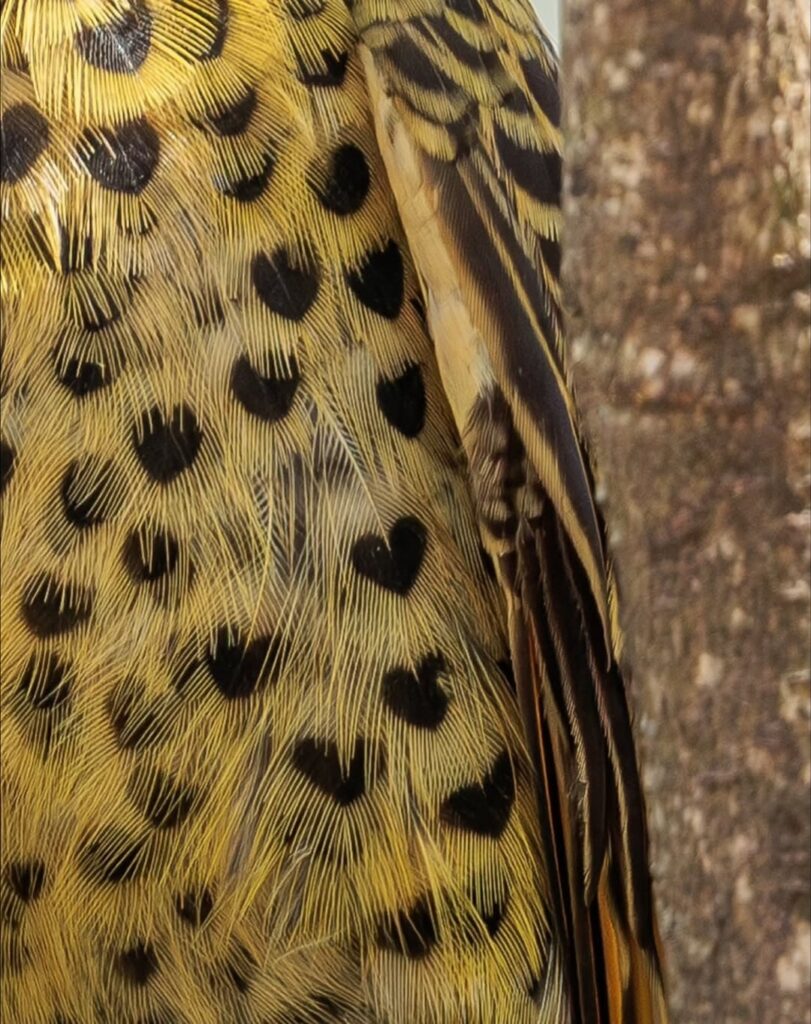
Moments like this—when light, pattern, and movement align—remind us that wildlife photography is not just about rarity, but about revealing the quiet beauty hidden in familiar species.
📷 Via: @fotografandocomfelipe
Why Birds Like the Green-barred Woodpecker Matter
Ground-foraging woodpeckers play a crucial role in controlling insect populations, particularly ants and termites, helping maintain ecological balance. Their adaptability to changing environments also makes them important indicators of how wildlife responds to habitat fragmentation and human expansion. Protecting diverse bird species ensures healthier ecosystems and preserves the subtle natural artistry that often goes unnoticed.
Leave a Reply