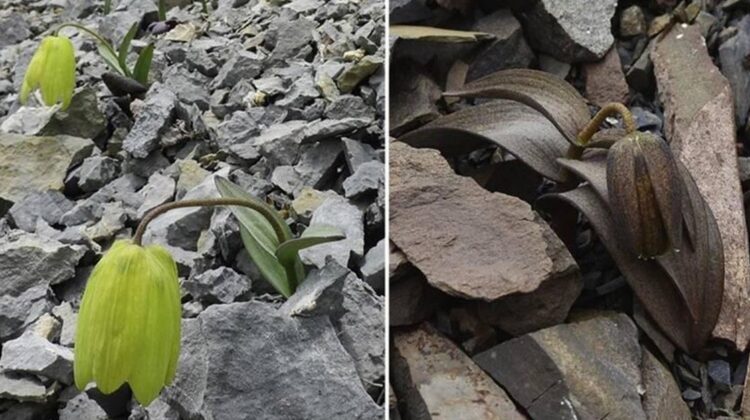
The vivid green blossom of Fritillaria delavayi has been known to humans for almost 2,000 years, and it has been gathered for therapeutic uses. It is now becoming brown in order to blend in with people.
Many types of flowering plants, adorned with vibrantly colored petals and evocative smells, expend a lot of effort to stand out and grab the attention of pedestrians – largely insects, of course. However, avoiding unwelcome attention has proven to be a more effective survival strategy for one hillside-growing plant that has traditionally been picked in China to manufacture traditional medicine.
The plant Fritillaria delavayi has evolved to become less apparent to people, according to a recent study published in the journal Current Biology. This suggests that humans are driving the species’ color shift since camouflaged plants have a greater chance of surviving.
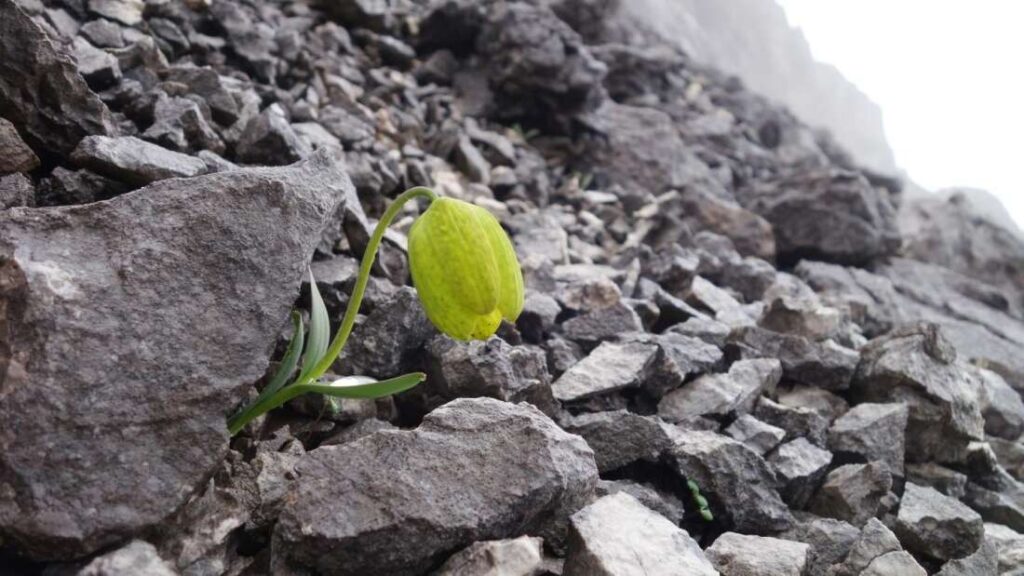
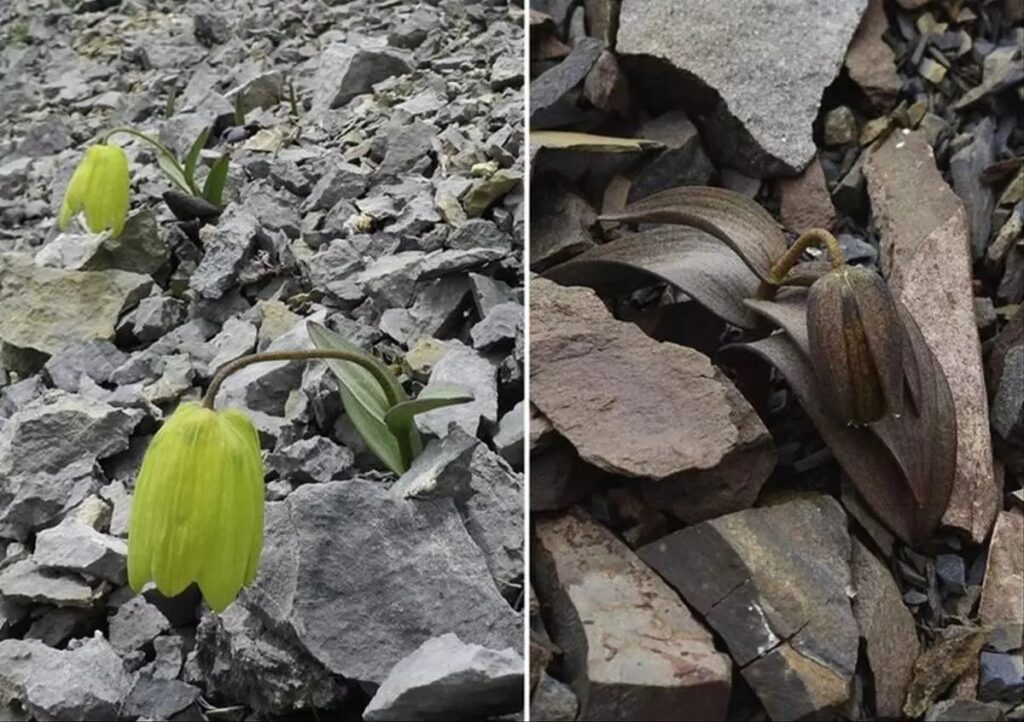
After its fifth year of existence, the plant usually blooms with a bright green blossom. However, under the strain of people harvesting the plants for traditional Chinese medicine, the researchers discovered that certain populations of the plant are progressively losing its vibrant mature colour in favor of a more faint hue that blends in with their rocky environment.
“Like other camouflaged plants we’ve investigated, we assumed herbivores were driving the development of camouflage in this fritillary, but we didn’t locate any.” “Then we concluded people may be the cause,” Yang Niu, one of the study’s co-authors, said.

“Many plants appear to employ camouflage to hide from animals that may consume them – but here we show camouflage developing in response to human collectors,” said Professor Martin Stevens of the University of Exeter’s Centre for Ecology and Conservation in a statement.
“It’s amazing to observe how people can have such a direct and dramatic influence on wild species’ colouring, not only on their survival but on their development,” he said. “Humans may have influenced the evolution of defensive tactics in other plant species, but surprisingly little study has looked into this.”
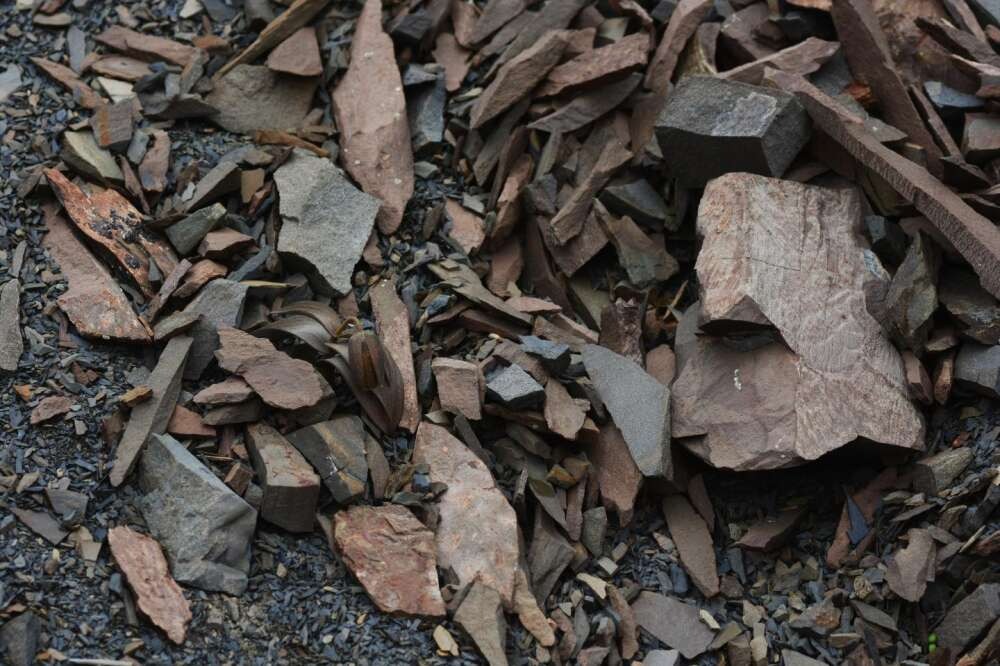
According to a new study undertaken by experts from China’s Kunming Institute of Botany and the University of Exeter, the amount of camouflage in these plants was closely tied to the extent to which they were harvested in a certain location.
Fritillaria delavayi, which grows on the steep hillsides of China’s Hengduan highlands, has long been regarded as a cure-all for coughs and other respiratory ailments. The plant has been extensively collected as a result of its alleged medical advantages, with a recent spike in demand for the plant’s prized bulbs.
Researchers researched the plant’s color shift by chatting with locals about the most heavily picked locations where the plant flourished. Then they looked at records from the previous five years that calculated the annual weight of bulbs collected. The green-petaled plants were far simpler to recognize by collectors than the grey-brown variety, especially against the rocky background, according to a computer-based investigation.
The example of this plant demonstrates how human activities may influence the development of diverse species in subtle ways. Unfortunately, this entails the loss of our world’s vibrancy, as well as the extinction of even more of those species.