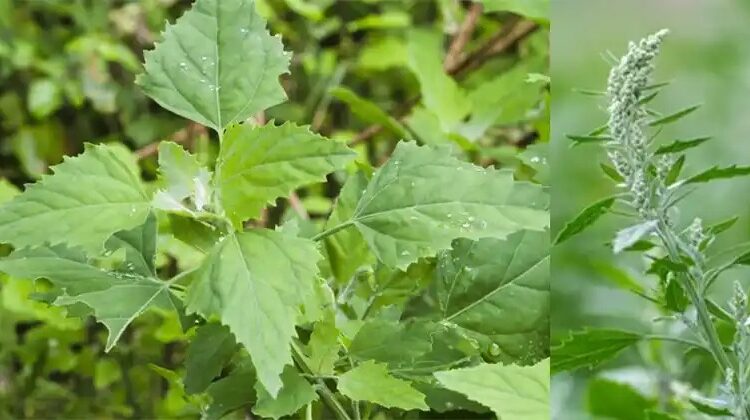
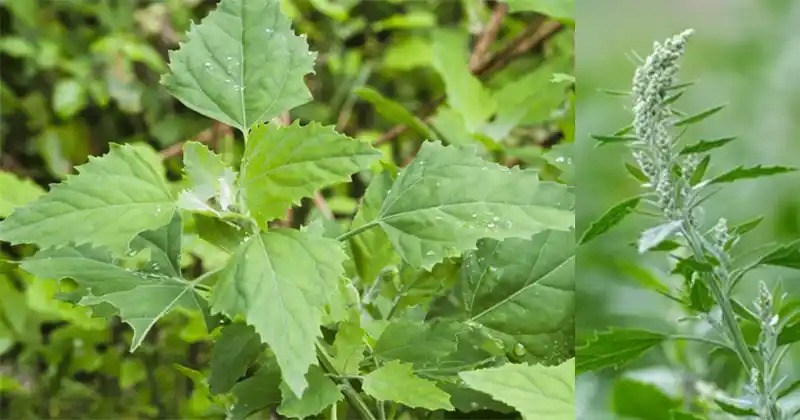
Most people who find Lamb’s Quarters growing in their garden pull it out without a second thought. It looks unremarkable — pale green, diamond-shaped leaves, a faint white dusting underneath — the kind of plant most weeding guides tell you to remove on sight. But Lamb’s Quarters (Chenopodium album), also known as wild spinach, goosefoot, or fat hen, has a nutritional profile that rivals — and in several respects exceeds — the spinach most of us buy at the store.
It isn’t a new discovery. Archaeological evidence shows the seeds were eaten by Indigenous peoples in North America centuries before European settlers arrived, and dried seed remains have turned up at Stone Age sites and even in the stomach of a 2,000-year-old bog mummy found in Denmark. During food shortages in parts of Europe during World War II, the old tradition of cooking Lamb’s Quarters as a vegetable was revived out of necessity. What’s changed is that it’s now being rediscovered for reasons that have nothing to do with scarcity.
What’s Actually in It
Nutrition data on Lamb’s Quarters varies a bit by source and growing conditions, but the pattern is consistent across every analysis: this plant is unusually dense in nutrients for a leafy green.
- Vitamins A, C, and K — cooked Lamb’s Quarters is exceptionally high in all three, supporting vision, immune function, and normal blood clotting.
- Calcium and iron — gram for gram, it contains more of both than raw cabbage, and its iron and protein content have been measured as higher than spinach in several nutritional analyses.
- B-complex vitamins, including folate and thiamine, involved in energy metabolism.
- Protein and fiber — a relatively high amount for a leafy green, including a full set of essential amino acids, which is part of why it’s drawn interest as a plant-based protein source.
- Antioxidant compounds, including flavonoids like quercetin and kaempferol, which help the body manage oxidative stress.
Some sources note it can help support healthy blood sugar levels and general immune and digestive function as part of a balanced diet — though it isn’t a treatment for diabetes, arthritis, or any other medical condition, and anyone managing a chronic illness should talk to a doctor or dietitian before relying on it for that purpose.
A Few Things to Know Before You Forage It
Lamb’s Quarters is generally considered safe to eat in normal food amounts, but there are a few real precautions worth knowing:
- It contains oxalic acid, like spinach and chard. People prone to kidney stones or on an oxalate-restricted diet should eat it in moderation, the same way they would spinach.
- It readily absorbs nitrates from soil, so avoid harvesting it from roadsides, industrial areas, or heavily fertilized lawns.
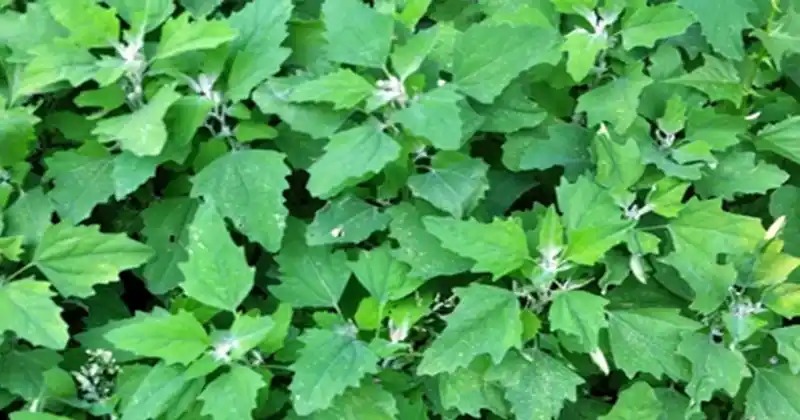
- Correct identification matters. Lamb’s Quarters has some toxic look-alikes in the same broader plant family. If you’re foraging rather than buying it at a market, cross-check with a reliable plant identification guide or forage with someone experienced before eating anything you’ve picked yourself.
How to Cook With It
Lamb’s Quarters tastes close to spinach — mild, slightly earthy, with a hint of something closer to green peas. It works almost anywhere spinach or chard would:
- Raw in salads, when the leaves are young and tender.
- Blended into smoothies, where its flavor mostly disappears alongside fruit.
- Sautéed with garlic and olive oil as a simple side dish, the way you’d cook any leafy green.
- Stirred into soups and stews, where it adds body along with nutrients.
- Swapped in for basil in pesto, blended with garlic, nuts, and Parmesan.
- Folded into quiches or frittatas, where its mild flavor blends easily with eggs and cheese.
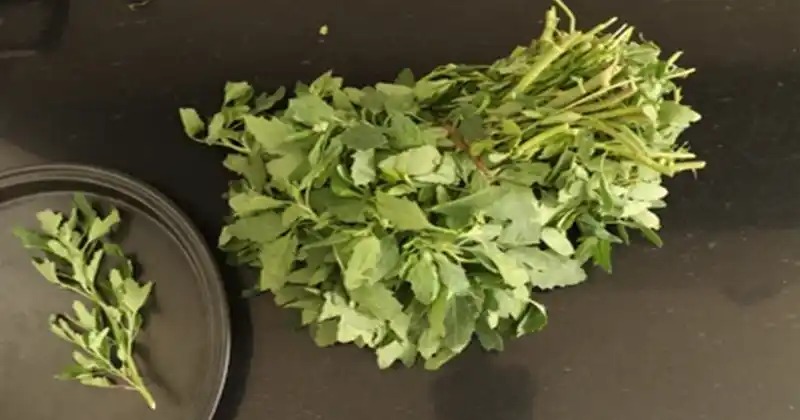
For longer storage, the leaves can be blanched and frozen, or dried and crumbled into soups later — a practical way to keep a supply on hand well past growing season.
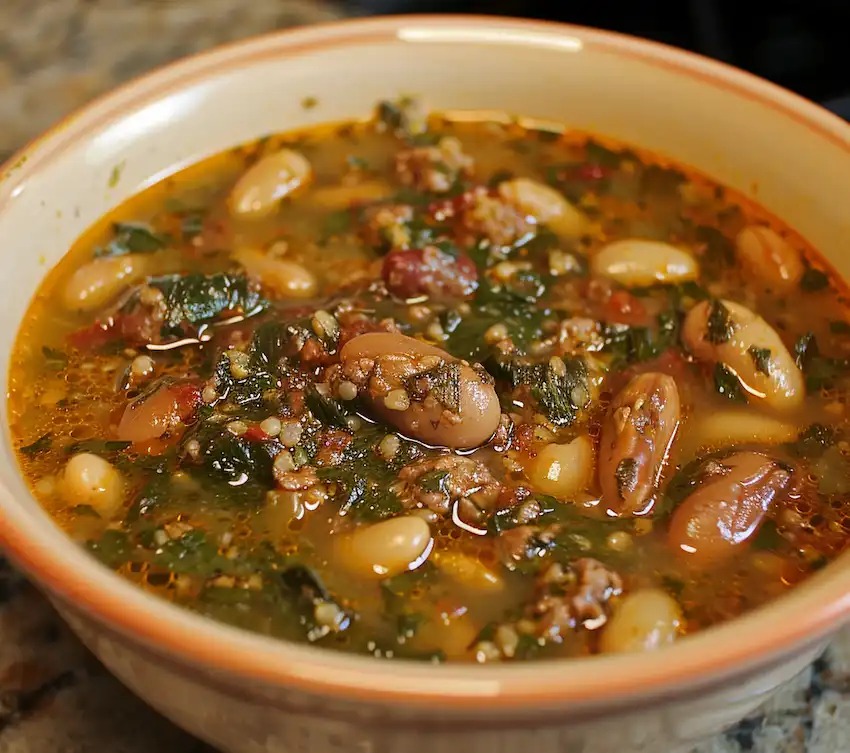
A Simple Recipe: Lamb’s Quarters and White Bean Soup
Ingredients: 2 tbsp olive oil, 1 chopped onion, 2 minced garlic cloves, 1 diced carrot, 1 diced celery stalk, 1 cup chopped Lamb’s Quarters, 4 cups vegetable broth, 1 can (15 oz) white beans (drained and rinsed), salt and pepper to taste, grated Parmesan (optional).
Method: Sauté the onion, garlic, carrot, and celery in olive oil for about 5 minutes until softened. Add the Lamb’s Quarters and cook for 2–3 minutes until wilted. Pour in the broth, bring to a boil, then reduce heat and simmer for 10 minutes. Stir in the white beans and heat through for another 5 minutes. Season to taste and serve with Parmesan if desired.
Frequently Asked Questions
Is Lamb’s Quarters actually a weed? Botanically, yes — it’s classified as a common weed and grows readily in disturbed soil, gardens, and farmland. That classification is about where it grows, not its nutritional value.
Does it taste like spinach? Very close. Most people describe it as milder than spinach, with a slightly nutty, earthy flavor.
Can I eat the seeds too? Yes — the seeds are edible and were historically ground into flour, similar to quinoa (a relative in the same plant family). They’re small, so harvesting a useful quantity takes some patience.
Is it safe for everyone to eat? In normal food amounts, it’s considered safe for most people. Those with kidney stone history, oxalate sensitivity, or a medical condition affecting diet should check with a healthcare provider first, the same precaution that applies to spinach and other oxalate-containing greens.
The Bottom Line
Lamb’s Quarters isn’t a trendy new superfood — it’s an old, overlooked one that never needed rebranding, just recognition. For anyone willing to look past its reputation as a weed, it offers a nutrient density that’s hard to match from a plant most people are actively trying to remove from their yard.
Sources consulted: Project Food Forest, Permaculture Project “Plant of the Month” series, Herbal Resource, and general nutritional-composition data on Chenopodium album.
Leave a Reply