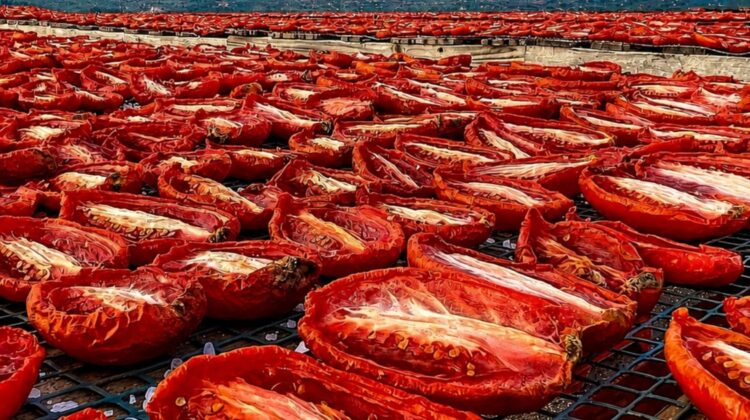
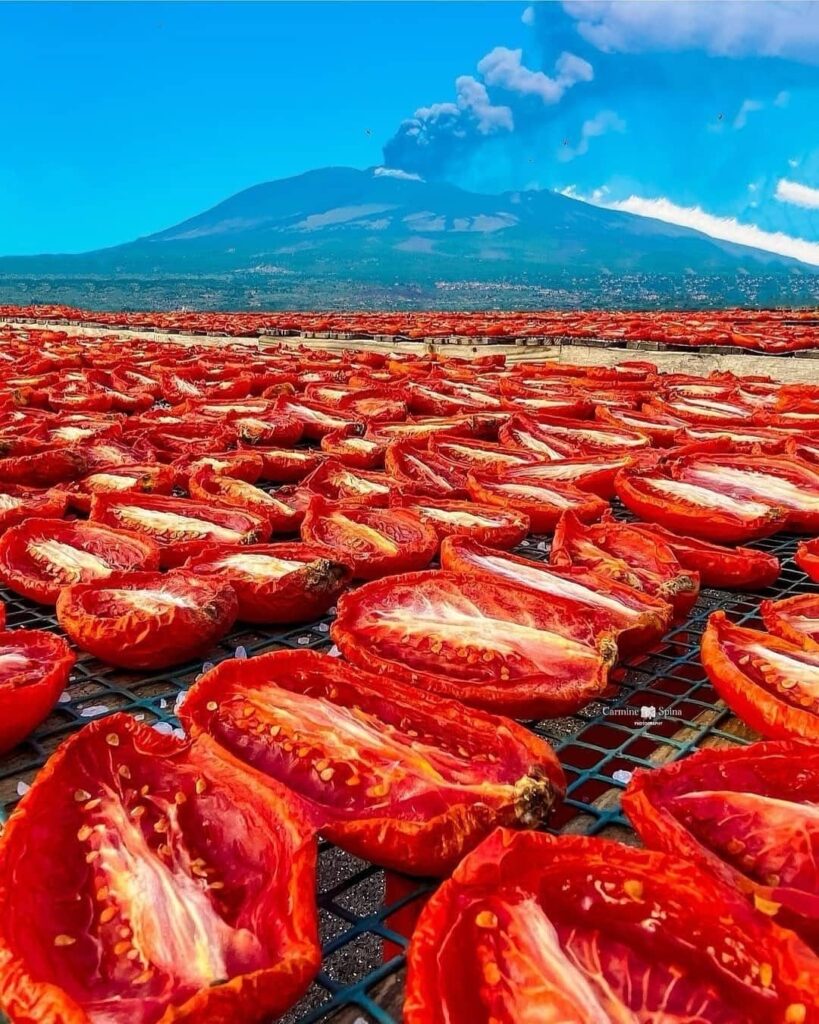
At the foot of Mount Etna — Europe’s largest and most active volcano — thousands of tomatoes lie split open under the Sicilian sun, drying in neat rows that stretch toward the horizon. In the background, Etna quietly vents a plume of ash and steam, a reminder that this fertile farmland sits in the shadow of a volcano that has erupted more than 190 times in the past 10,000 years.
Why Farmers Grow Tomatoes on an Active Volcano
It might seem risky to farm so close to a volcano that erupts almost continuously, but Etna’s slopes are some of the most fertile farmland in Europe. Centuries of lava flows have broken down into mineral-rich volcanic soil, packed with potassium, phosphorus, and trace elements that vegetables — especially tomatoes — thrive on. Local producers, such as small family operations in the Catania region, have farmed these volcanic soils for generations, long before anyone thought to package the tomatoes for export.
The Traditional Sun-Drying Process
Sun-drying tomatoes is an old Sicilian preservation method that predates refrigeration by centuries. The process typically follows a few key steps:
- Halving and salting — ripe plum or cherry tomatoes are cut in half and lightly salted to draw out moisture and concentrate flavor.
- Laying out in full sun — the tomatoes are spread cut-side up on mesh racks or nets, which allow air to circulate underneath as they dry.
- Days in the sun — depending on humidity and heat, tomatoes can take anywhere from several days to over a week to fully dry, and farmers often bring them in at night to protect against dew.
- Preserving in oil — once dried, the tomatoes are frequently packed in olive oil with garlic, chili, or herbs like oregano and basil, a method that both preserves them and infuses them with flavor.
A Landscape Shaped by Fire
Etna’s volcanic activity isn’t just a dramatic backdrop — it’s the reason this land is so productive in the first place. Volcanic ash deposited over thousands of years has created some of the darkest, most mineral-dense soil in the Mediterranean. Farmers here have learned to read the mountain’s moods, working the land between eruptions that rarely threaten populated areas but occasionally send ash drifting over the very fields being farmed.
Frequently Asked Questions
Is it safe to grow food near an active volcano like Etna? Yes — Etna’s eruptions are typically effusive (slow-moving lava) rather than explosive, and its frequent activity rarely endangers nearby farmland or towns, which is part of why agriculture has flourished on its slopes for centuries.
Why does volcanic soil produce better crops? Volcanic soil is naturally rich in minerals like potassium and phosphorus that break down from weathered lava rock over time, giving crops grown in it a reputation for intense flavor — a quality Sicilian tomatoes, in particular, are known for.
How long does it take to sun-dry tomatoes? It varies with weather, but most traditional methods take anywhere from 5 to 10 days of consistent sun exposure, with tomatoes typically brought indoors overnight.
Leave a Reply