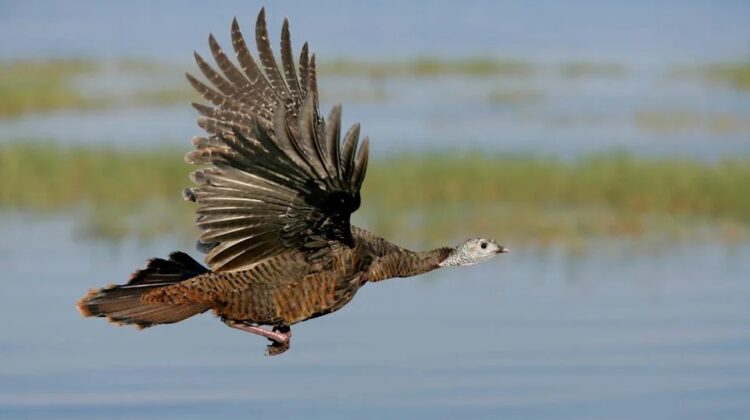
Turkeys are best known as plump, ground-strutting birds, so it’s easy to assume they’re stuck on the ground. The truth is more interesting. Wild turkeys can fly, and quite well over short distances, while the turkeys raised on farms generally cannot. Here is why.
Can Wild Turkeys Fly?
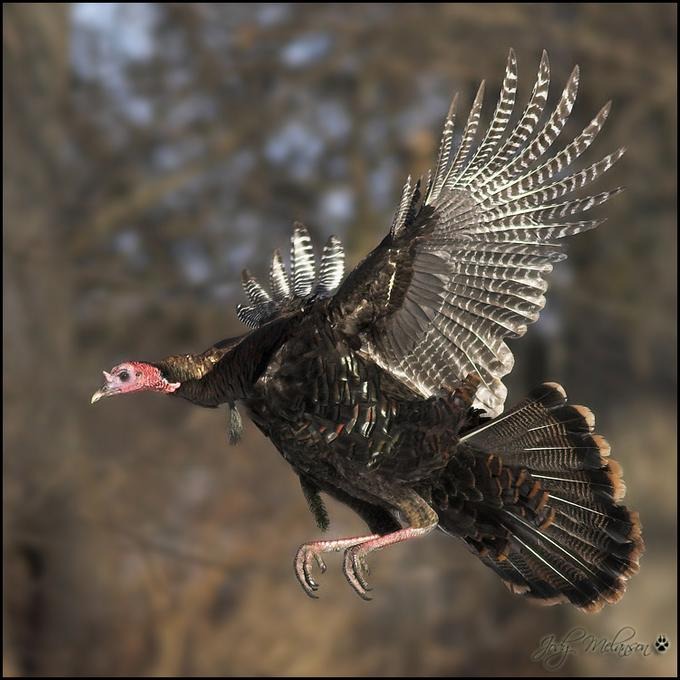
Yes. The wild turkey (Meleagris gallopavo) spends most of its time walking and foraging on the ground, but it is fully capable of flight. Flying is an important survival tool: when predators such as coyotes, foxes or bobcats approach, a turkey can burst into the air and get out of reach.
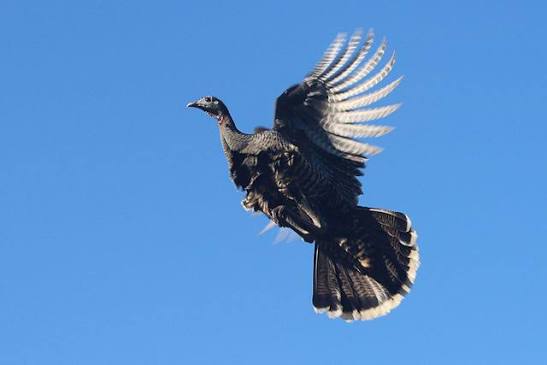
Wild turkeys also use flight at the end of the day. They typically fly up into tree branches to roost overnight, which keeps them away from ground-dwelling predators.
Why You Rarely See Them Soar Long Distances
Unlike geese and ducks, wild turkeys don’t migrate for the winter, so they have little need to fly for long distances. Their flight is built for short, explosive trips: getting out of danger, flying into a tree or crossing an obstacle.
How Fast and How Far Can Turkeys Fly?
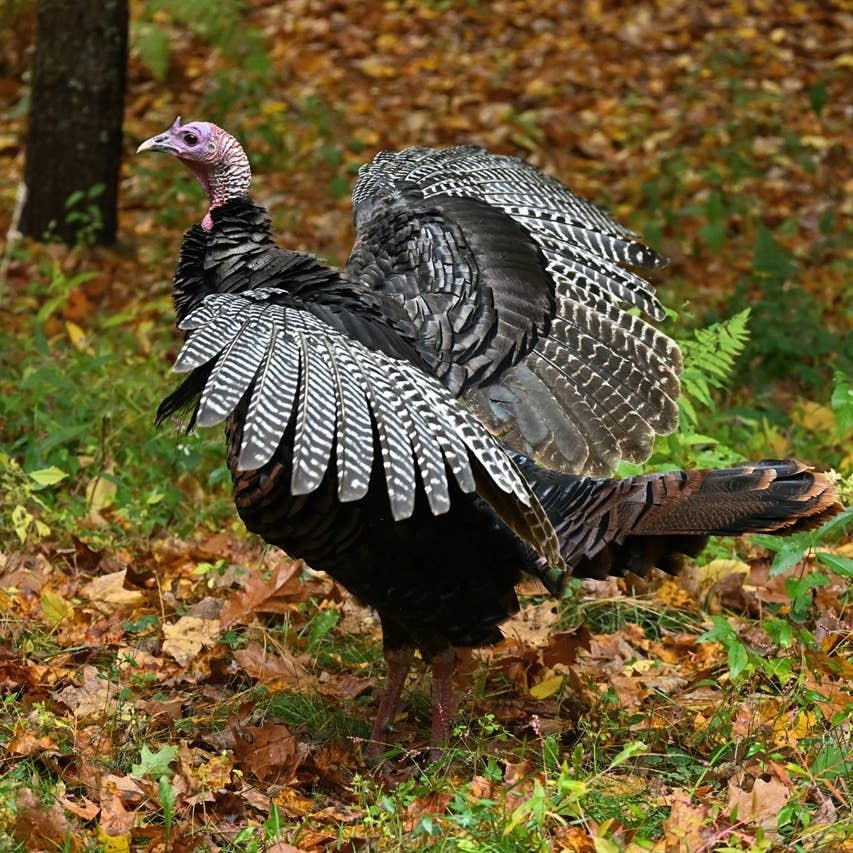
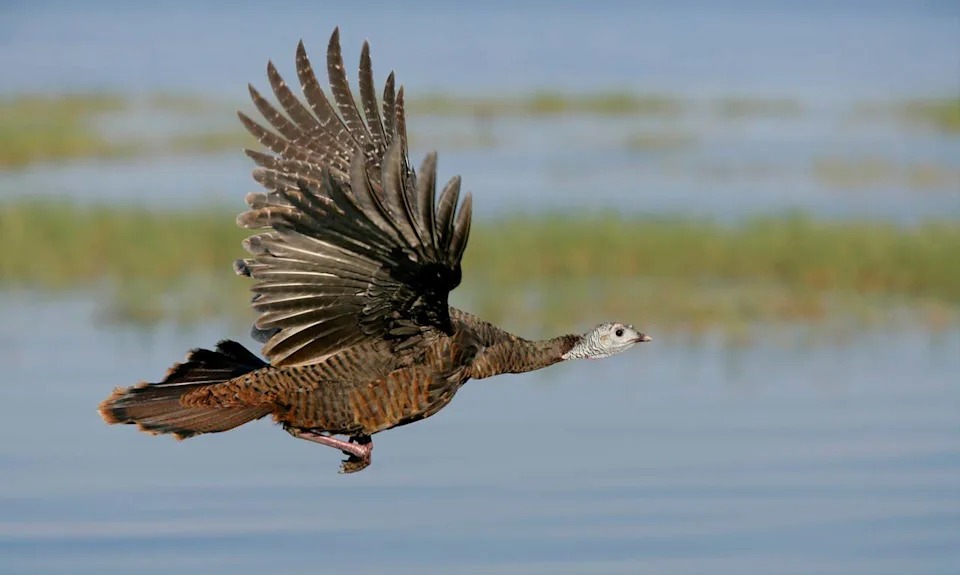
Estimates vary by source and conditions, but wild turkeys are commonly reported to reach speeds of roughly 40 to 55 miles per hour in short bursts. These flights are usually brief, covering around a quarter of a mile at a time.
Some sources also describe wild turkeys as capable gliders, able to coast for a considerable distance without flapping once they have built up momentum. Exact figures differ, so it is best to treat all of these numbers as approximate rather than precise.
Why Can’t Domestic Turkeys Fly?
Farm-raised turkeys descend from wild turkeys, but they have been selectively bred for size, especially for large breast muscles. That change has a big effect on their ability to fly:
- Young poults can fly briefly. Domestic turkey chicks can make short flights during their first weeks of life.
- Growth changes everything. As they mature, their bodies become much heavier, particularly in the breast.
- Power-to-weight drops. An adult domestic turkey can’t flap hard or fast enough to lift its body off the ground.
Some heavy birds, like the kori bustard, can still fly, but the extreme body composition of modern domestic turkeys prevents it. Since they live on farms and don’t face wild predators, they don’t need to escape in the same way their wild relatives do.
Wild vs. Domestic Turkeys at a Glance
- Flight: Wild turkeys fly in short bursts; adult domestic turkeys generally can’t fly.
- Habitat: Wild turkeys live in woodlands and fields; domestic turkeys live on farms.
- Roosting: Wild turkeys sleep in trees; domestic turkeys stay on the ground or in barns.
- Body shape: Wild turkeys are leaner; domestic turkeys are bred to be much heavier.
What This Article Doesn’t Cover
Turkey flight speeds, distances and glide lengths vary between sources, and individual birds differ by age, size and conditions. Treat the figures above as general estimates. Details can also differ between wild turkey subspecies and regions.
How to Watch Wild Turkeys Respectfully
- Keep your distance. Observe from afar with binoculars rather than approaching.
- Don’t feed them. Feeding wild turkeys can make them lose their natural wariness and sometimes lead to conflicts with people.
- Look at dusk and dawn. These are good times to spot them feeding or heading to roost.
- Use a field guide. A bird identification field guide helps you learn their habits and calls.
- Capture the moment. A wildlife photography camera with a zoom lens lets you take photos without disturbing them.
- Try trail cameras. Wildlife trail cameras can show you what visits your property.
Support Birds and Wildlife
If you enjoy learning about birds, here are ways to help:
- Support conservation. Compare wildlife conservation donations, bird conservation organizations and habitat restoration programs.
- Welcome birds to your yard. Browse backyard bird feeders, native plants for birds and bird baths.
- Visit natural areas. Look into wildlife refuge visits, birdwatching tours and national park passes.
Frequently Asked Questions
Can turkeys fly? Wild turkeys can, in short bursts. Adult domestic turkeys generally cannot.
How fast can wild turkeys fly? They are commonly reported to reach roughly 40 to 55 miles per hour over short distances, though estimates vary.
Do wild turkeys sleep in trees? Yes. They fly up into trees to roost at night, away from ground predators.
Why can’t farm turkeys fly? They are bred to be much heavier, so their wings can’t lift their bodies off the ground.
Do wild turkeys migrate? No. They stay in their home range through the winter.
Sources: Parade Pets
Leave a Reply