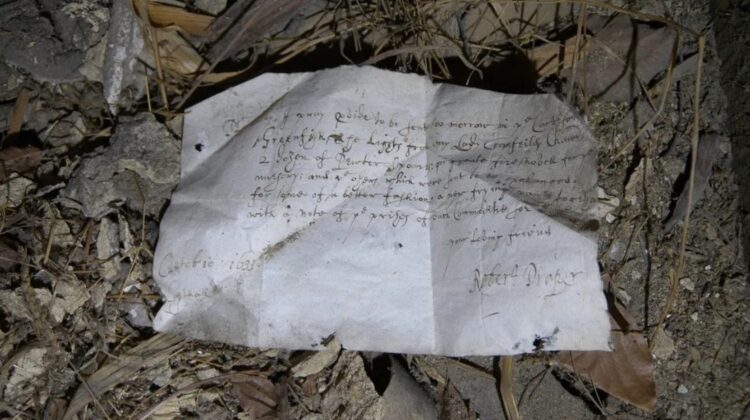
Penned in 1633, the “beautifully written” list hints at household life 400 years ago
Pewter spoons, a new frying pan and something called “greenfish.” The items were scrawled on a shopping list about four hundred years ago, and the scrap of paper stayed hidden beneath the floorboards of one of England’s grandest houses until volunteers working on a restoration project found it. The humble note offers a rare glimpse into how a great household was run.
A Chance Find During a Restoration
The list was discovered at Knole, a historic country house in Kent, England, now cared for by the National Trust. Jim Parker, a volunteer working with the archaeology team, found it during a large conservation project at the house. Two other letters from the same century were found nearby, one beneath the attic floorboards like the shopping list, and another stuffed into a ceiling void.
What the List Says
The note was written by a man named Robert Draper to a Mr. Bilby. Its modern-English meaning is simple: please send tomorrow, in the cart, some greenfish, which is unsalted cod, the candles or lights from Lady Cranfield’s chamber, two dozen pewter spoons, a large fire shovel for the nursery, replacements for some items that had been sent back to be exchanged for a better style, and a new frying pan, along with a note of the prices of those goods.
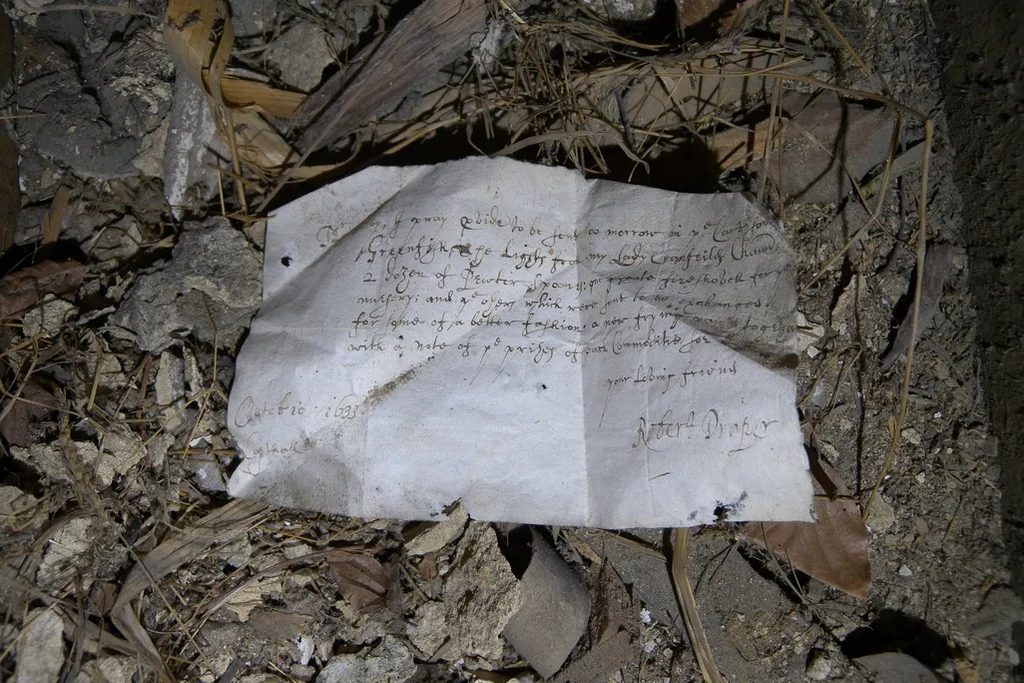
It’s signed by Draper, who calls himself Bilby’s loving friend, and is marked as written at Copt Hall.
The National Trust described the handwriting as beautifully written, which suggests that Draper was a high-ranking servant, perhaps a steward who managed supplies for the household.
How Did It End Up in Kent?
Copt Hall is in Essex, roughly 36 miles from Knole, so how did the note end up in Kent? The National Trust explains that the two estates became linked when Frances Cranfield, the daughter of the owner of Copt Hall, married Richard Sackville, the 5th Earl of Dorset, who had inherited Knole.
Household records suggest that large trunks of domestic items, including papers, were moved from Copt Hall to Knole when the couple married and were later stored in the attic. Draper’s note may have slipped through the floorboards at some point afterward. This is a likely explanation, but it hasn’t been proven.
Why a Shopping List Matters
The marriage brought valuable paintings and furniture to Knole, and a scrap of shopping list was certainly not among the treasures. For historians, though, ordinary documents like this are precious. The National Trust’s regional archaeologist, Nathalie Cohen, said that letters from the 17th century are extremely rare, particularly ones that show how wealthy households were managed and how goods moved from one place to another. She added that the good condition of the list and the two other letters made the discovery especially exciting.

What We Don’t Know
Several questions are unanswered:
- The reports don’t say what the two other letters contain.
- It isn’t clear exactly how long the note was under the floorboards or how it got there.
- Draper’s exact role in the household is an inference from his handwriting.
- Greenfish is described as unsalted cod, but the term may have had different meanings in different places and times.
Knole and Its Deer Park
Knole is a large medieval and Tudor house near Sevenoaks, surrounded by an ancient deer park that is home to herds of deer, and it’s open to visitors through the National Trust. The house is also known for the legend that it has as many rooms as there are days in the year, though that is a popular story and not an official count.
Visiting Historic Houses and Exploring History
History lovers often buy National Trust membership for access to historic houses, plan trips with UK heritage travel packages and travel insurance, and read history books about everyday life in earlier centuries. Those curious about their own past sometimes try family history research tools and genealogy subscriptions to find ancestors who may have worked in houses like this.
Frequently Asked Questions
What was found at Knole? A shopping list written about 400 years ago, found under attic floorboards along with two other letters from the same century.
Who wrote it? A man named Robert Draper, who addressed it to a Mr. Bilby.
What was on the list? Greenfish (unsalted cod), pewter spoons, a fire shovel, candles or lights and a new frying pan.
Why is it important? It’s a rare glimpse into how wealthy households were managed in the 17th century.
Sources: National Trust, Kent Live, Smithsonian Magazine