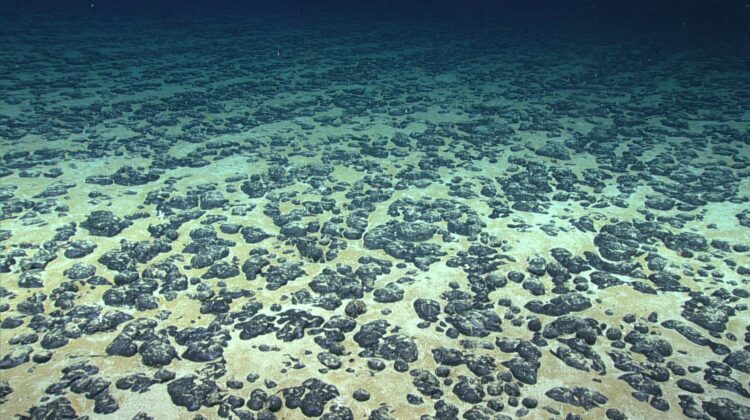
A startling claim says metal-rich nodules act like natural batteries and split seawater far below the reach of sunlight. The idea is thrilling, and it is also fiercely disputed.
Everything in a textbook says oxygen in the ocean comes from sunlight. Plankton and algae near the surface capture it, release oxygen and feed the rest of the sea. So when a marine ecologist reported rising oxygen levels four kilometers down, in water so dark and cold that photosynthesis cannot happen, many scientists assumed his instruments were broken. His team says they were not. The result has set off one of the most intriguing and contested debates in ocean science, with potentially large consequences for the future of deep-sea mining.
A Mystery Four Kilometers Down
Andrew Sweetman, a deep-sea ecologist at the Scottish Association for Marine Science, lowered instruments about 4,000 meters, roughly 2.5 miles, into the Pacific Ocean and recorded data that defied basic marine biology. At that depth, where temperatures hover near freezing and sunlight never penetrates, animals on the seabed consume oxygen. Levels in the water should have fallen. Instead they appeared to climb.
Sweetman first blamed faulty sensors. But the baffling readings kept appearing across multiple expeditions, even after he swapped equipment and checked the water with chemical tests. The measurements came from the Clarion-Clipperton Zone, a vast stretch of ocean floor between Hawaii and Mexico. In 25 chamber experiments on the seabed, described in a study in Nature Geoscience, oxygen began at an average of 185 micromoles per liter and rose as high as 819 micromoles per liter within 47 hours. Follow-up laboratory tests with filtered seawater persuaded his team that simple sensor glitches or leaks from outside could not explain the surge.
A Clue Nobody Expected From a Hotel Bar
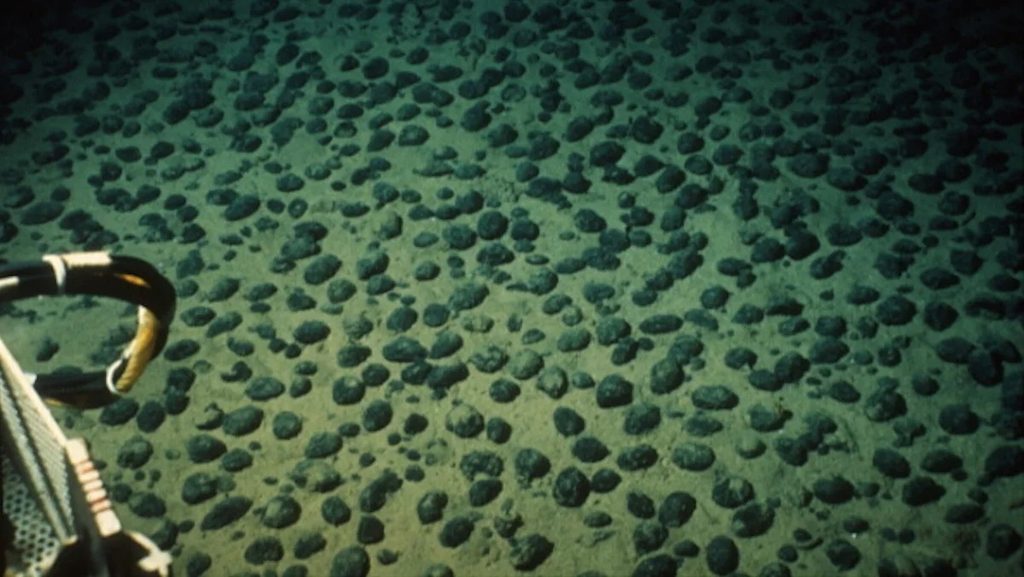
The explanation Sweetman now proposes came, by his own account, from an unlikely place: a television documentary playing in a hotel bar in São Paulo. The program described the potato-sized metallic rocks that carpet parts of the Pacific seabed as a “battery in a rock.” Sweetman wondered if those deposits might be producing electricity and using it to split water, creating what he and others call “dark oxygen,” oxygen made without any help from sunlight.
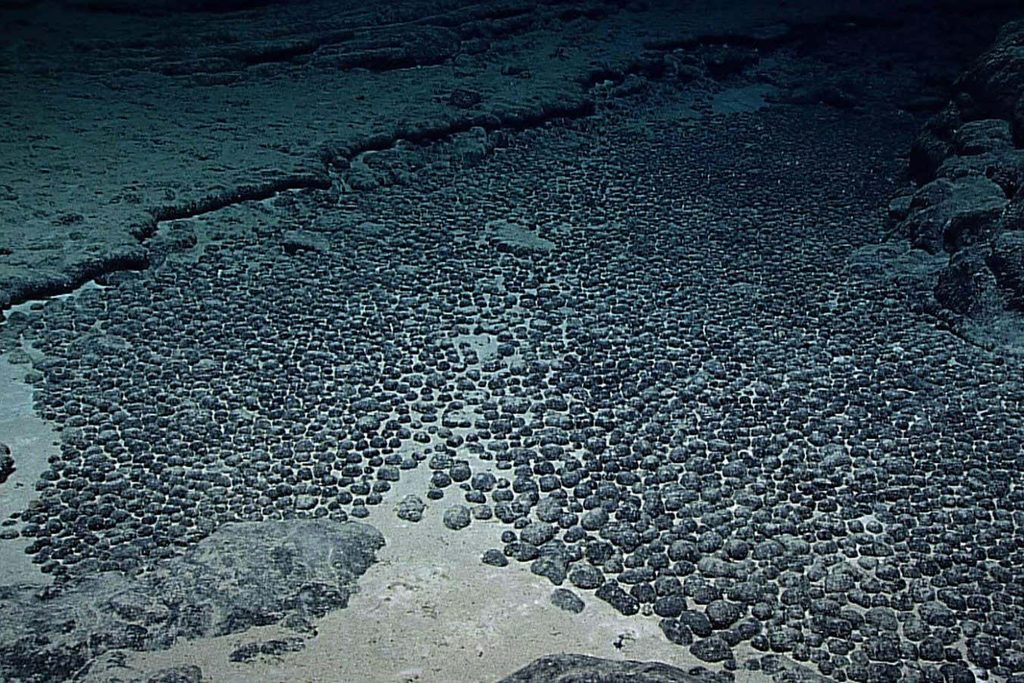
The rocks in question are polymetallic nodules, rounded lumps packed with manganese, iron, cobalt, nickel and copper. They are among the slowest-growing geological structures on Earth, adding only a few millimeters of thickness every million years. They form around tiny bits of seafloor debris, and in one specimen researchers even found a preserved shark tooth, building mineral layers like the rings of a tree. Because ocean chemistry changes over time, each layer has a slightly different mix of metals, and pairing different metals in salt water can create an electrical charge.
The Fifty-Dollar Voltmeter
To test the idea, Sweetman contacted Franz Geiger, an electrochemist at Northwestern University who studies how metals and salt water interact to produce electrical charges. Geiger was skeptical, expecting any charge from the nodules to be microscopic. Yet, according to Popular Mechanics, he found that an ordinary hardware-store voltmeter costing around fifty dollars could detect it.
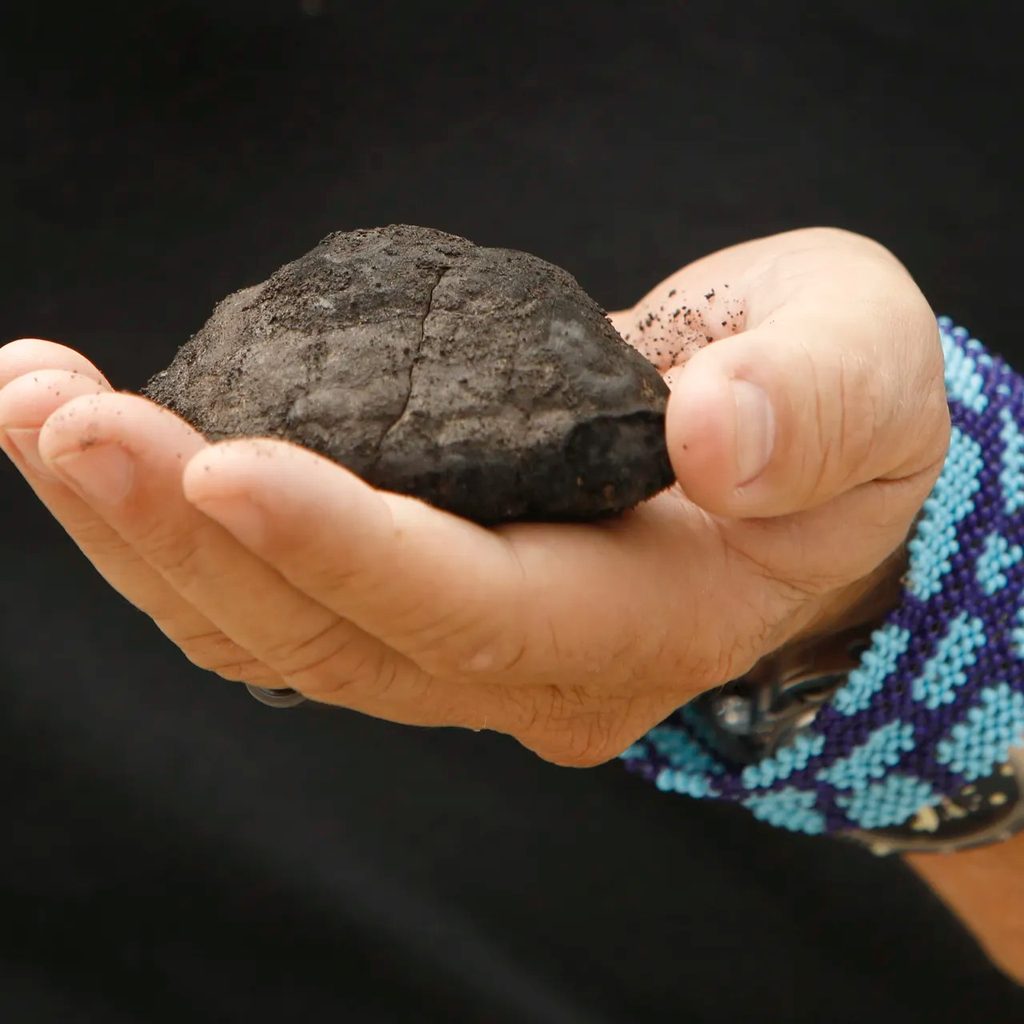
Voltages on the surface of individual nodules reached up to 0.95 volts. That is just short of the 1.23 volts normally needed for electrolysis, the process in which electricity splits water into hydrogen and oxygen. Sweetman proposed that clusters of touching nodules might behave like batteries wired in series, combining their charges to cross the threshold. It is an elegant hypothesis, but it is still a hypothesis. Not every nodule shows the same charge, and having layers of different metals does not automatically make a rock a working oxygen factory.
A Debate That Refuses to Settle
Not everyone is convinced, and the criticism has been sharp. Some scientists argue that the oxygen spikes could come from trapped air bubbles or from flaws in the experiments rather than from any natural geobattery. A note from the journal’s editors was added to the original paper to say that the concerns are being reviewed.
A separate reanalysis of the earlier data, posted in the journal F1000Research, found no clear statistical link between the size or weight of nodules and the rise in oxygen. Its authors say the original correlation depended on a single outlier, and that three seabed deployments with no nodules at all still recorded oxygen increases within the range of the rest of the data. A control run with seawater only suggested to them that the equipment itself might cause rising oxygen readings. The authors stress that they do not dispute the oxygen increases themselves, only the claim that nodules are responsible. Sweetman stands by his team’s work.
How Scientists Plan to Settle It
The best way to end the argument is with better data. Backed by the Nippon Foundation’s Dark Oxygen Research Initiative, engineers have reportedly built two deep-sea landers named Alisa and Kaia, designed to withstand depths of up to 11 kilometers. Unlike older equipment, these landers can measure oxygen, acidity and hydrogen simultaneously. That matters because splitting water by electrolysis should release both hydrogen and oxygen, so seeing the two together would be a strong signature. One lander is reported to be heading to the Clarion-Clipperton Zone for a new expedition. If the results hold up, the finding would force a rethink of how oxygen is produced. If they do not, it will be a reminder of how easily deep-sea measurements can mislead.
Why This Matters Far Beyond the Ocean Floor
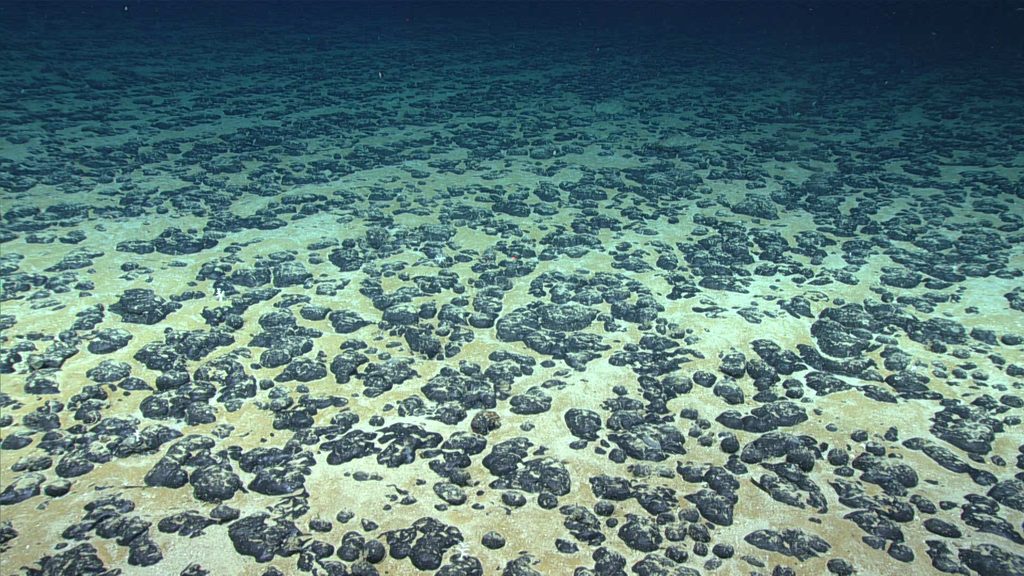
The stakes are not only scientific. The nodules contain metals such as nickel, cobalt, copper and manganese that are used in batteries for electric vehicles and in renewable energy technology, and mining companies are eager to collect them. If the rocks also supply oxygen to deep-sea communities, as Sweetman’s hypothesis suggests, then mining them could cause ecological damage that no one has accounted for. Even without dark oxygen, the seafloor is home to animals found nowhere else, and scientists warn that recovery from disturbance could take a very long time.
The question has therefore become part of a larger argument about how to meet the world’s growing demand for battery metals while protecting the least-explored ecosystems on the planet. Recycling, new battery chemistries and mining on land are all among the alternatives being weighed. Whatever the outcome of the experiments, the debate shows how much remains unknown about the deep sea, and how a stray observation in the dark can challenge assumptions that have lasted for generations.
Frequently Asked Questions
What is dark oxygen? Oxygen that may be produced on the deep seafloor without sunlight, which researchers propose could be created when electricity from metal-rich nodules splits seawater.
What are polymetallic nodules? Potato-sized rocks on the deep seafloor, rich in manganese, iron, cobalt, nickel and copper, that grow very slowly around tiny bits of debris.
Is dark oxygen proven? No. Critics suggest trapped air or experimental errors may explain the readings, and a reanalysis found no clear statistical link to the nodules.
How much electricity do the nodules produce? Tests found up to 0.95 volts on individual nodules, just below the 1.23 volts normally needed to split water.
Why does it matter for deep-sea mining? If nodules help supply oxygen to deep-sea life, harvesting them for battery metals could cause unforeseen ecological harm.
Sources: Nature Geoscience; F1000Research; Popular Mechanics; Scottish Association for Marine Science; Northwestern University.