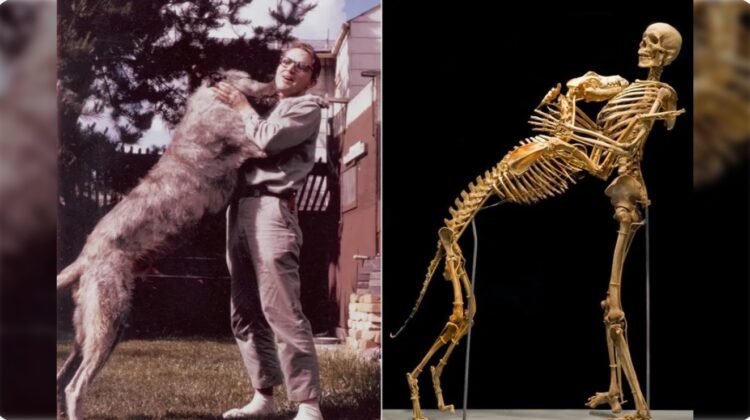
When anthropologist Grover Krantz offered to donate his body to the Smithsonian, he attached a single, unusual condition: his dogs had to stay with him. The museum agreed. Years after his death, his skeleton was displayed beside that of his Irish wolfhound, Clyde, in a pose copied from a favorite photograph. It’s a story about teaching, science and one of the deepest bonds between a person and a dog.
A Teacher Who Didn’t Want to Stop
Krantz was a longtime anthropology professor at Washington State University. Outside the academic world, he was also known for his serious, controversial interest in Bigfoot. According to the Smithsonian, he approached the museum’s anthropology collections manager, David Hunt, with an offer. Krantz said he had been a teacher all his life and thought he might as well continue to be one after he died.
Then he added the catch: the museum had to keep his dogs with him.
Three Wolfhounds
The dogs in question were three Irish wolfhounds named Clyde, Icky and Yahoo. Irish wolfhounds are among the tallest dog breeds, and Krantz loved them. He had already arranged for their skeletons to be given to the museum for study, and he wrote a book about his life with Clyde, titled Only a Dog.
Krantz also valued the dogs’ skeletons for teaching, and he kept animal remains for study and instruction. For him, the collection and his affection for the dogs were part of the same story.
From Body Farm to Museum
After his death there was no funeral. As he had requested, his body first went to the University of Tennessee’s Forensic Anthropology Center, a research facility where scientists study how human remains decompose, which helps forensic investigators. His skeleton then went to the Smithsonian’s National Museum of Natural History, where it joined the bones of his dogs.
At first, it seemed likely that the remains would simply stay in storage drawers, available for researchers who might have questions about them. Reports say that they rested in adjoining drawers, and that Clyde’s drawer held a copy of the book Krantz had written about him.
An Unexpected Display
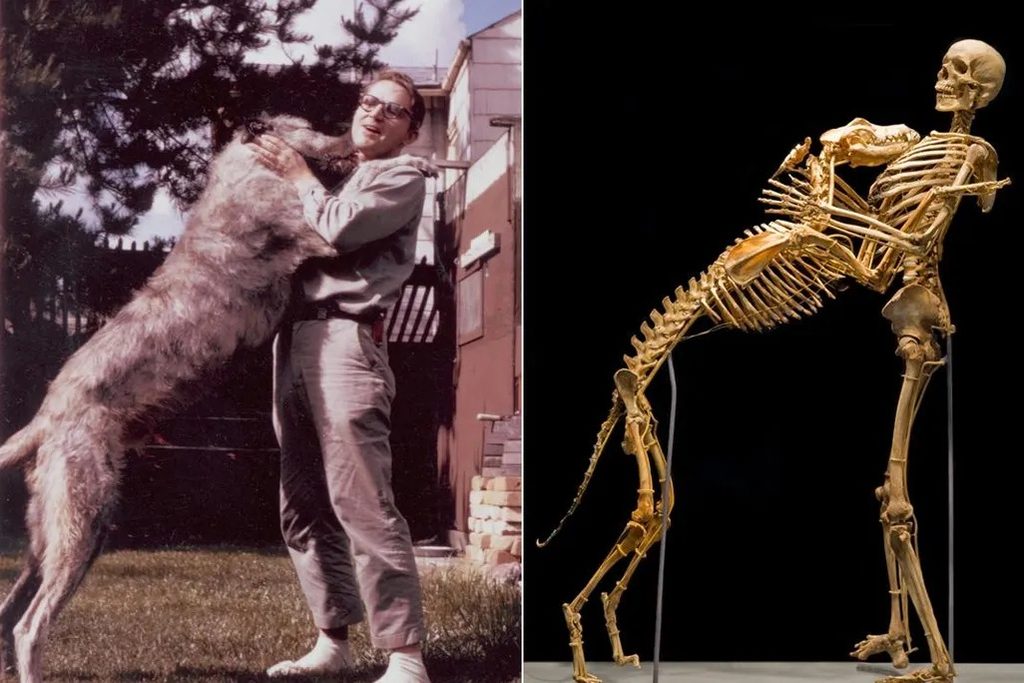
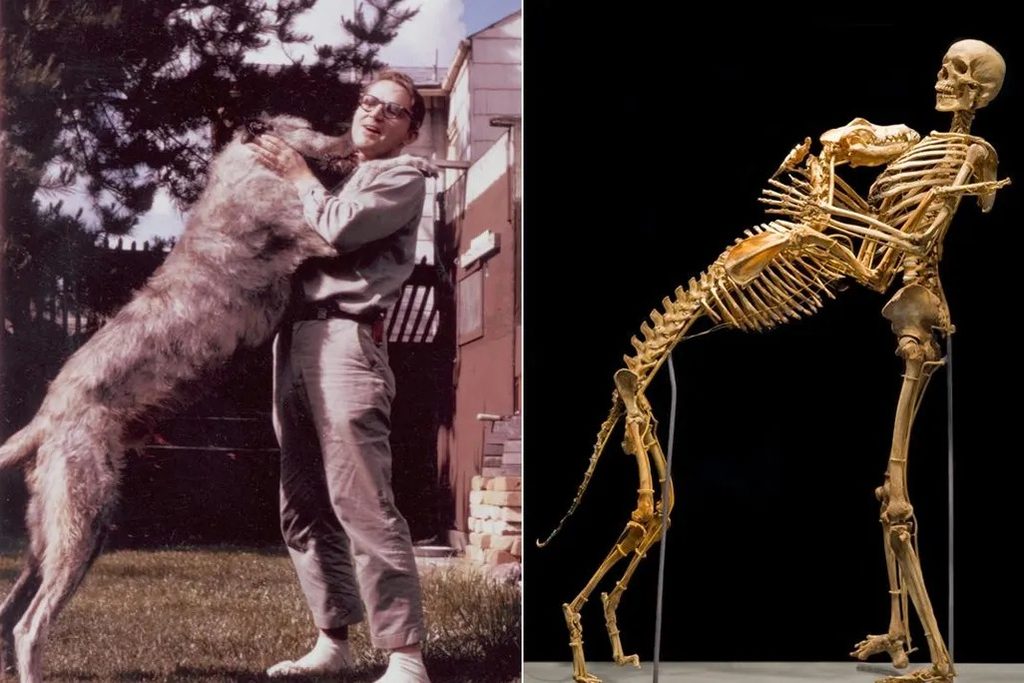
The skeletons might have stayed out of public view if forensic anthropologist Doug Owsley hadn’t suggested including them in a museum exhibition on forensic science, “Written in Bone.” He proposed featuring Krantz and Clyde as the finale. A museum taxidermist, Paul Rhymer, mounted the skeletons together, modeling the pose on a photograph of Krantz with his dog.
The display served a purpose beyond sentiment: it illustrated how people who donate their bodies can continue to educate long after their deaths. The museum’s text describes Krantz as an anthropologist who loved his dogs.
What We Know and What We Don’t
Several points are worth keeping in mind:
- The pose and the story come from the museum and from accounts published by Smithsonian and university magazines. Details such as how long the display remains on view can change.
- Krantz’s Bigfoot research was and remains controversial among scientists, and this article doesn’t take a position on it.
- His arrangement was unusual. Body donation programs generally have their own rules, and donors typically can’t set personal conditions like this one.
- Whether the bond between humans and animals “survives death” is a philosophical question, not a scientific one. What the display shows is how important the bond was to Krantz.
The Human-Dog Bond
Dogs have lived alongside people for thousands of years, and research shows that people and dogs form strong emotional connections. Large breeds such as the Irish wolfhound are known for being gentle and loyal despite their size. For many owners, a dog is a member of the family, and Krantz’s request shows how far some people will go to honor that.
Honoring a Beloved Pet
People who want to remember a pet often compare pet memorial keepsakes and personalized pet portraits, or write a book or journal about their dog’s life. Owners of large breeds often budget for large dog beds, quality dog food and pet insurance for large breeds, and history lovers can plan a trip to see the exhibits with natural history museum tickets, Washington DC travel packages and travel insurance.
Frequently Asked Questions
Who was Grover Krantz? An American anthropologist and professor at Washington State University, also known for his Bigfoot research.
What was his condition for donating his body? That the Smithsonian keep his dogs with him.
Who was Clyde? His favorite Irish wolfhound, whose skeleton was displayed alongside his own.
Where were they displayed? At the Smithsonian’s National Museum of Natural History in Washington, D.C.
Sources: Smithsonian Magazine, Washington State Magazine, NPR, Scientific American