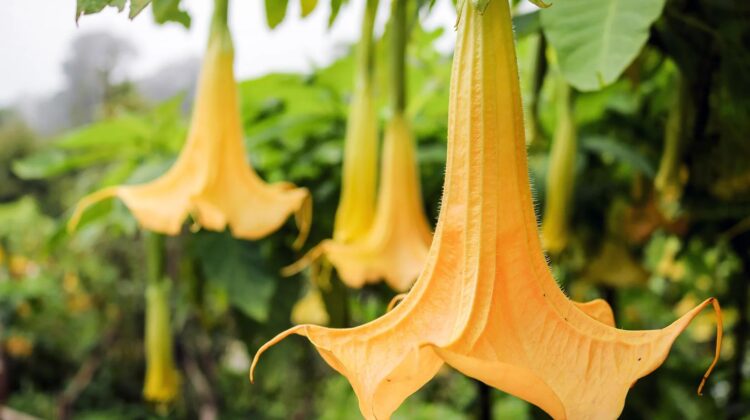
With its enormous, drooping, trumpet-shaped flowers and a heavy, sweet scent that intensifies after dark, Angel’s Trumpet is one of the most dramatic plants a gardener can grow. It is also among the most toxic ornamental plants sold in garden centers. Many people buy it without a warning. This guide explains how to recognize it, why it is dangerous and how to enjoy it safely, or decide not to grow it at all.
What Is Angel’s Trumpet?
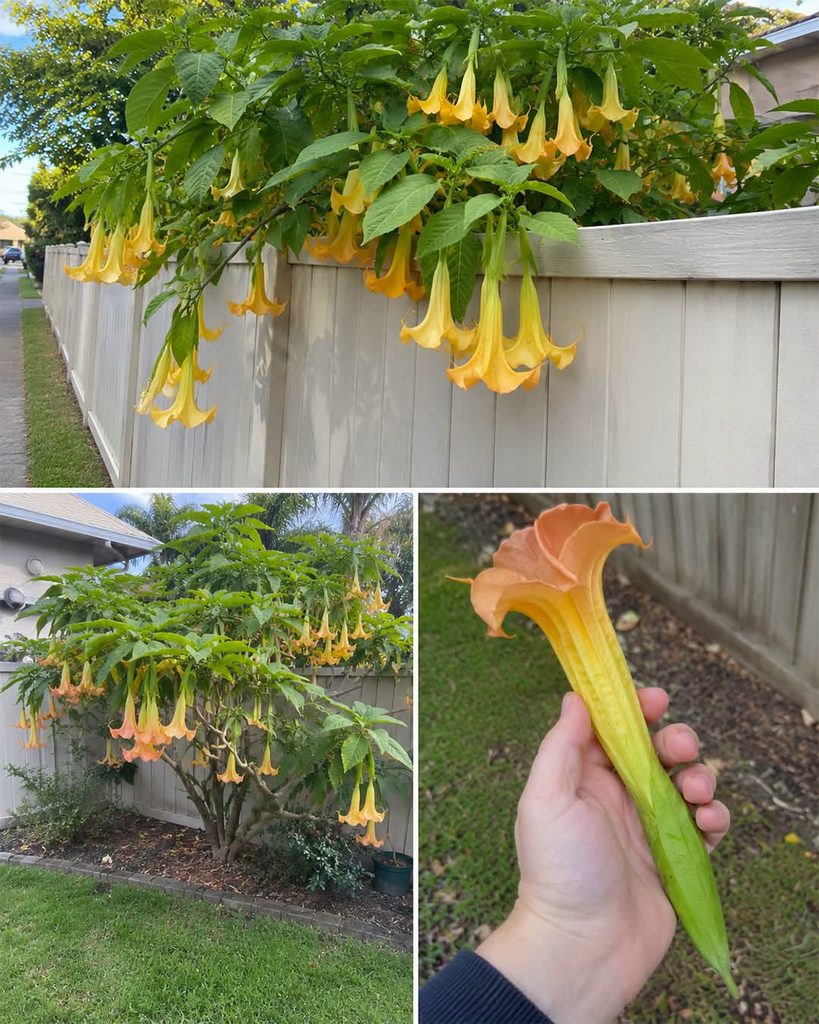
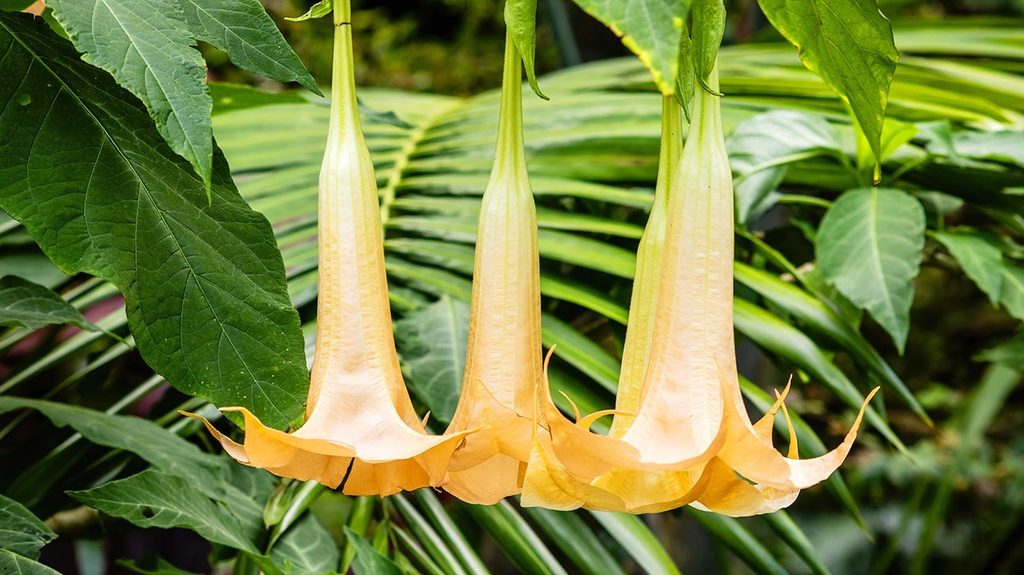
Angel’s Trumpet (Brugmansia) is a woody shrub in the nightshade family that can grow into a small tree. Here is how to recognize it:
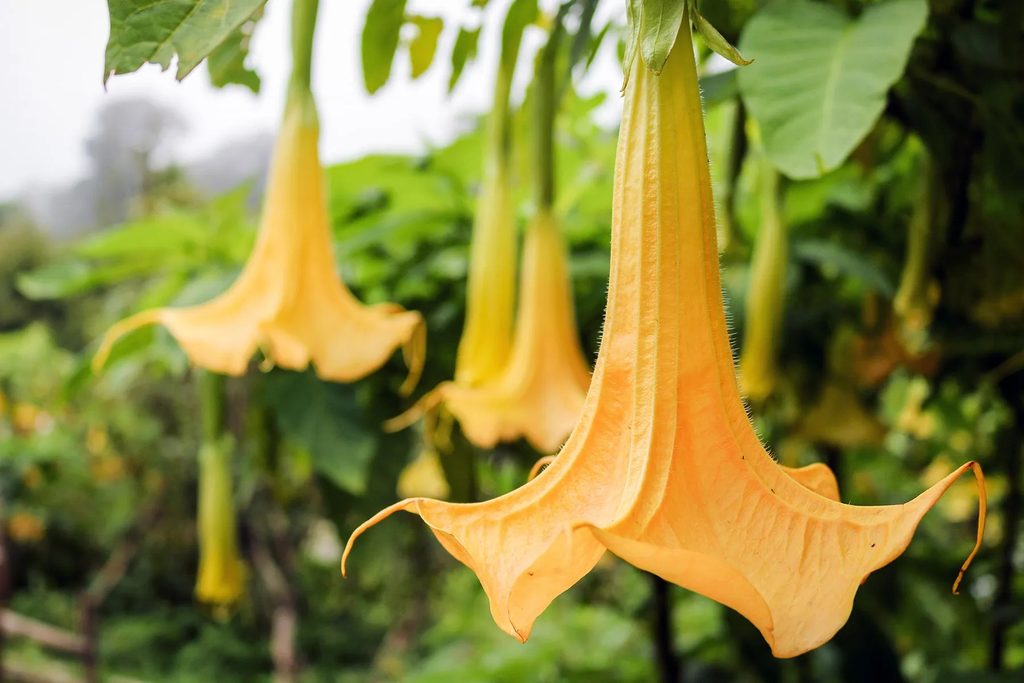
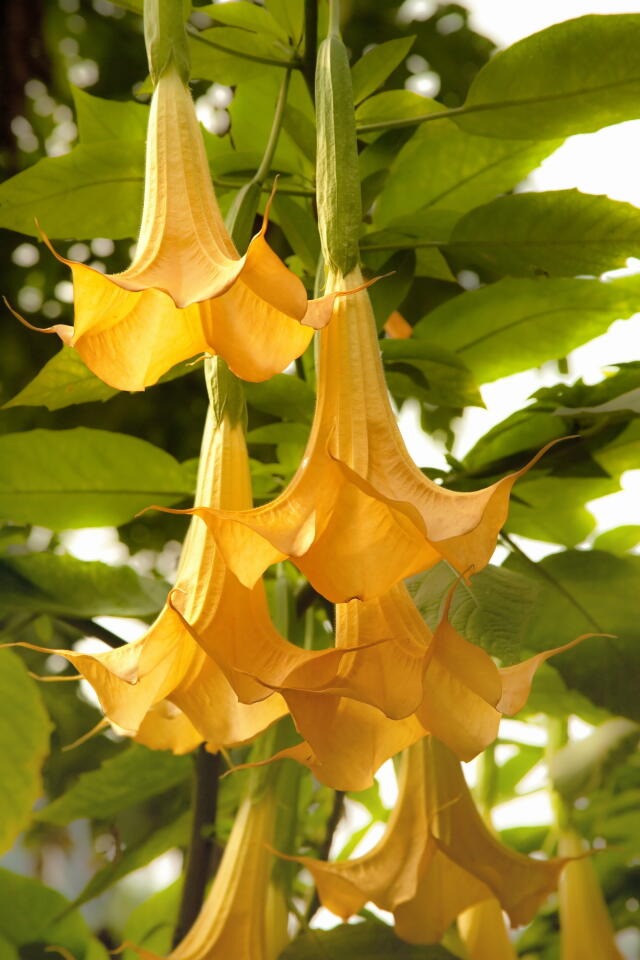
- Flowers. Long, hanging trumpets, often 6 to 20 inches (15 to 50 centimeters) in length, in white, yellow, peach, pink or orange.
- Leaves. Large, soft and slightly fuzzy.
- Scent. A strong, sweet fragrance, especially in the evening.
A close relative called Datura, also known as thornapple or jimsonweed, is sometimes also called angel’s trumpet. Its flowers are similar but tend to face upward instead of hanging down. Both plants contain the same type of toxins.
Why It Is Dangerous
Angel’s Trumpet contains tropane alkaloids, including atropine, hyoscyamine and scopolamine. These natural chemicals interfere with the nervous system, affecting the heart rate, vision, body temperature and brain function. All parts of the plant contain them, including the leaves, flowers, roots and seeds, though the amounts vary between plant parts and with the season. Extension specialists describe it as among the most toxic landscape plants for both people and animals, and ingestion of the seeds in particular can be fatal.
How Poisoning Happens
- Eating or sucking on flowers and leaves. Curious children are especially at risk because the flowers are large and attractive. Dogs, cats and other pets can also chew on fallen leaves and blooms.
- Deliberate misuse. Some people have been poisoned by drinking tea made from the plant or eating parts of it for its hallucinogenic effects. Medical reports describe hospitalizations, and this is extremely dangerous.
- Sap on the skin or hands. Handling the plant can sometimes cause symptoms, especially if sap gets into the eyes after touching your face.
- Cross-contamination. Using unwashed pruning tools on edible plants can transfer sap.
Symptoms of Poisoning
Symptoms can start within minutes after ingestion. Clinicians often summarize the pattern with an old rhyme: blind as a bat, mad as a hatter, red as a beet, hot as a hare, dry as a bone. In practice, that can look like:
- Very dry mouth and skin, and little sweating
- Widely dilated pupils, blurred vision and sensitivity to light
- Flushed, warm skin and fever
- A racing heartbeat
- Confusion, agitation and hallucinations
- Difficulty urinating
- In severe cases, seizures, loss of consciousness and breathing or heart problems
In pets, signs reported by veterinary sources include disorientation, dilated pupils, high body temperature, behavior changes and loss of appetite.
What to Do in an Emergency
This is a medical emergency. If you suspect that a person or pet has eaten any part of the plant:
- Call emergency services or a poison center immediately. Don’t wait to see whether symptoms appear.
- Don’t try to make the person vomit unless a medical professional tells you to.
- For eye or skin contact, rinse thoroughly with clean water for at least several minutes and follow the advice of a poison center or doctor.
- For pets, contact a veterinarian or a pet poison helpline right away.
- Take a sample of the plant, carefully and with gloves, to show medical staff, if it is safe to do so.
Safety Rules for Gardeners
If you decide to grow Angel’s Trumpet, treat it as a hazard plant:
- Choose the location carefully. Keep it away from play areas, patios, walkways and places where children or pets spend time.
- Clean up regularly. Remove fallen flowers and leaves promptly.
- Protect yourself when pruning. Wear gloves, long sleeves and eye protection, then wash your hands, arms and tools thoroughly afterward.
- Don’t touch your face while working with the plant.
- Dispose of cuttings carefully. Bag them and follow local green-waste rules rather than composting them where they might end up on edible plants. Many guides also advise against burning them.
- Tell visitors and family what the plant is, and explain that no part should be touched or eaten.
What This Guide Doesn’t Cover
This is general safety information and not medical or veterinary advice. Toxin levels vary with the species, plant part and season, and how people react depends on age, body size and the amount involved. In any suspected poisoning, follow the guidance of local emergency services and poison centers.
Safer Alternatives and Tools
Gardeners who love tropical looks but have children or pets often compare pet-safe garden plants such as hibiscus, and anyone working with toxic plants may invest in chemical-resistant gardening gloves, safety glasses and a good plant identification guide or app. Pet owners also often look at pet insurance that can help with emergency vet bills, and homeowners redesigning a yard may consult landscape design services.
Frequently Asked Questions
Is Angel’s Trumpet poisonous? Yes. All parts contain tropane alkaloids, and ingestion of the plant can cause serious poisoning.
Can touching it be dangerous? Handling it can sometimes cause problems, especially if sap reaches your eyes, so gloves and handwashing are important.
Is it dangerous to pets? Yes. It is considered toxic to dogs, cats and other animals.
What should I do if someone eats part of the plant? Call emergency services or a poison center immediately and don’t induce vomiting unless instructed.
Sources: Federal Institute for Risk Assessment (BfR), Pet Poison Helpline, UF/IFAS Extension, BMC Research Notes, Forensic Toxicology