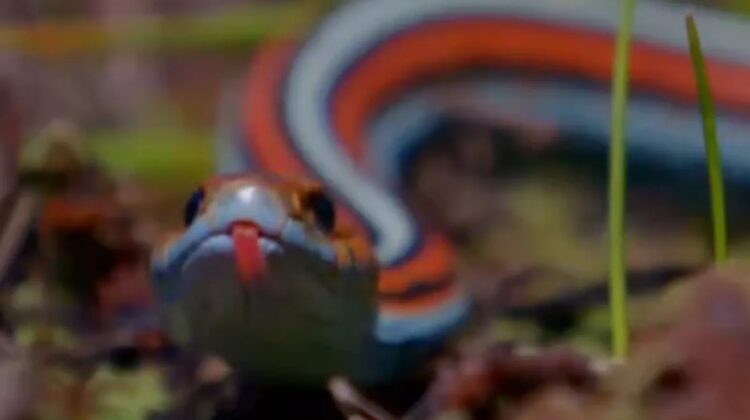
After years of work, one of the most endangered reptiles in the United States is getting a fresh start, thanks to a technique called head-starting.
Sixty-two brightly colored snakes slid into the grass of San Mateo County, south of San Francisco, and almost nobody was allowed to see exactly where. That secrecy is part of the plan. The young San Francisco garter snakes, raised in captivity at the San Francisco Zoo and Gardens, are the first to be released into the wild under a new recovery program for a species that has teetered on the edge of extinction for more than half a century. Biologists say it is a milestone worth celebrating.
A Snake Painted in Red, Blue and Black
The San Francisco garter snake is often described as one of the most beautiful snakes in the world. Its slim body is striped in bold red, blue and black, a combination so vivid that it has long been a target for collectors. Despite its name, it lives only in a small corner of California, in San Mateo County and a small part of neighboring Santa Cruz County.
It is a subspecies of the common garter snake, and it was among the very first animals to receive protection under the federal endangered species list. Today, only a few thousand are believed to survive in the wild, and some estimates put the number even lower, at fewer than 2,000 scattered across isolated pockets of the San Francisco Peninsula.
The snake is not a danger to people. It has no fangs, and its saliva is only mildly toxic, which helps it subdue small prey such as frogs. It eats amphibians, including California red-legged frogs and tree frogs, along with newts, small fish and worms, so its survival depends on healthy ponds and wetlands.
Why a Species Almost Disappeared
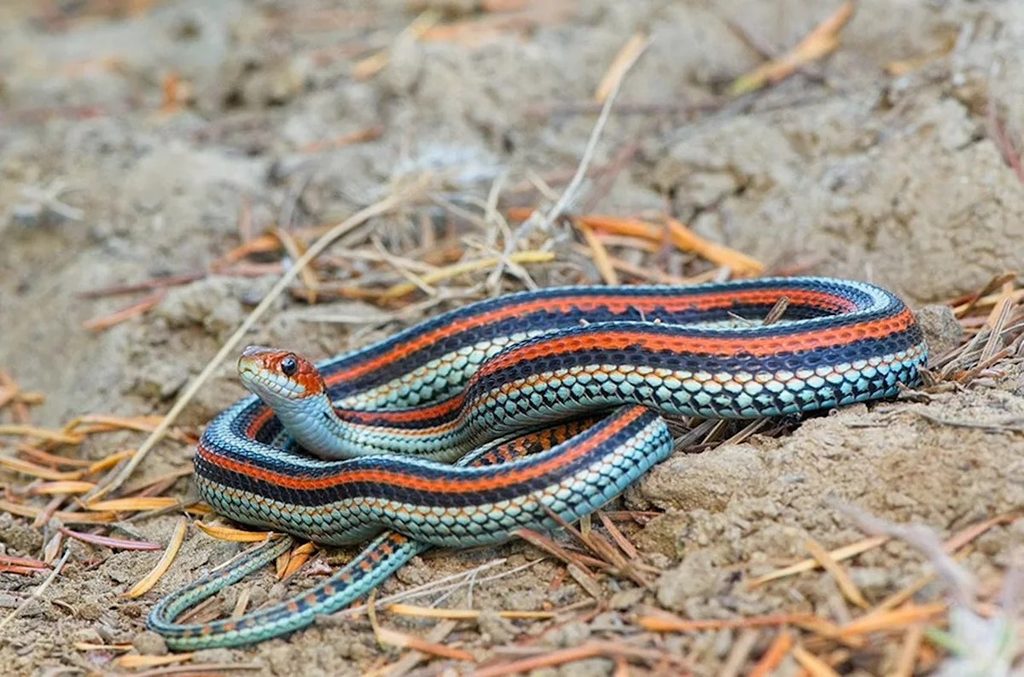
Its decline has many causes. Roads and development have chopped up the coastal grasslands, ponds and wetlands it needs. Drought, invasive species and disease add further pressure, and its prey has declined. Illegal collecting is another danger, since the animal’s looks make it valuable on the black market.
A less obvious problem is genetic. When a population shrinks and its pockets of animals become isolated, they begin to breed with relatives, and diversity falls. Karine Tokatlian, a biologist with the Midpeninsula Regional Open Space District, has explained that a lack of genetic diversity can mean fewer healthy baby snakes are born to each mother.
A Snake Raised in Secret
The answer the conservationists chose is called head-starting. It works by raising young animals in captivity during the most vulnerable stage of their lives, when tiny snakes are at the greatest risk from predators and competition for food, and then releasing them once they are large enough to cope.
The process began when biologists from the US Geological Survey collected pregnant females from a healthy population on a protected preserve and brought them to the San Francisco Zoo. After the mothers gave birth, they were returned to the wild, while their offspring stayed behind and were cared for by zoo staff until they were strong enough to face the wild.
Genetic testing then guided where each snake would go. About one-third were returned to the areas their mothers came from. The remaining two-thirds went to sites that needed more diversity, in the hope of building stronger, more resilient populations.
Why Scientists Hid the Map
The zoo has not said where the snakes were released, and that is deliberate. Keeping the locations secret protects this fragile population from poachers, from vehicles and from the possible spread of disease. For a rare animal that is vulnerable to collecting, even a single well-publicized location can be risky.
Hikers and nature lovers in the region can help by giving wildlife space. The species is protected by law, and disturbing, handling or collecting an endangered animal can carry serious penalties. Anyone who spots one is better off admiring it from a distance and reporting the sighting to local wildlife officials than attempting to touch it.
What Success Would Look Like
The goal is ambitious. For the San Francisco garter snake to be removed from the endangered species list, conservationists need at least ten self-sustaining breeding populations, each with at least 200 individual snakes. Reaching that goal will take years of monitoring, habitat restoration and further releases. Partners have already restored wetlands and grasslands, built breeding ponds and boosted frog habitat to support the snake’s food supply.
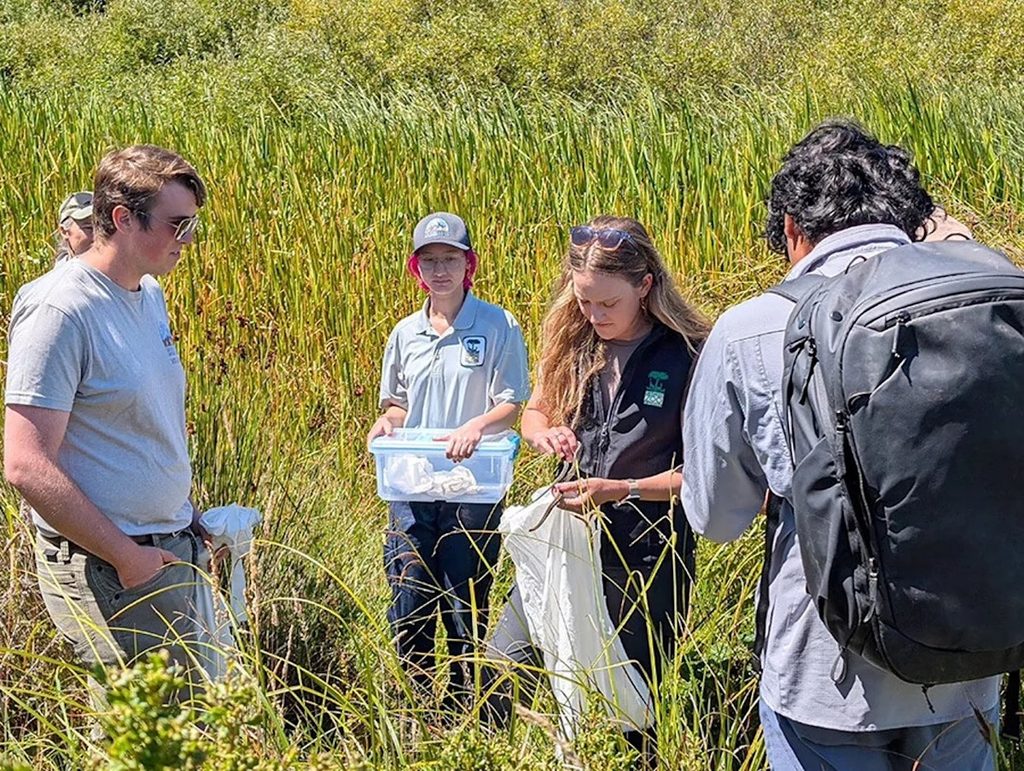
The program has a lot of work ahead, but there are early signs of progress. More than 130 additional baby snakes were born at the zoo this year and are being raised for a second release. Scientists will keep a close watch on how the first group fares.
“This is an extraordinary accomplishment for everyone who has worked for generations to protect this remarkable species,” Tokatlian said. “Seeing these young snakes returning to the wild represents years of research, collaboration, habitat restoration and careful conservation work.” Wildlife ecologist Ariel Starr added that the species’ critical status is not unique, and that the lessons learned could help the recovery of many other imperiled reptiles.
How Ordinary People Can Help
Conservation of rare species is often seen as work for scientists, but communities play a role too. Supporting local land trusts and open space organizations, visiting zoos and nature centers that fund breeding programs, and keeping garden ponds and green spaces wildlife-friendly all help. Responsible outdoor recreation, such as staying on trails and keeping pets away from wetlands, protects fragile habitat. And for students interested in careers in wildlife biology, projects like this one show how field research, laboratory genetics and zoo science can work together.
Frequently Asked Questions
How many San Francisco garter snakes were released? Sixty-two young snakes, raised at the San Francisco Zoo and Gardens, were released at undisclosed sites in San Mateo County.
Why are San Francisco garter snakes endangered? Habitat loss, drought, invasive species, disease, declining prey, low genetic diversity and illegal collecting have all reduced their numbers.
What is head-starting? A conservation technique that raises young animals in captivity during their most vulnerable stage, then releases them once they are better able to survive.
Are they dangerous? No. They have no fangs and only mildly toxic saliva, and they pose little threat to people.
Why were the release sites kept secret? To protect the snakes from poachers, vehicles and disease.
Sources: San Francisco Zoo and Gardens; Popular Science; KQED; Midpeninsula Regional Open Space District; US Geological Survey.