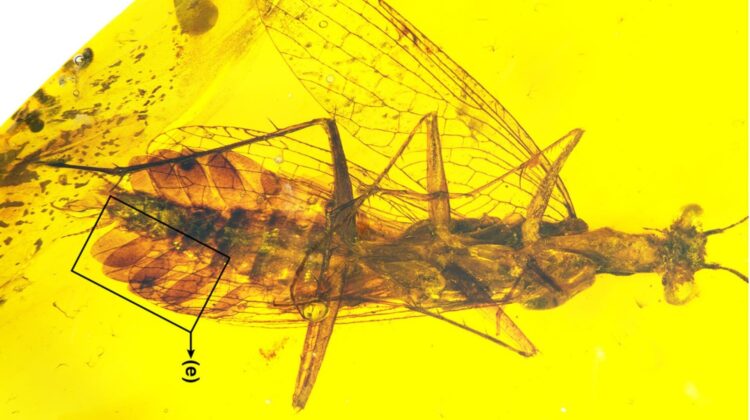
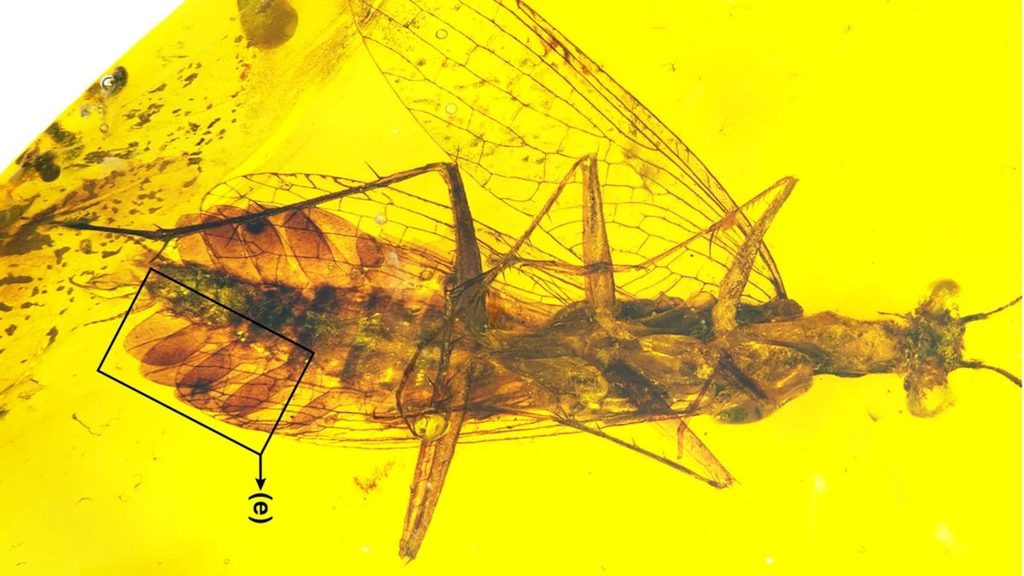
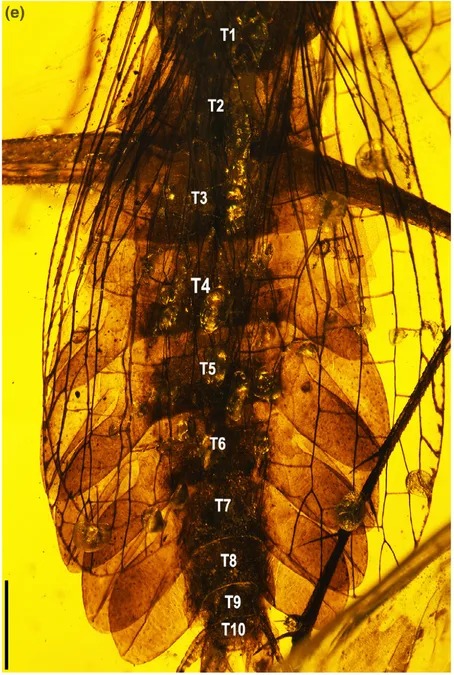
Trapped in a drop of ancient tree resin, a tiny praying mantis has been preserved with something no other fossil mantis is known to have: an abdomen that looks like a leafy plant. The discovery gives scientists the earliest clear evidence of mantises mimicking plant leaves, and it opens a window on how insects and plants evolved together.
A Mantis Entombed in Resin
Around 98 million years ago, in the middle of the Cretaceous Period, a tropical rainforest in what is now Myanmar was dripping with sticky resin. That resin trapped a remarkable insect and, over millions of years, hardened into amber.
Researchers have now named the insect Folimantis hyalinala, in a paper in the journal New Phytologist. The genus name means “leaf mantis,” and the species name refers to the glass-like transparency of its wings.
A Disguise Shaped Like a Plant
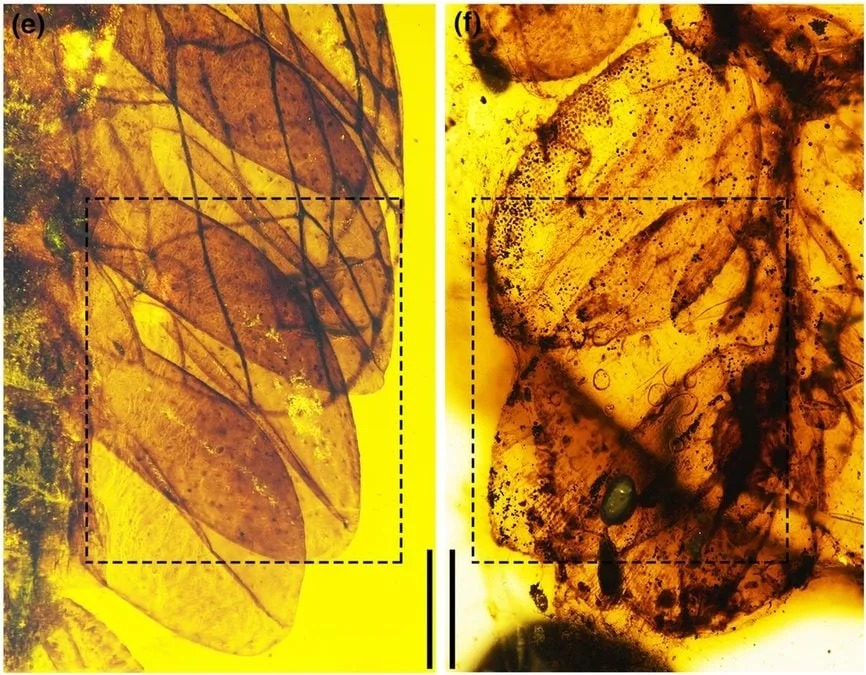
The mantis’s abdomen has extensions that strongly resemble the leaves of an extinct clubmoss called Selaginella grimaldii, which is also preserved in amber from the same region. Paleoentomologist Hongru Yang and colleagues explained that although insect and plant mimicry has existed for at least 200 million years, reliable fossil examples are scarce. They also noted that this style of mimicry had never been reported before and that no modern mantis imitates Selaginella.
How Mimicry Evolves
Modern mantises provide plenty of examples of plant mimicry. The most famous is the orchid mantis (Hymenopus coronatus) of Southeast Asia, which resembles a flower, from its pink and cream coloring to the way it sways like a blossom in the wind.
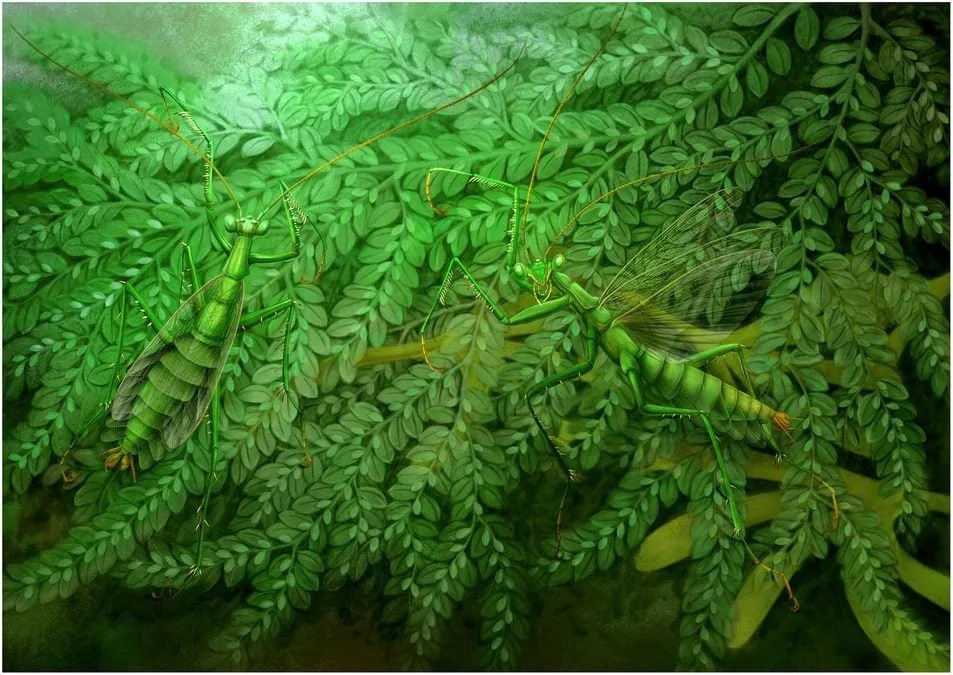
When Folimantis lived, flowering plants hadn’t yet taken over the landscape, so a mantis would have evolved to resemble leaves instead. The idea is simple: mantises that looked slightly more like their host plant were better at sneaking up on prey and avoiding predators, so they were more likely to survive and pass on their traits. Over many generations, this process could produce a striking resemblance. The plant might have gained something too, since a mantis living on it could help keep plant-eating insects away.
Leaves Only on the Abdomen
One feature stands out: Folimantis has leaf-like structures only on its abdomen. Many modern plant-mimicking mantises wear leaf-like features on various parts of their bodies. The researchers suggest this could hint that plant mimicry began at the rear of the body, with changes to the wings, thorax and other parts appearing later. This is an interpretation, based on a single specimen.
Mantises Through Deep Time
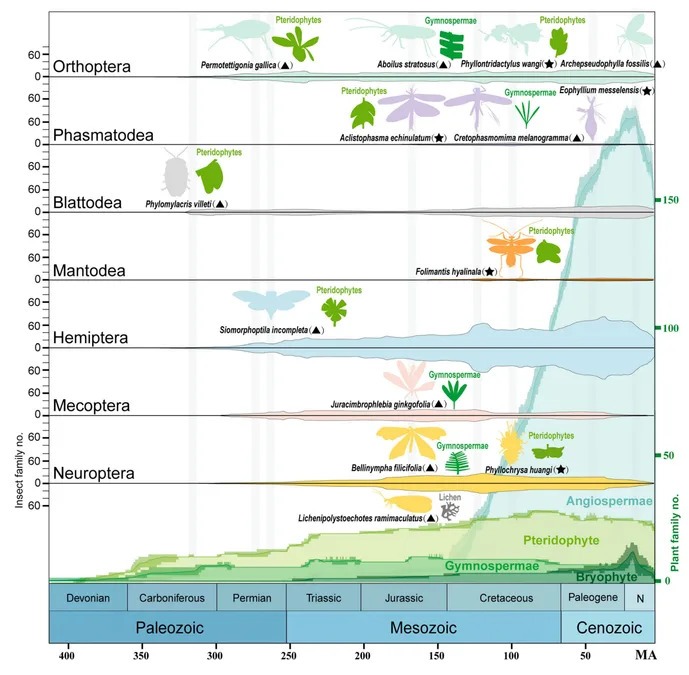
Praying mantises share an ancestor with cockroaches that lived around 274 million years ago. Recent research suggests that the first distinct mantises appeared about 185 million years ago, in the Jurassic Period, when the supercontinent Gondwana was breaking apart. That long history helps explain why mantises are so widespread and diverse, and so finely adapted to their environments.
They weren’t the only insects with leaf-like features. Cockroaches, grasshoppers, stick insects and other groups were also evolving plant-like disguises at around this time, which shows how closely the lives of insects and plants were intertwined as both spread across land.
What the Discovery Doesn’t Tell Us
It’s important to keep the findings in perspective. The conclusion is based on one amber specimen, so scientists can’t say how common this kind of mimicry was. The idea that the mantis lived on Selaginella, and that the plant benefited, is a reasonable inference rather than something directly observed. And the story of how leaf mimicry began on the abdomen remains a hypothesis that more fossils could test.
An Ethical Note About Amber
Amber from northern Myanmar, known as Kachin amber, is a rich source of fossils, but its mining and trade are linked to the ongoing conflict in the country. Many scientists have raised ethical concerns about how it is sourced and used, and there are worries that the trade may help fund violence. Readers who collect amber may want to check where it came from.
Exploring Prehistoric Life
Readers curious about ancient insects often visit exhibits with natural history museum tickets, learn more from entomology books and paleontology courses, try fossil kits for kids at home or photograph living insects with a macro lens and a wildlife photography camera, and some subscribe to science magazines to follow new discoveries, with travel insurance for trips to fossil sites.
Frequently Asked Questions
What is Folimantis hyalinala? A 98-million-year-old praying mantis preserved in amber, with leaf-like structures on its abdomen.
Why is it important? It is the earliest clear fossil evidence of mantises mimicking plant leaves.
What plant did it resemble? An extinct clubmoss called Selaginella grimaldii.
Do modern mantises mimic plants? Yes. The orchid mantis, for example, looks like a flower.
Sources: New Phytologist