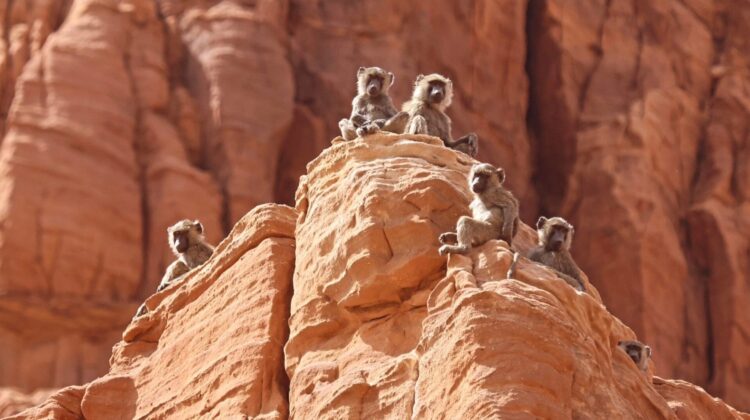
Deep in the Sahara, on a rugged sandstone plateau in northern Chad, researchers searching for baboons kept noticing eagles overhead. They never imagined the birds were a threat. Then they began finding skulls with puncture marks, and the picture changed. A new study suggests that a large eagle may be hunting primates far heavier than scientists thought raptors could take.
A Hidden Baboon Population
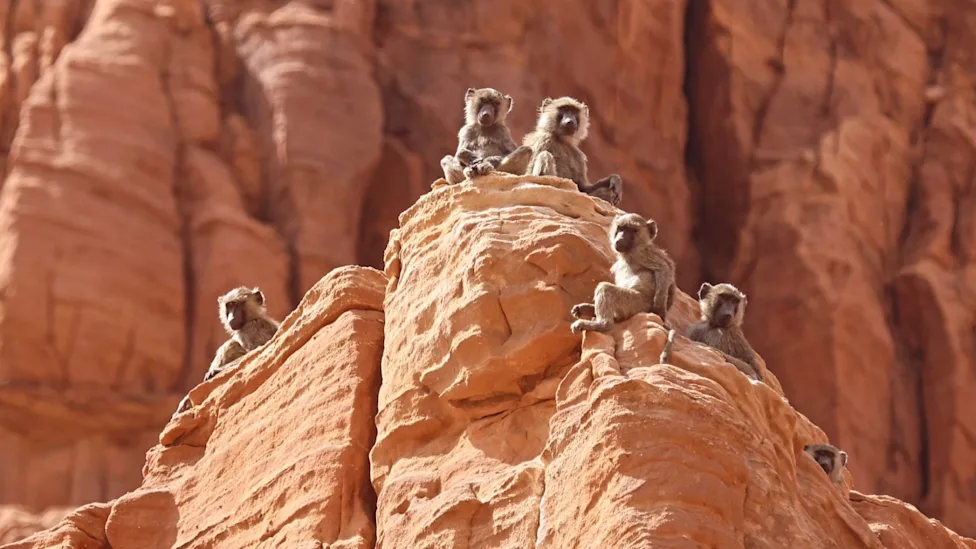
The Ennedi plateau is a remote region in the middle of the Sahara Desert, covering an area roughly the size of Switzerland. It is home to an isolated population of olive baboons (Papio anubis) that has lived apart from other primate groups. Adult males weigh around 40 to 60 pounds, about the size some early human ancestors are thought to have been.
The baboons share the plateau with Verreaux’s eagles (Aquila verreauxii), large birds of prey with wingspans of roughly 1.8 to 2.2 meters (71 to 86 inches). The species is usually associated with smaller prey, and until now no primate heavier than about 13 kilograms (28.6 pounds) had been confirmed as raptor prey.
What the Researchers Found
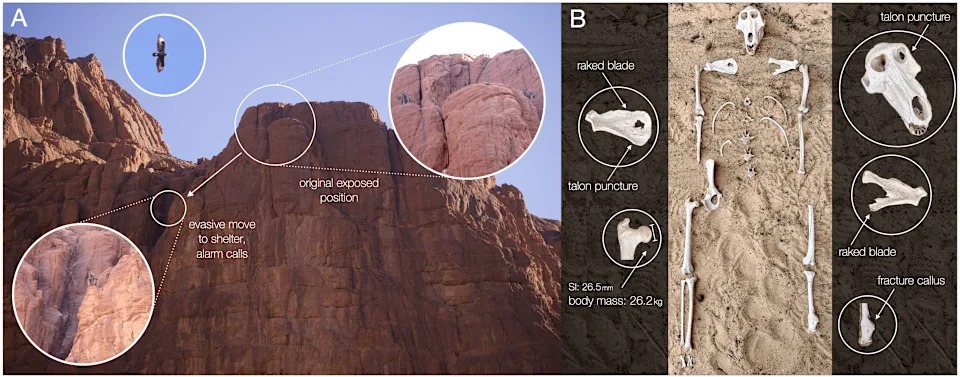
The team, publishing in the American Journal of Biological Anthropology, describes skulls and bones from adult male olive baboons that carry the signature marks of eagle attacks. These include puncture holes made by talons in the skulls, along with scrapes and rake-like marks on the shoulder bones.
By estimating the weight of the animals from their remains, the researchers calculated that one individual weighed more than about 26 kilograms (57.3 pounds), well within the range of some of our hominin ancestors and roughly double the previous record for raptor prey among primates.
Primatologist Catherine Hobaiter of the University of St Andrews, a co-author, said that the team saw the eagles while looking for the baboons but never thought they might be a threat, until they found a skull with a puncture mark, then another and another. A colleague from the African Parks Network said the finding raises new questions about the mysterious gueltas, the pockets of water that form in the rocks of the Sahara.
Why It Matters for Human Evolution
Our ancestors were vulnerable to many predators, including crocodiles, big cats and even large eagles. Scientists have generally believed that, as hominins grew larger, they became too heavy for raptors to carry off. This study suggests that very large eagles may have been a threat for longer than we assumed, which could change how researchers think about predator and prey relationships during human evolution.
Modern primates that live with eagle predators often travel in large groups, sometimes mixed with other species, and they defend themselves by mobbing, charging or harassing the attacker until it leaves. Early human relatives living alongside other primates may have benefited from similar cooperation.
What the Study Doesn’t Prove
The evidence is indirect, and some limits are worth noting:
- The findings are based on marks on bones, not on observations of eagles actually killing baboons, so the eagles may sometimes have scavenged remains.
- The weights were estimated from skeletons and could be off.
- It isn’t yet known how common such attacks are, or whether the Ennedi baboons are unusual because of their isolation.
- The study can’t show exactly how our ancestors were affected, and modeling past predator risk remains speculative.
More Surprises to Come
The researchers hope to learn more about the Ennedi baboons, whose lives already differ from what scientists expected in areas such as diet and social behavior. Hobaiter said she can’t wait to see what new rules they break next.
Watching African Wildlife Responsibly
Travelers who want to see African primates and raptors in the wild often compare African wildlife safaris run by licensed guides, bring birdwatching binoculars and a wildlife photography camera with a telephoto lens and purchase travel insurance for trips abroad, while readers who want to learn more can browse natural history and primate books. Supporters of research and habitat protection can also look into primate conservation donations and wildlife conservation charities.
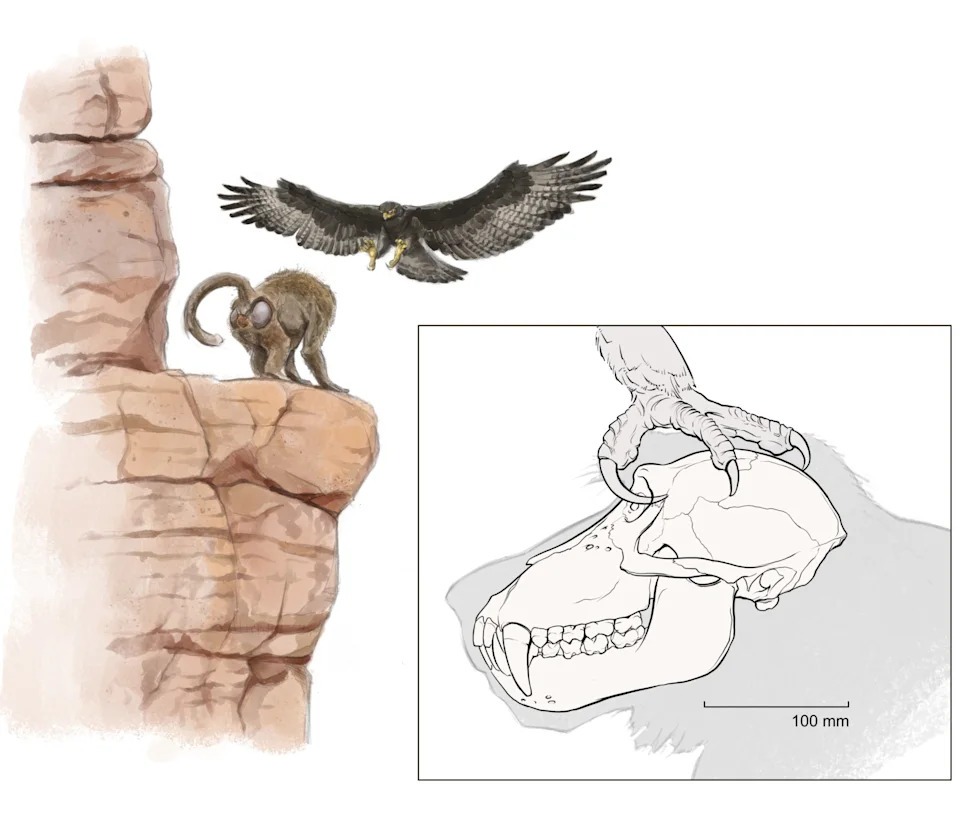
Javier Lazaro(http://www.lazaroillustration.com/)
Frequently Asked Questions
Where did the study take place? On the Ennedi plateau in northern Chad, in the Sahara Desert.
Which animals were involved? Olive baboons and Verreaux’s eagles.
What evidence did scientists find? Skulls and bones of adult male baboons with talon puncture marks and scrapes consistent with eagle attacks.
Does this mean eagles hunted our ancestors? It suggests large eagles could threaten animals of that size, but researchers can’t say exactly how it affected hominins.
Sources: American Journal of Biological Anthropology, University of St Andrews