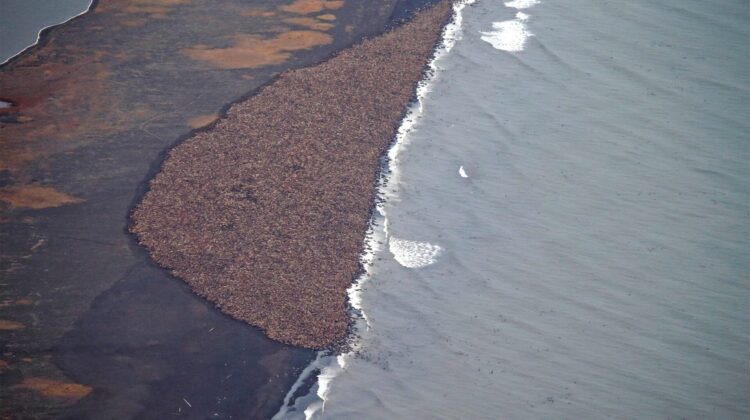
Every fall, a stretch of barrier islands in northwest Alaska becomes one of the most crowded places on Earth. Hundreds of thousands of Pacific walruses haul their huge bodies out of the water and press together on the sand, a noisy, pungent mass of blubber and tusks. It looks like a celebration, but it is also a sign of a species adapting to a rapidly changing Arctic. Now a conservation group has announced a plan to protect the land they depend on.
The Largest Haulout in North America
The gathering takes place near the village of Point Lay, on barrier islands along the Chukchi Sea, which stretches between northern Alaska and Russia’s Siberian coast. According to conservationists, more than 200,000 walruses gather there. John Wros of the Conservation Fund described it as a cacophony of life that overwhelms the senses, with animals playing in the surf.
It’s the largest walrus haulout in North America, and it is a fairly new phenomenon. It began with a few thousand females and calves, but the numbers climbed quickly. Today almost all Pacific walrus females and their young use the site.
Why Are They Coming Ashore?
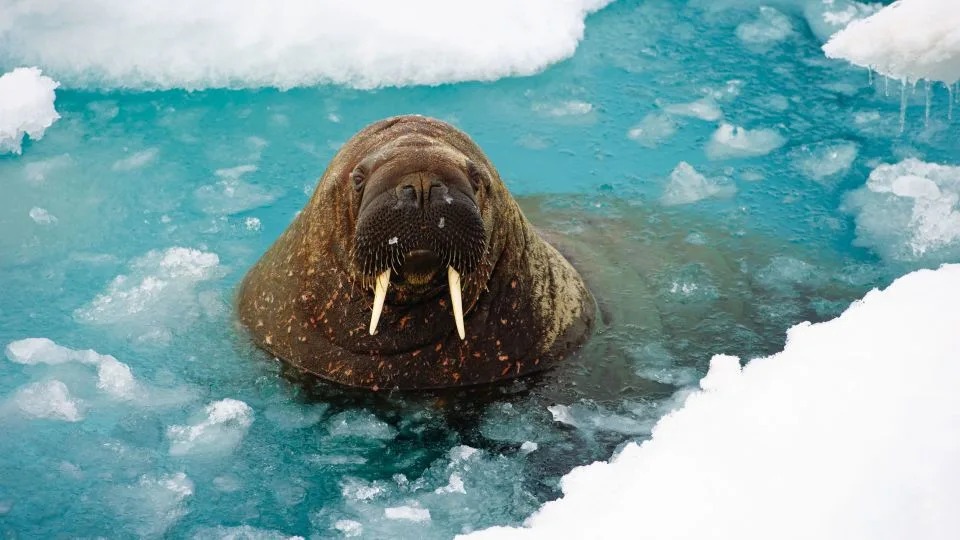
Walruses have traditionally used floating sea ice as a platform to rest between dives, give birth and nurse their young near feeding areas. Pacific walruses spend winter on the pack ice of the Bering Sea. Males generally stay there year-round, while females and their young travel north to feed on the shallow shoals of the Chukchi Sea.
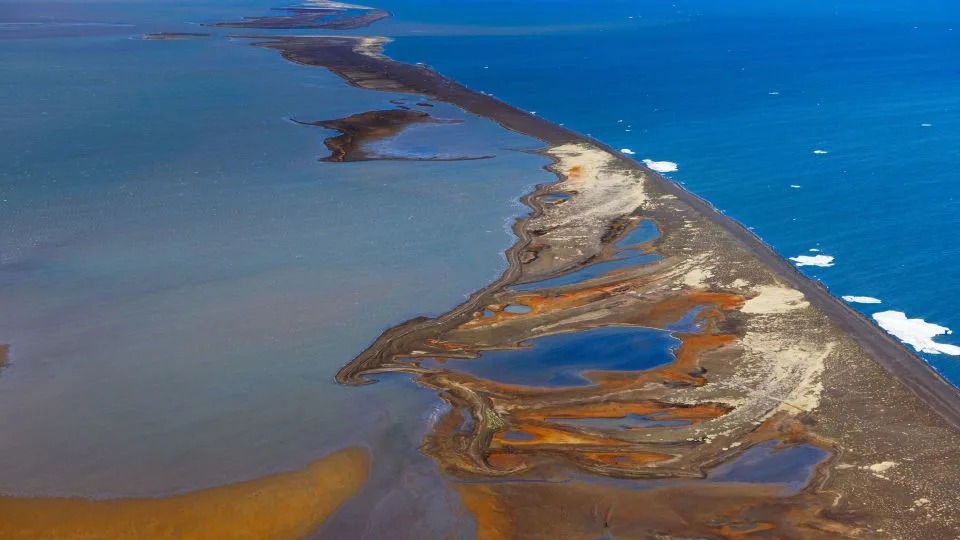
But as the planet warms, summer sea ice has disappeared. Marine scientist Chelsea Koch of American University explained that in late summer the ice now often retreats beyond the shallow continental shelf into water too deep for walruses to feed on the seafloor. With the ice gone, the animals turn to land.
Scientists stress that this shows animals responding to change, but it doesn’t mean land can fully replace the habitat they are losing. USGS wildlife biologist Anthony Fischbach said the population has been relatively stable, but that the walruses are living in a new normal of vanishing sea ice, which is a threat.
The Refuge Plan
The Conservation Fund, an environmental non-profit, has announced an agreement with the Cully Corporation, the Alaska Native village corporation that owns the land, to secure nearly 50,000 acres, including the barrier islands, as a permanent refuge for walruses. The deal is designed to shield the animals from human activities, including resource development.
In return, the Cully Corporation receives a payment meant to support financial security and the way of life of local communities, whose relationship with walruses, for food and culture, goes back thousands of years. Willard Neakok, chairman of the corporation’s board, said the partnership will help preserve Inupiaq heritage for future generations. The Conservation Fund’s president, Larry Selzer, said the model is a powerful tool because it works with landowners while still allowing economic use of the land and protecting crucial wildlife habitat.
The Danger of Crowds
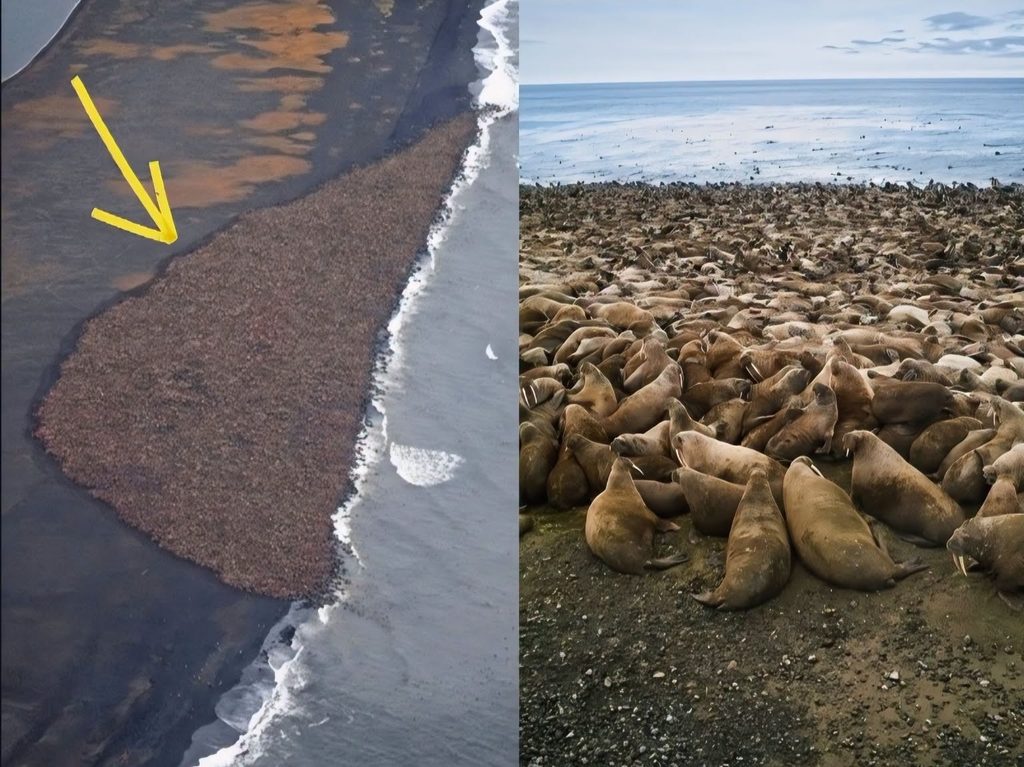
Huge gatherings carry risks. Walruses can weigh up to two tons, and they are easily spooked. At Point Lay, the main danger is stampedes, since even small disturbances can send thousands of animals rushing toward the water, which can injure or crush animals, especially young ones. A scene in a 2019 documentary, which showed walruses falling from cliffs in Russia, helped raise public awareness of how dangerous crowding can be.
What We Don’t Know
Some key details remain open:
- The size of the payment and other terms of the agreement haven’t been described in detail in the report.
- Protecting the land doesn’t stop sea ice loss, which is driven by global warming, so the refuge is only part of the solution.
- Scientists are still learning how the walruses will fare in the long term as ice continues to retreat.
Watching Wildlife Without Causing Harm
Large animal gatherings are fragile, and disturbances such as low-flying aircraft, drones, boats or people approaching on foot can trigger stampedes. Wildlife agencies generally advise keeping a long distance from walruses and other marine mammals, following local rules and viewing them only through guided, authorized programs. Remote haulouts like this one are not tourist attractions, and any visit should go through responsible local operators.
Seeing the Arctic Responsibly
Travelers who want to experience Arctic wildlife often compare Alaska wildlife tours and Arctic expedition cruises run by licensed operators, invest in a wildlife photography camera with a telephoto lens and binoculars to view animals from a distance, pack proper cold-weather gear and buy travel insurance for remote trips. Supporters of Arctic habitat protection can also look into wildlife conservation donations and climate research charities.
Frequently Asked Questions
Why do walruses gather at Point Lay? Because summer sea ice has retreated, forcing them to rest on land.
How many walruses gather there? More than 200,000, including most Pacific walrus females and their young.
What is the new plan? The Conservation Fund and the Cully Corporation agreed to protect nearly 50,000 acres as a permanent refuge.
Is the refuge enough to protect walruses? It helps protect them from disturbance and development, but it doesn’t stop the loss of sea ice.
Sources: CNN, The Conservation Fund, U.S. Geological Survey