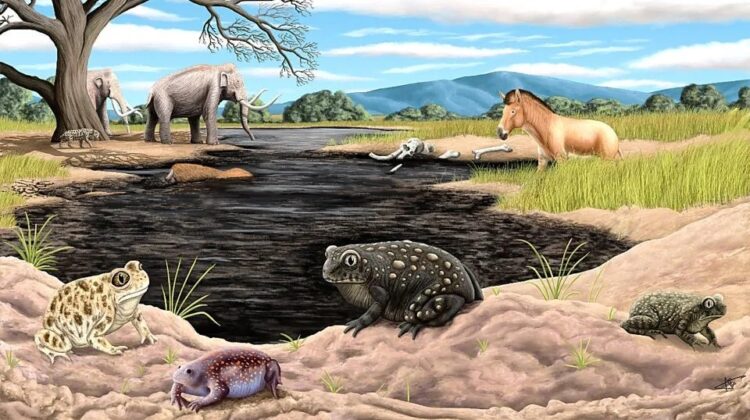
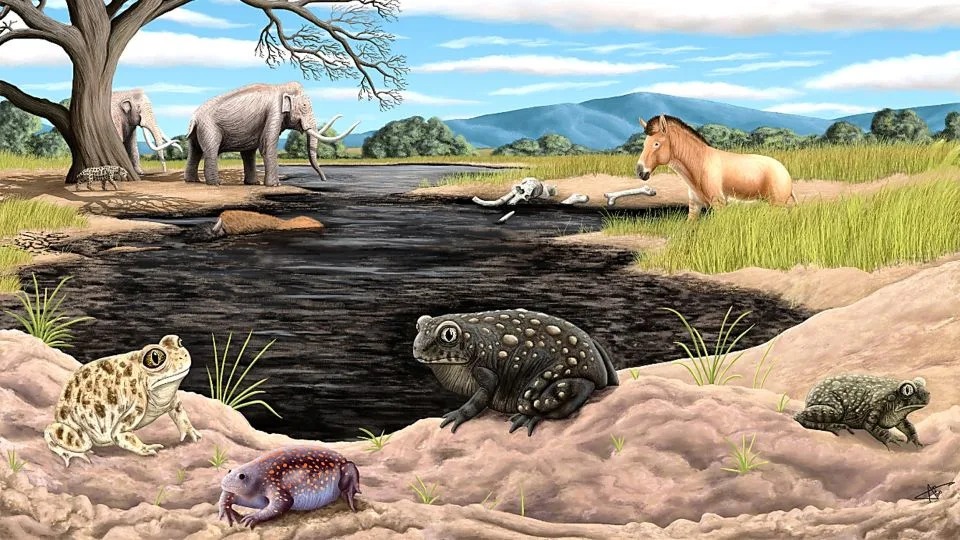
Scientists have discovered a previously unknown extinct toad species hidden for nearly a century inside the collections of Los Angeles’ famous La Brea Tar Pits.
The tiny amphibian, named Spea labreae after the tar pits, represents the first extinct Ice Age amphibian ever identified from Los Angeles and only the second known extinct Pleistocene amphibian from North America.
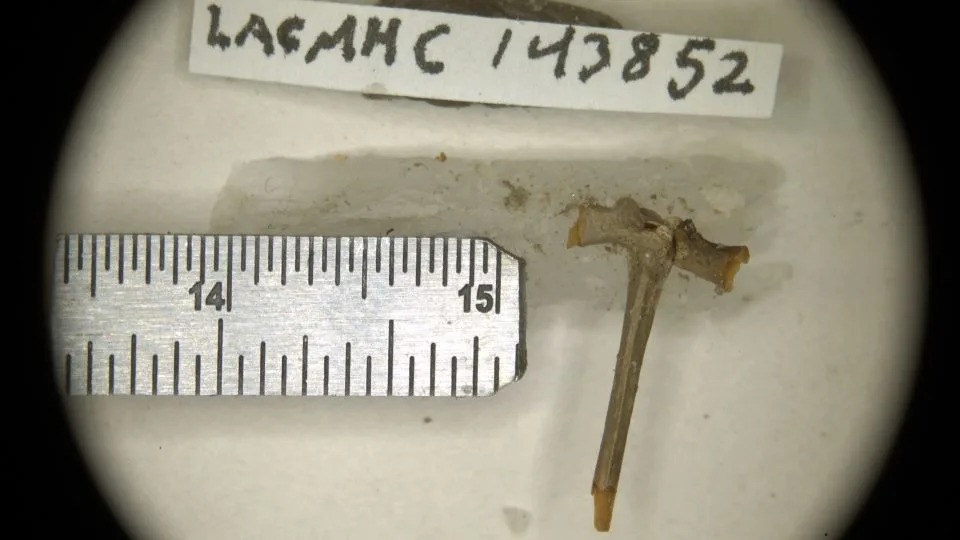
The discovery was made when researchers reexamined fossil specimens excavated from the tar pits in 1929. Two tiny fragments, each only about one centimeter long, had remained overlooked because they belonged to a small amphibian rather than one of the giant mammals that dominate the fossil record at La Brea.
Lead researcher Dr. J. Alberto Cruz identified the unusual bones in 2023 and compared them with amphibian specimens from several major museum collections. Their distinctive shape revealed that they belonged to a species never previously documented.
The fossils cannot be dated precisely without damaging them, but researchers know the toad lived sometime within the past 60,000 years, when the La Brea Tar Pits were actively trapping animals.
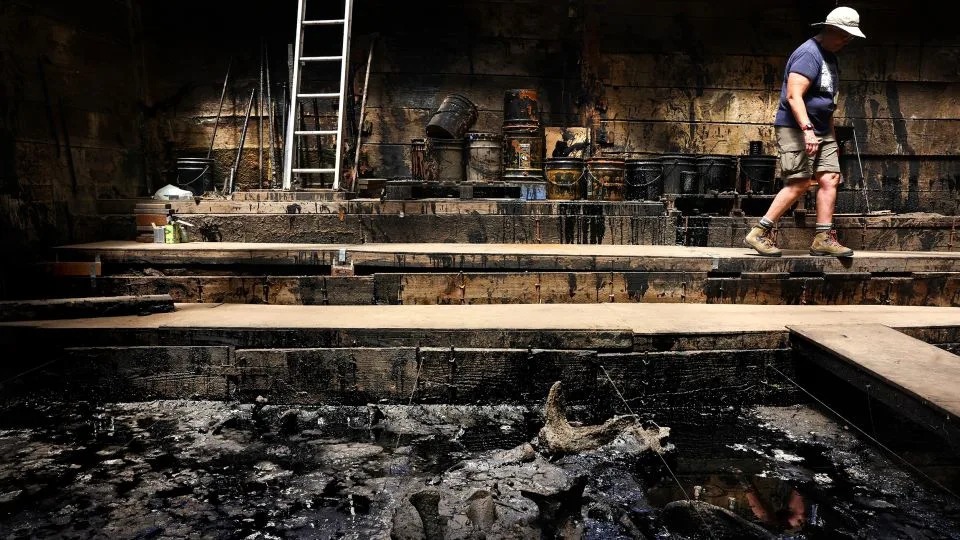
The tar pits are exceptionally valuable to paleontologists because their thick asphalt protected bones from weathering, decay, scavengers and microbial activity. While famous discoveries include mammoths, mastodons, saber-toothed cats and dire wolves, scientists say the smaller creatures preserved there can provide an equally important picture of the ancient ecosystem.
Another surprising discovery came from the same collection: remains of the Mexican burrowing toad, a species still alive today but normally found in Mexico, Central America and southern Texas. Its presence in prehistoric Los Angeles suggests that the region may once have been considerably wetter and more humid than it is today.
Because amphibians depend heavily on water, temperature and precipitation, their fossils can act as clues to ancient environmental conditions. Researchers believe studying these forgotten remains could help scientists understand how ecosystems responded to past climate changes—and potentially provide insight into how modern amphibians may respond to a rapidly changing climate.
The discovery also highlights how much information can remain hidden inside museum collections. Tiny and fragile fossils are often overlooked in favor of the spectacular bones of large prehistoric animals, meaning other extinct species may still be waiting to be identified.
A Tiny Fossil With a Big Environmental Story
The discovery of Spea labreae shows why protecting and studying even the smallest traces of ancient life matters. Amphibians are highly sensitive to changes in water availability, temperature and habitat, making their fossil remains valuable records of Earth’s changing environments. By studying species that disappeared thousands of years ago, scientists can better understand how ecosystems respond to climate shifts and why protecting today’s frogs and toads is so important for the future of biodiversity.
Leave a Reply