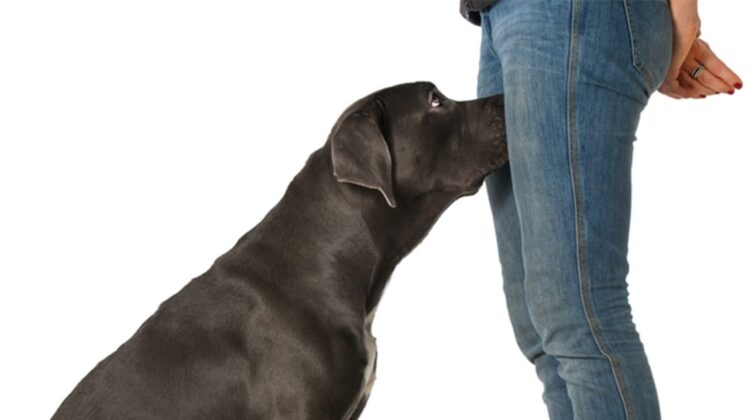
Few dog behaviors make owners and guests cringe quite like a nose that heads straight for a visitor’s crotch. It’s awkward, but it isn’t rude, at least not in the dog’s mind. Here’s why dogs do it, and how to teach a more polite greeting.
A World Explored by Smell
Dogs learn about the world through their noses. They have vastly more scent receptors than people do, roughly 50 times as many by common estimates, which lets them pick up details that are invisible to us. For a dog, sniffing is how it reads a visitor’s story: who the person is, where they’ve been and how they might be feeling.
Dogs also use smell to greet each other, which is why they famously sniff each other’s rear ends. When your dog turns that same investigation toward a person, it’s following the same instinct.
Why the Crotch?
According to veterinarian Jennifer Sperry, speaking to Rover, dogs are drawn to strong odors, and the groin area has plenty. The reasons include:
- Scent glands. The area has apocrine sweat glands, which produce a stronger, more pungent scent than other parts of the body. They’re also found in the armpits and chest, but those are harder for a dog to reach.
- Convenient height. For medium and large dogs, the crotch is right at nose level.
- A noticeable scent source. Compared with hands or feet, the area stands out as a rich source of information.
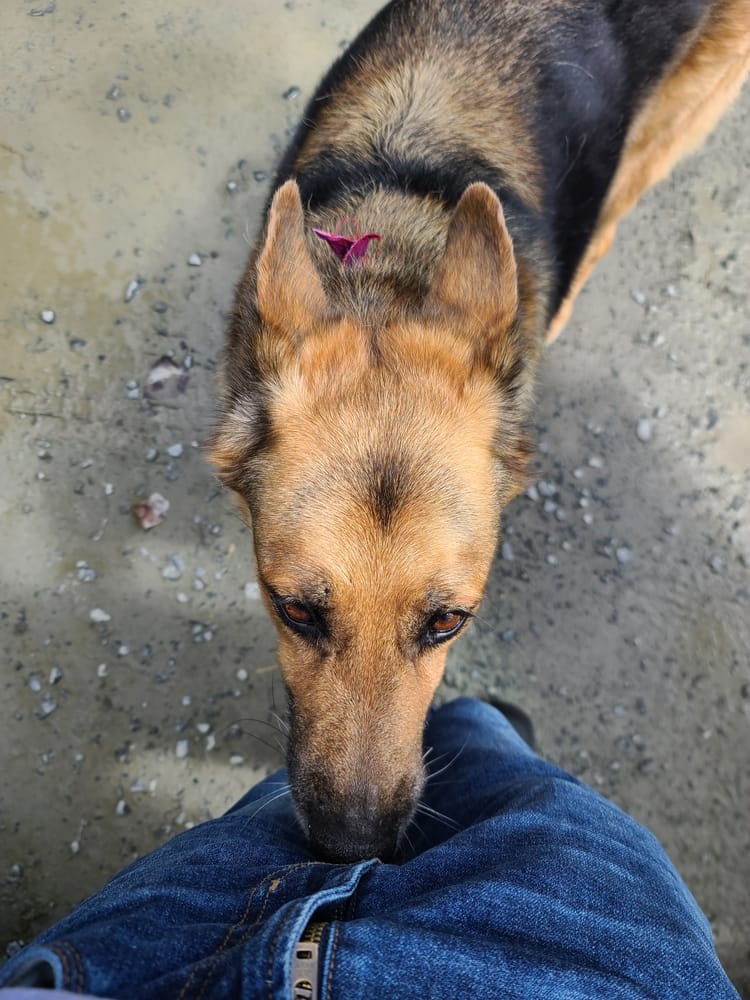
In short, your dog isn’t being inappropriate. It’s collecting information in the only way it knows how.
Is It a Sign of Anything Else?
For most dogs, sniffing is simply normal, healthy behavior and often a sign that the dog is curious and engaged. If the behavior suddenly becomes intense, repetitive or is paired with other changes such as anxiety or aggression, it’s worth talking to a veterinarian or a certified trainer to rule out health or behavior problems.
How to Redirect the Behavior
Experts recommend positive training instead of scolding.
1. Redirect, don’t punish. Dogs don’t understand why you’re upset when you scold them, and it can cause confusion and stress. Give their noses something better to do:
- Snuffle mats
- Puzzle toys
- Nosework games
- Sniffer walks, where the dog is allowed to explore scents at its own pace
2. Teach a polite greeting. Dr. Sperry suggests reinforcing the “sit” command as guests come through the door. Some owners teach a fun alternative, such as a high-five:
- Make sure your dog is comfortable with the high-five trick first.
- Ask a friend to enter quietly.
- Cue the high-five as your guest arrives.
- Reward your dog with a treat when they do it correctly.
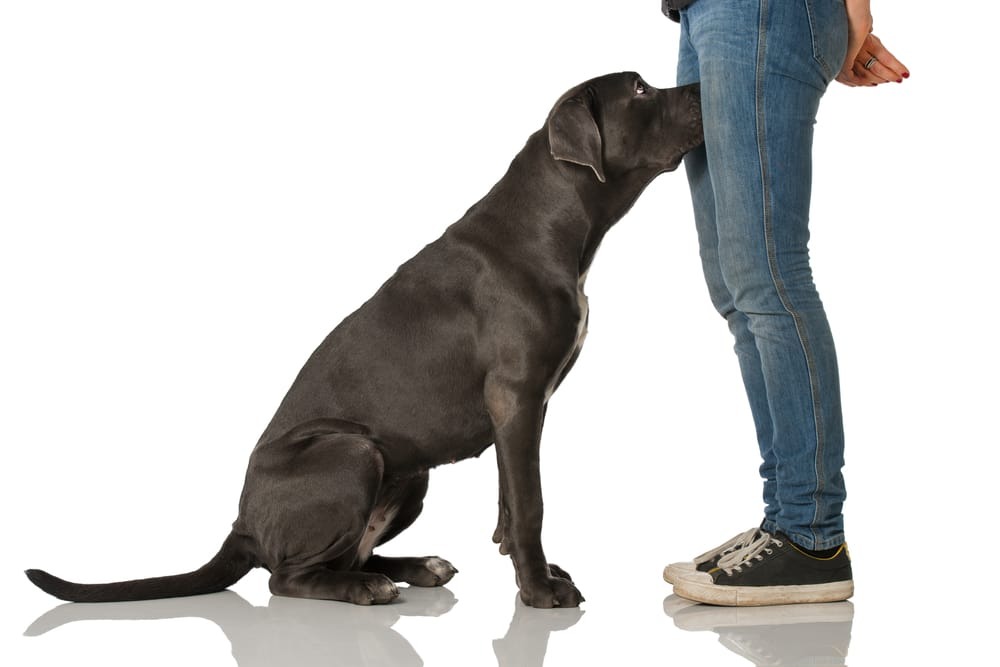
3. Manage the doorway. If your dog is very excited, have them on a leash or behind a baby gate until they calm down, and let guests know in advance.
What This Article Doesn’t Cover
Every dog is different, and training takes time and consistency. Persistent or intense sniffing, or any aggression, should be addressed with a professional trainer or veterinarian. The scent receptor figures are estimates, and exact numbers vary between sources and breeds.
Giving Your Dog’s Nose a Job
Owners who want to channel their dog’s curiosity often compare snuffle mats, puzzle toys for dogs and dog nosework kits, sign up for dog training classes to build good manners, stock up on small training treats and look at pet insurance plans that can help with vet bills if behavior or health problems appear.
Frequently Asked Questions
Why do dogs sniff people’s private areas? It’s a strong source of scent information, partly because of apocrine sweat glands, and it’s often at nose height.
Is it a sign my dog is misbehaving? Usually not. It is normal curiosity, though it can make guests uncomfortable.
Should I scold my dog? No. Redirecting and rewarding polite greetings works better.
What can I teach instead? A simple “sit” or a high-five greeting at the door, rewarded with a treat.
Sources: Rover
Leave a Reply