
Scientists have discovered fossilized tails of animals dating back hundreds of millions of years. Earlier fish utilized their fan-like tails as fins to swim through oceans and avoid predators.
As these fish evolved into land creatures, their tails began to change as well.
Tails, whether they belong to reptiles, insects, birds, or mammals, perform a variety of functions. Modern animals use their tails for a variety of purposes, including balance, communication, and mate searching.
A balance and movement assist
Scientists believe that dinosaurs, such as the Tyrannosaurus rex, swung their tails side to side while walking on two legs to balance their large heads and bodies. This motion enabled them to run quickly enough to seize their prey.
Similarly, modern kangaroos use their tail for balance when leaping across open territory. They don’t just utilize it to balance their weight; the kangaroo’s tail also serves as a powerful third leg that can propel them through the air.
Cats and other climbing animals frequently have bushy or long tails that help them balance, similar to a tightrope walker clutching a long pole.
Monkeys balance themselves by hanging through forest tree branches with their long tails. Many have prehensile, or gripping, tails that function as hands and allow them to grasp tree limbs.
These tails are so powerful that they can even support the animal while it consumes fruit and leaves.
A protective mechanism
The tails of some animals evolved into weapons. Stingrays, for example, have a stinger tail that they can use to defend themselves when a predator attacks.
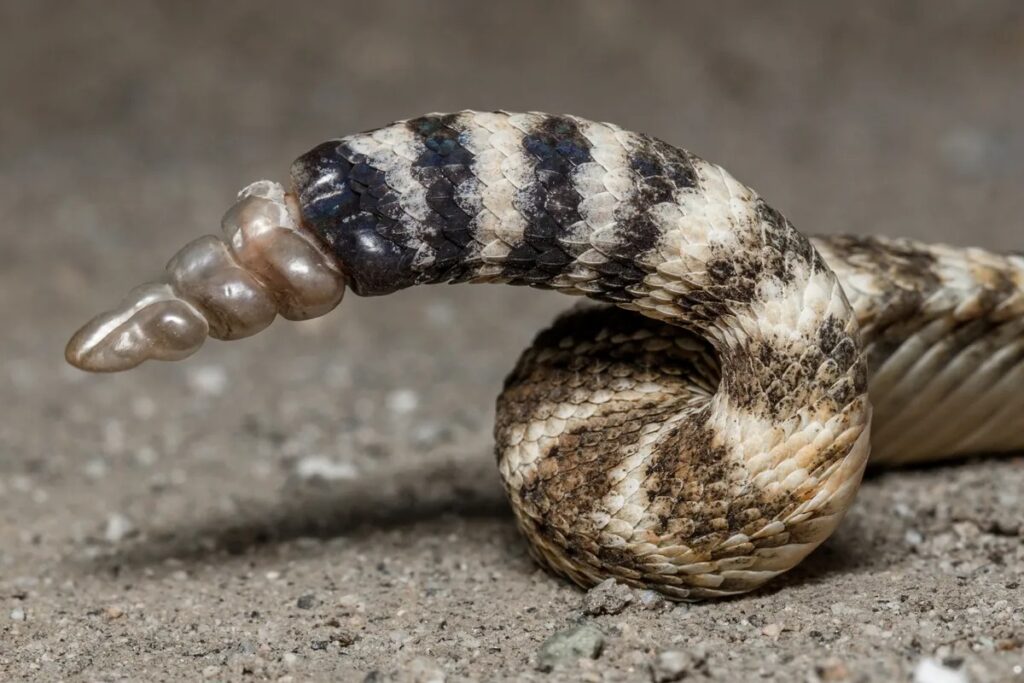
When a venomous rattlesnake shakes its tail, it makes a racket of dried skin buttons. This alerts any creatures that might pose a threat to the rattlesnake that it is about to strike.
Many insects have tails, although they developed independently of other animals with backbones, such as fish and mammals. The tails of most tailed insects are used to lay eggs or to sting and immobilize hosts or prey. Some animals, such as wasps, have tails that can accomplish both, as certain parasitic wasps lay their eggs within a host.
Grazing animals, such as bison in North America and wildebeest and giraffe in Africa, have tails with clusters of long hairs that can be waved like a whisk to swat away mosquitoes and other insects. Domestic cows and horses have the same type of tail.
A communication aide
Birds utilize their feathered tails to balance on a tree limb as well as to turn and reduce drag when flying. Some birds use their tails as a mating display as well.
Male turkeys and peacocks will unfurl their colorful tail feathers to attract female mates, and this visual show is most impressive in these species.
Wolves, for example, use a range of tail positions to signify their rank in groups or packs.
Dogs, who are descended from wolves, utilize their tails to communicate as well. When dogs are enthusiastic, you’ve probably seen them wag their tails.
Why you don’t have one
Even while humans lack the lengthy gripping tails of primates and the bright feather tails of peacocks, our forefathers did have tails.
Scientists believe our predecessors’ tails perished roughly 20 million years ago. They no longer needed tails to help them balance once they began walking upright. The Discussion
Michael A. Little, Emeritus Professor of Anthropology at Binghamton University (State University of New York).
The Conversation has republished this article under a Creative Commons license. Please read the original article.
Leave a Reply