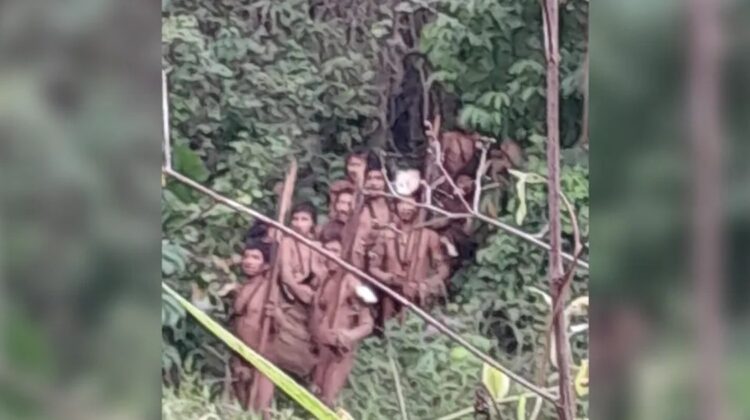
An uncommon meeting between an isolated Indigenous group and a neighboring community in Brazil’s Amazon has led authorities to step up protection and drawn a warning from advocates. The Awa people, who have long avoided outsiders, were seen approaching a village near a government checkpoint. Here is what has been reported, and why many people who work with Indigenous communities say the story matters.
What Happened
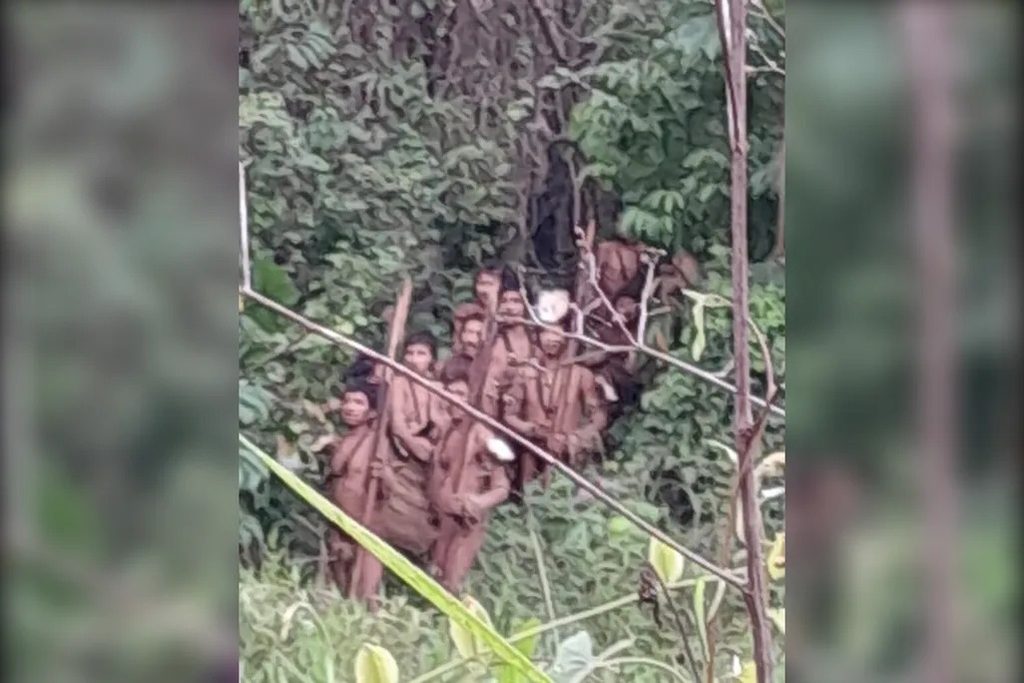
According to a statement from Brazil’s Ministry of Indigenous Peoples, around 20 members of the isolated Awa people were seen approaching an area near a government access control post and the Guajajara village of Tawari in the Arariboia Indigenous Territory in the northeastern state of Maranhão. The ministry cautioned that the information was preliminary while authorities assessed the situation.
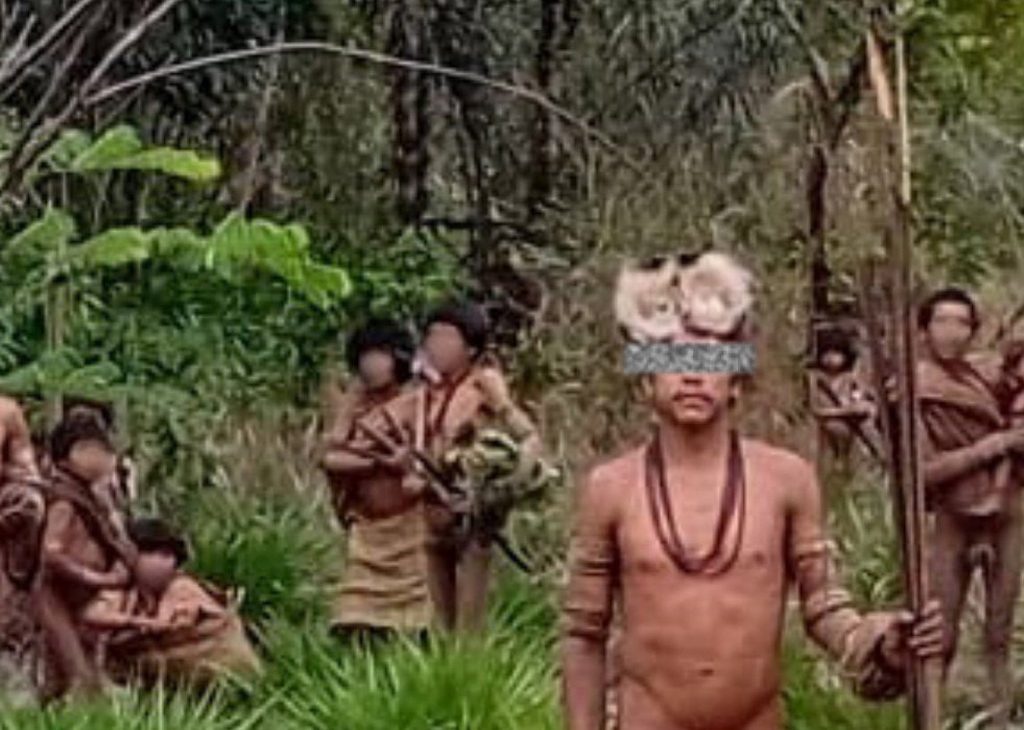
Footage recorded by members of the neighboring Guajajara community and shared by the advocacy group Survival International reportedly shows Awa adults and children in dense vegetation, some with bows and arrows and wearing traditional feathered headdresses and necklaces. The meeting reportedly lasted several hours, and because the two groups speak different languages, communication was very limited. Accounts differ on the details of the food: Survival International says the Awa approached a government team and asked for yams, while other reports say the Guajajara shared yams with them. In either version, the Awa took the yams and retreated into the forest.
Why It Raised Concern
The Awa in this area have spent decades hunting, fishing and gathering while avoiding outsiders, so a move toward a neighboring community is unusual. It is not clear why it happened. Advocates worry it may be linked to pressure on their forest from illegal logging, hunting and other intrusions that have affected the territory for years as surrounding woodland has been cleared.
Sarah Shenker, head of Survival Brasil, described it as a crisis moment and a wake-up call, and urged the Brazilian authorities to crack down on illegal intrusions into the Awa’s territory.
Signs of Pressure on the Forest
A Guajajara spokesperson told Brazilian television that this should not be read as a heartwarming story. He said the Guajajara had been trying to avoid contact with the Awa, in line with Brazil’s long-standing no-contact policy toward isolated peoples, and that the Awa now seem to have felt forced to come forward. Shenker said the Awa have shown for a long time that they don’t want contact with outsiders, so the fact that they came out suggests they probably felt they had no choice.
An anthropologist who has studied the group for about 20 years, Uirá Garcia of the Federal University of São Paulo, told Brazilian media that some members looked exceptionally thin. That was especially concerning because the encounter happened during the rainy season, which is usually a time of abundance in the forest. These are observations from the encounter, not a medical assessment.
The Awa rely on the forest for hunting, fishing, gathering fruit and honey, and for medicinal and spiritual practices. Survival International says they now live on an “ever-smaller island” of forest, surrounded by destruction, and that hunters, loggers and ranchers have increasingly encroached on the territory. It reports that more than a third of one legally protected Awa reserve had previously been cut down. Brazil’s deforestation has slowed in recent years thanks to renewed enforcement, but estimates suggest nearly a fifth of the Amazon has been lost since the 1970s.
Survival International counts at least 196 uncontacted peoples in ten countries, with roughly 95 percent of them in the Amazon.
Disease and Health Risks
One of the most immediate dangers is illness. Indigenous peoples living in isolation can be especially vulnerable to infectious diseases that are common elsewhere, because they may have had little previous exposure to those germs. Experts say the Awa have not been vaccinated and may have no immunity to common illnesses such as influenza, measles and chickenpox, so even a brief encounter can carry a serious health risk.
The Government’s Response
The Brazilian government says the Awa group is already registered in its database of isolated Indigenous peoples and is monitored by a specialized protection team from Funai, the federal Indigenous affairs agency. Funai staff and Indigenous health workers have been sent to the area, and an emergency coordination mechanism has been activated to assess potential contact situations and health risks.
The ministry stressed that its policy is not to encourage contact, but to protect the group’s right to remain isolated and to decide for itself whether to establish relations with outsiders. It also noted that a brief encounter does not necessarily mean the group has given up its isolation or chosen permanent contact.
Who Are the Awa?
The Awa are an Indigenous people whose ties to the forests of northeastern Brazil stretch back centuries. According to Survival International, they suffered attacks from settlers generations ago, which pushed them into a nomadic life of hunting and gathering in order to avoid outsiders. Settlement areas were set aside for them much later, and it took further years before the government invested properly in demarcated land. In the meantime, deadly encounters with loggers, farmers and other illegal intruders reduced the community to roughly 300 people, and advocates estimate that only about a third of them remain completely isolated. Other Awa live in settled villages and have regular contact with outsiders.
The Arariboia territory is also home to the Guajajara people. Some of their members serve as volunteer “Forest Guardians,” who have spent years pushing back against illegal ranchers and loggers trying to claim land there. Survival International says those efforts have come at a high cost, including the loss of community members, and that responsibility for protecting the territory ultimately rests with the government. The Guardians have demanded immediate action to safeguard the Awa’s lives, health, safety and dignity in the way the Awa themselves believe is best.
A Wider Warning
Caroline Pearce, director of Survival International, said the encounter is a troubling sign of how the continued invasion of uncontacted peoples’ forests puts otherwise self-sufficient people in real danger, and she urged the Brazilian government to commit the resources needed to protect Arariboia from illegal loggers and ranchers. Advocates more broadly warn that around half of the nearly 200 communities still living in relative isolation worldwide could disappear within a decade without stronger safeguards against land loss, climate change and illegal industrial intrusion. That figure is an advocacy estimate, not an official count.
What We Don’t Know
Key details remain unclear:
- Why the group chose to approach, and whether it was related to threats in the forest.
- Whether any health problems have appeared since the encounter.
- What additional protection measures the authorities will take.
- The situation is developing, and the information was described as preliminary, so details may change.
A Note on Respecting Isolated Peoples
Advocates say that images of uncontacted people can themselves be a risk, since they can draw unwanted attention to groups who have chosen to live apart. Shenker said she would rather the Awa had remained out of sight, living undisturbed in their forest. For that reason, this article doesn’t include any photos, and readers are encouraged not to seek out or share identifying footage.
Protecting the Forest and Its People
Readers who want to help can support organizations that defend Indigenous rights and Amazon forests, such as Indigenous rights organization donations and rainforest conservation donations. Those who dream of visiting the Amazon can choose responsible Amazon rainforest eco tours run by reputable local operators, which never enter protected or restricted Indigenous territories, and buy travel insurance for remote trips, while documentaries and books about the Amazon are a good way to learn more.
Frequently Asked Questions
Who are the Awa? An Indigenous people in northeastern Brazil, some of whom live in isolation in the forest.
What happened? About 20 isolated Awa were seen approaching a neighboring village and a government checkpoint, according to Brazil’s Ministry of Indigenous Peoples.
Why is it a concern? Isolated peoples are vulnerable to diseases and to illegal logging and other intrusions into their territory.
What is the government doing? Funai and Indigenous health workers are in the area, and an emergency mechanism has been activated, with a policy of not encouraging contact.
Sources: Associated Press, Smithsonian Magazine, Popular Mechanics, Survival International, Brazil’s Ministry of Indigenous Peoples