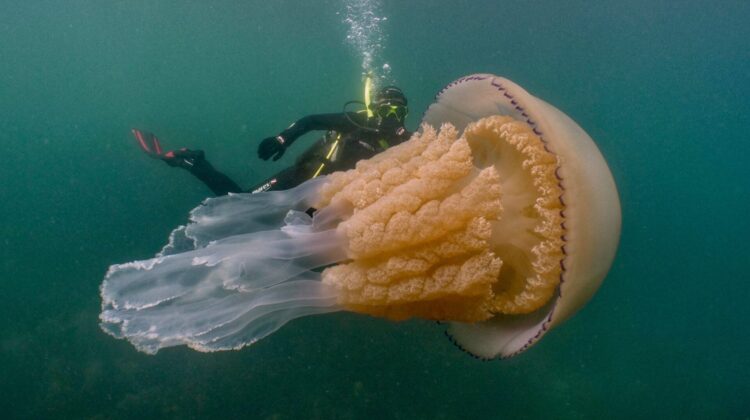
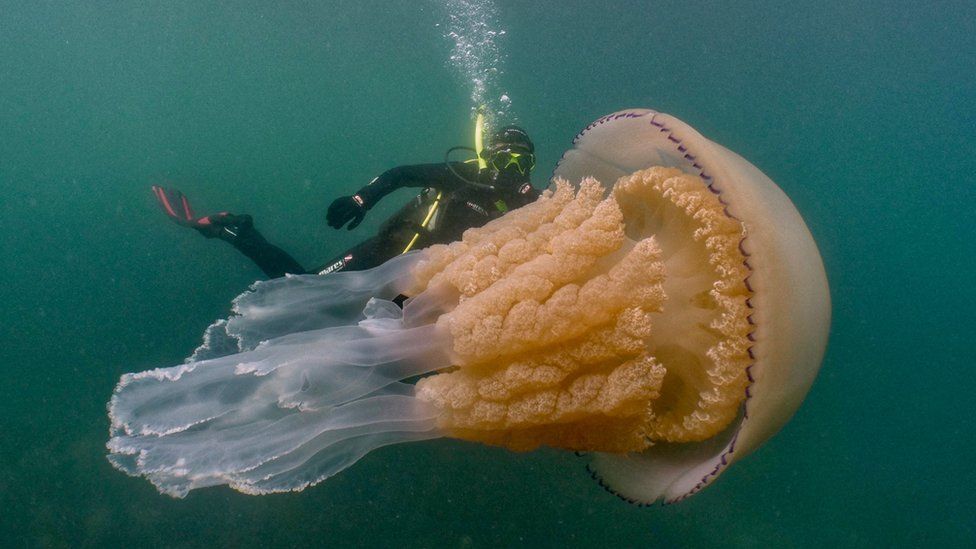
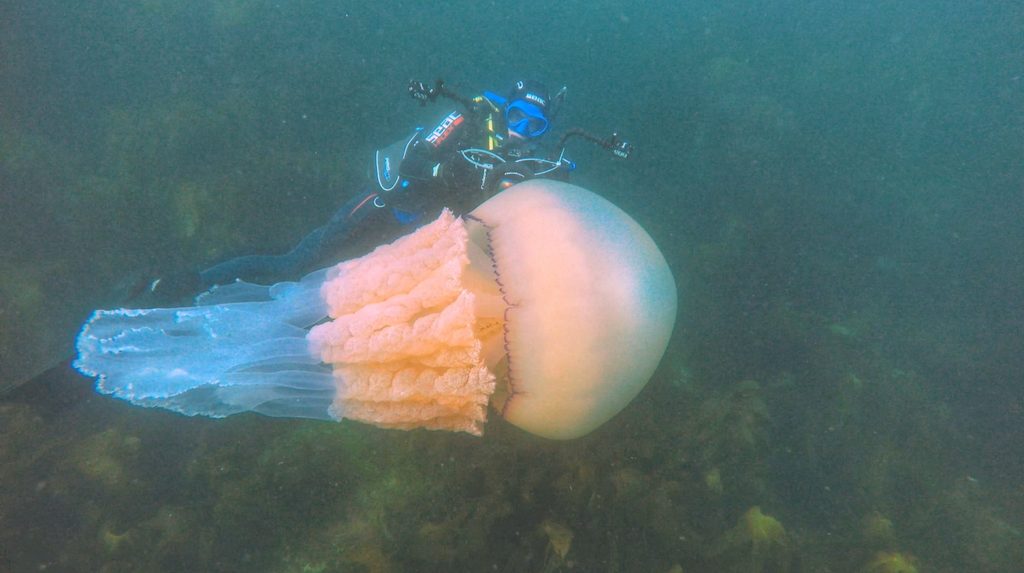
A diver glides beside a pale, frilled creature that looks as large as she is. The photo has circled the world, with captions calling it a “human-sized jellyfish.” The animal is a barrel jellyfish, the largest jellyfish found in British waters, and the story behind the picture is a good lesson in how big these ocean drifters can get, and in how camera angles can play tricks.
The Encounter
The photo appears to be the widely shared image of biologist and wildlife presenter Lizzie Daly diving with a barrel jellyfish off Falmouth in Cornwall, England, taken by underwater cinematographer Dan Abbott. They were finishing “Wild Ocean Week,” a fundraising and awareness trip around the UK for the Marine Conservation Society, during which they documented seals, breaching minke whales, lunge-feeding whales and dolphins. The planned dive to see blue sharks had been changed because of windy weather, and Daly later said the jellyfish footage inspired more people than any other clip from the week.
The pair had been diving for about half an hour when a single enormous jellyfish emerged from the murky water. Abbott estimated that it was around 1.5 meters (5 feet) long, about the same size as Daly. He described it as the biggest jellyfish he had ever seen, and Daly said it was the size of her body. They swam alongside it for about an hour and later condensed the footage into a two-minute video, which they posted on Facebook.
What Is a Barrel Jellyfish?
The barrel jellyfish (Rhizostoma pulmo) is the largest jellyfish species in UK waters. It has a rounded bell and thick, frilly oral arms, which give it a cream or apricot color and a “barrel-like” look. According to the Wildlife Trusts, the bell of a typical animal can reach up to about 3 feet (90 centimeters) wide, and individuals can weigh almost 80 pounds. Most are smaller, often about the size of a dustbin lid.
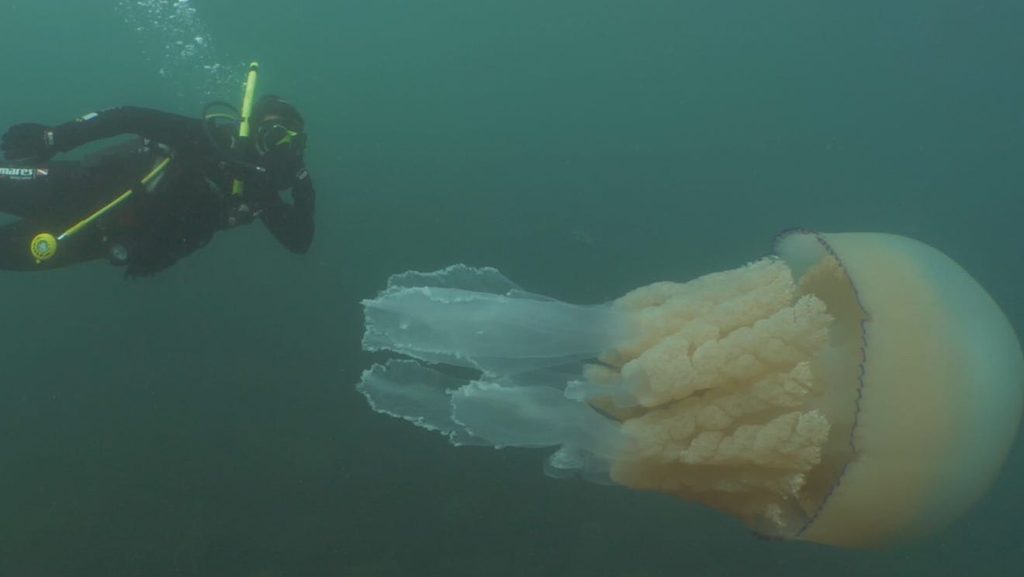
Despite their size, barrel jellyfish are not generally considered dangerous to people. Daly said she and Abbott felt comfortable because the species has a very mild sting and poses no threat to humans, and that some people don’t feel it at all. It’s still wise not to touch them, since some people can react.
From Tiny Larva to Giant Drifter
Cheryl Ames, a research collaborator at the Smithsonian’s National Museum of Natural History who wasn’t involved in the video, explained that barrel jellyfish begin life as creatures only about a millimeter long. In captivity, they can’t reach anything like the size the divers saw, but in the wild, where their range stretches from the coast of the United Kingdom to the Mediterranean, they can grow largely unchecked. In the UK, they spend the summer in the warm waters off the western coast.
Size is relative, though. The lion’s mane jellyfish, the largest known jellyfish, has been reported to have tentacles around 120 feet long in the longest recorded specimens, which is longer than a blue whale.
Is It Really “Human-Sized”?
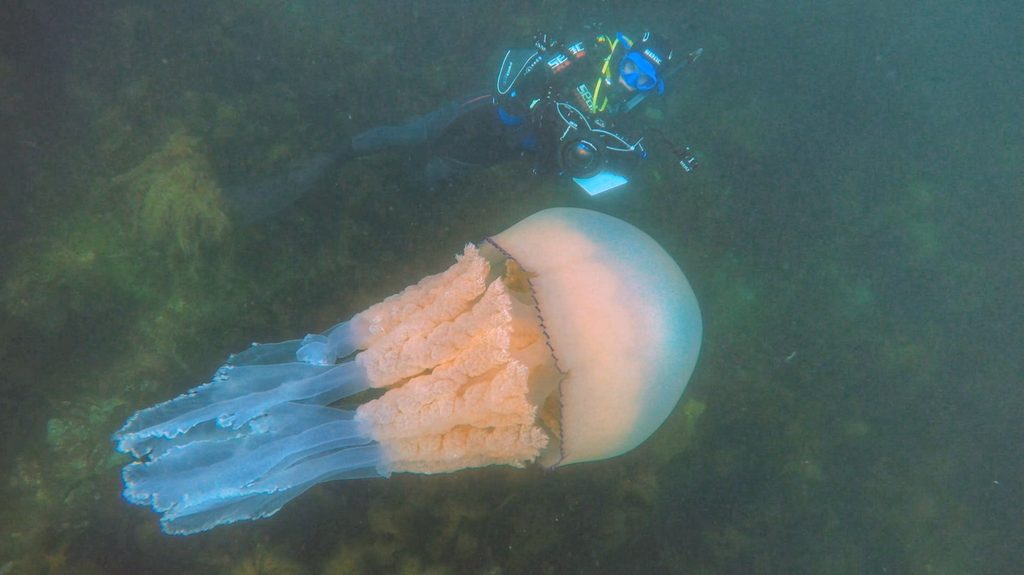
A jellyfish expert at Sea Life London told the Telegraph that finding barrel jellyfish this large isn’t unusual and that this was a big individual, but that the camera angle may have made it look even larger. Because the jellyfish was in front of the diver, perspective can exaggerate its size. Daly herself acknowledged that the angle may have skewed perceptions slightly, though she saw no reason to doubt that it was close to human-sized.
In other words, the animal was genuinely large, but “as big as a person” is an estimate that depends on how you measure a floppy, soft body underwater.
Why Do People Usually See Them Dead?
Most Britons only encounter barrel jellyfish when they wash up on beaches, typically in early summer. These animals live in warmer coastal waters and can gather in large groups, called blooms or swarms. Winds and currents can carry them ashore, where they die. Seeing a live one in its natural environment is far less common.
Why Jellyfish Numbers Change
Jellyfish populations rise and fall with ocean conditions, including water temperature, food supply and currents. Barrel jellyfish are considered common, but experts say warming seas and other human impacts can affect marine life in many ways, and scientists continue to study how jellyfish blooms are changing.
What the Reports Don’t Tell Us
Some details are limited:
- The size is an estimate, not a measured value, and it comes from the divers.
- It isn’t clear how common individuals of this size really are.
- The photo shows one moment from a longer dive, and the reports don’t say what happened to the animal afterward.
Staying Safe Around Jellyfish
- Don’t touch washed-up jellyfish. They can still sting, even when dead.
- Follow lifeguard and local warnings about jellyfish at beaches.
- Observe divers’ rules. If you dive or snorkel, look but don’t touch or chase marine animals.
- Get help if you’re stung badly. Seek medical advice if you have severe pain, trouble breathing or an allergic reaction.
Seeing Marine Life for Yourself
Ocean lovers often take scuba diving courses or try snorkeling gear, record their trips with an underwater camera, and compare dive travel packages with travel insurance that covers diving. Those who want to support the sea can also look into marine conservation donations and ocean wildlife charities.
Frequently Asked Questions
What kind of jellyfish is it? A barrel jellyfish (Rhizostoma pulmo), the largest jellyfish in UK waters.
How big can they get? The bell can reach about 3 feet across and the animal can weigh close to 80 pounds, though most are smaller.
Is the photo real? Yes. It was taken during a dive off Cornwall, though the camera angle may make the animal look bigger.
Is a barrel jellyfish dangerous? Its sting is generally mild, but you shouldn’t touch it.
Sources: Smithsonian Magazine, NPR, ITV News, CBS News, HuffPost UK, The Telegraph