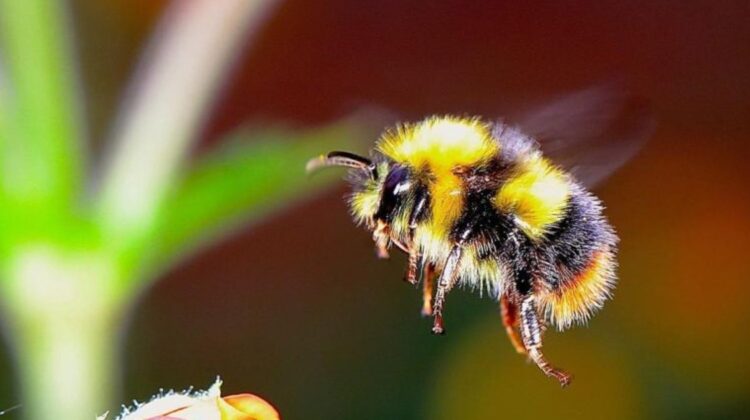
A honey bee’s body is a small marvel of specialized engineering — built almost entirely around two tasks: finding flowers and getting the colony fed. Its senses of smell and taste, in particular, are far more sophisticated than most people realize.
A Sense of Smell Built for Survival
Honey bees have 170 odorant receptors — compare that to 62 in fruit flies and 79 in mosquitoes. This was first documented in a 2006 study by entomologist Hugh M. Robertson and researcher Kevin W. Wanner, published in the journal Genome Research, which mapped the honey bee genome’s chemoreceptor family.
That expanded receptor count is what gives bees their remarkable sense of smell — often cited as many times more sensitive than a dog’s, strong enough that some medical researchers have explored training bees to detect diseases like cancer and diabetes through scent alone.
Why Bees Need Such Precise Smell
Smell isn’t just about finding flowers. Inside the hive, scent is the colony’s communication system:
- Pheromone detection — worker bees and drones use scent to recognize the queen, detect alarm signals, and identify nestmates.
- Mate-finding — a drone’s entire biological role is to detect and reach a queen’s pheromone, and its antennae are specially structured for exactly that task, according to research from the University of Illinois.
- Nectar quality assessment — foraging bees can judge a flower’s sugar content by scent alone, even while flying, helping the colony prioritize the most nutritious sources.
The Antennae: A Bee’s Primary Sensory Tool
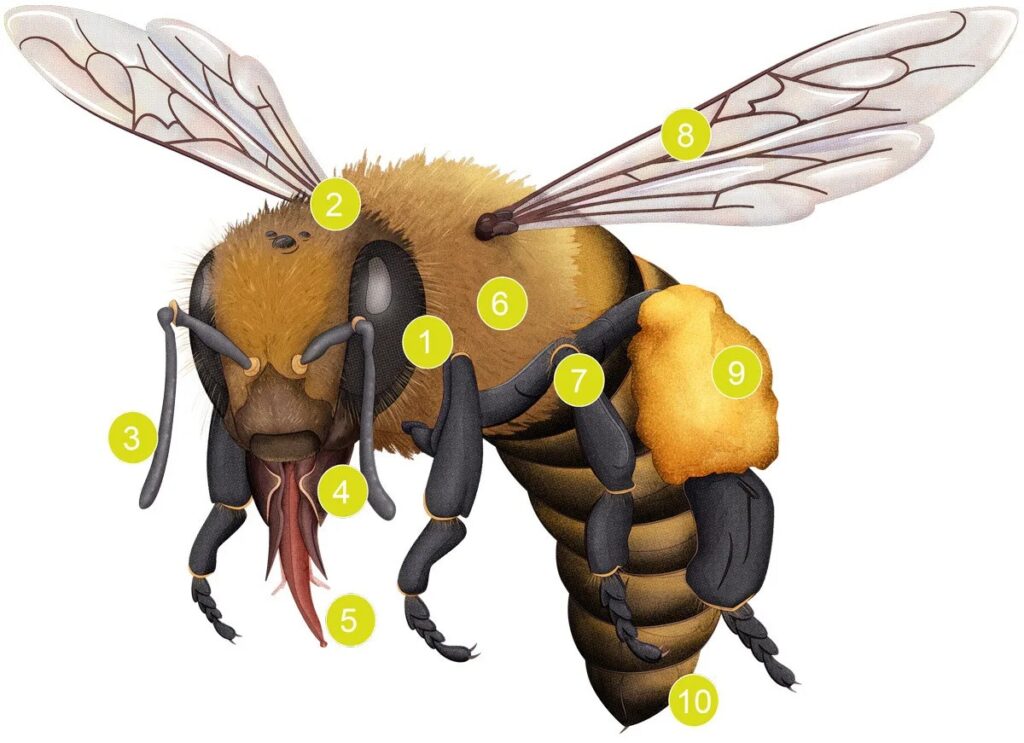
Each antenna is built in three segments, according to entomology research compiled by Michigan State University and Agriculture.Institute:
- The scape — the long base segment, connected to the head by a ball-and-socket joint that allows wide movement.
- The pedicel — a small middle segment housing the Johnston’s organ, which detects vibration, airflow, and the bee’s own movement.
- The flagellum — the antenna’s tip, made of smaller segments called flagellomeres, which carry most of the bee’s smell receptors. Workers and queens have 12 of these segments; drones have 13.
Bees also show a clear preference for their right antenna in social interactions — a lateral bias scientists still don’t fully understand, similar in concept to human handedness.
Two Stomachs, Two Jobs
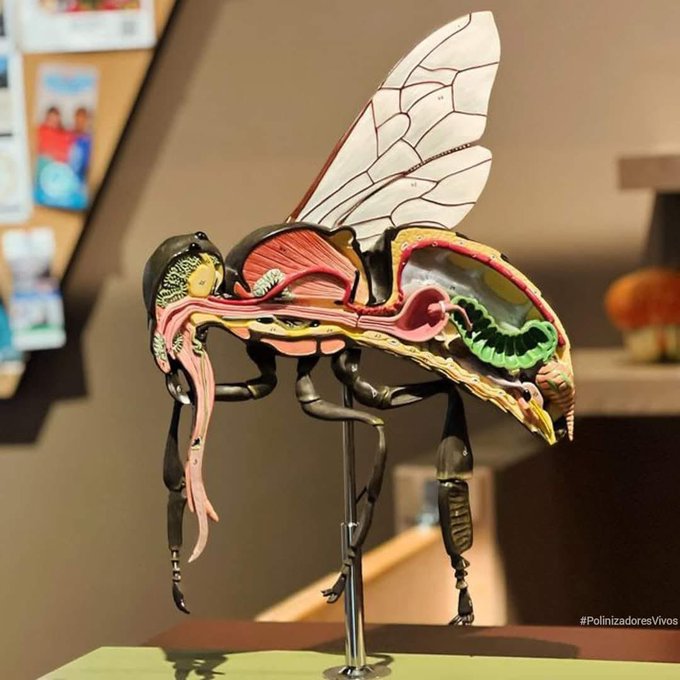
Honey bees have two separate stomachs: one for digesting their own food, and a second — the “honey stomach” or crop — used purely to carry and pre-process nectar. Enzymes added in this second stomach begin converting nectar’s complex sugars into simpler ones on the way back to the hive, the first step in turning nectar into honey.
Taste: Surprisingly Limited
Despite their powerful sense of smell, bees actually have relatively few taste receptors compared to what researchers expected — a few hundred spread mainly across the antennae and mouthparts, with additional taste sensors on the tips of their legs. Robertson’s research suggests this is because larvae are fed food that’s essentially free of toxins inside the hive, reducing the evolutionary pressure for an elaborate taste-detection system.
Frequently Asked Questions
Why do bees need 170 odorant receptors when humans manage with far fewer types? Bees rely on scent for nearly everything humans use sight, hearing, and language for combined — finding food, recognizing nestmates, detecting threats, and coordinating colony behavior — so an expanded receptor set gives them the resolution needed for all of it.
Do all bees have the same anatomy, or does it differ by role? Anatomy varies somewhat by caste — for example, drones have 13 antennal segments instead of 12, and their receptors are tuned specifically for detecting queen pheromone rather than foraging cues.
How is a bee’s sense of smell used outside of beekeeping? Researchers have explored training bees and even using isolated bee antennae in biosensors to detect certain diseases and chemical compounds, based on the same receptor sensitivity that makes them such effective foragers.
Leave a Reply