

High in the rugged mountains of northern Pakistan, where the air is razor-thin and the glaciers glisten like glass, a decades-old mystery has finally been solved.
The ice has given back what it took—unchanged, untouched, and almost as if time itself had stopped.
A Disappearance That Became Legend
It was June 1997 when 31-year-old Naseeruddin set out across the breathtaking Supat Valley in the Kohistan region. Known for its remote beauty and treacherous ice caves, the valley has always demanded respect from those who venture into it.
But on that day, he never returned. A husband and father of two, he vanished into the glacier, leaving his family to endure a heart-wrenching search that would stretch nearly three decades.
“Our family left no stone unturned to trace him,” recalls his nephew, Malik Ubaid. “Our uncles and cousins visited the glacier several times, but they eventually gave up—it wasn’t possible.”

The Ice Opens Its Grip
On July 31, 2025, a lone shepherd named Omar Khan was navigating the valley when something caught his eye—something so surreal it didn’t seem possible.
Lying before him was a man frozen in perfect preservation. His clothes were immaculate, his features untouched by time, and in his pocket, an identity card still bearing his name: Naseeruddin.
“What I saw was unbelievable,” Khan told BBC Urdu. “The body was intact. The clothes were not even torn.”
For 28 years, the glacier had held him in its icy embrace, shielded from oxygen, decay, and the passing of seasons.
Nature’s Deep Freeze — and Its Thaw
Pakistan is home to about 7,000 glaciers—the largest collection outside the polar regions. But in recent years, climate change has begun to eat away at these frozen giants.
Less snowfall, hotter summers, and the relentless sun have accelerated the melt, peeling back layers of ice that have hidden their secrets for centuries.
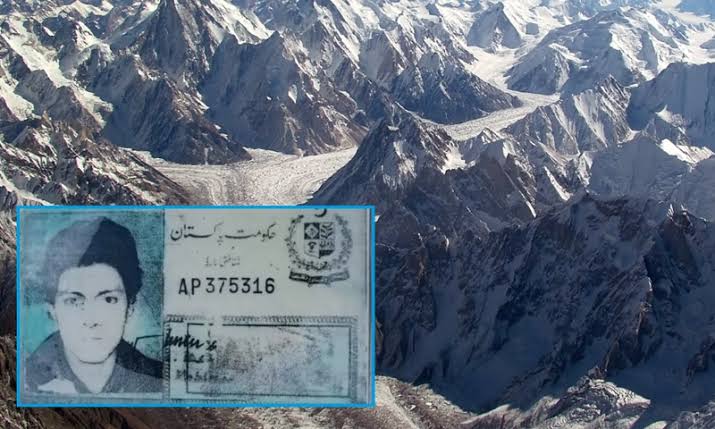
Naseeruddin’s body emerged not because time healed the wound, but because the ice could no longer hold it.
“Finally, we have some relief after the recovery of his dead body,” Ubaid said, the decades of uncertainty finally giving way to closure.
Glaciers as Time Machines
To scientists, glaciers are not just frozen rivers—they are vast archives. Inside them, ancient air bubbles whisper the history of Earth’s climate. Entire lives, cultures, and artifacts can remain sealed for millennia.
The most famous is Ötzi the Iceman, discovered in 1991 in the Italian Alps, preserved for over 5,000 years with soft tissue still intact. In 2017, melting ice revealed the remains of World War I soldiers in Europe’s mountains.
Even the world’s tallest peak, Mount Everest, is slowly surrendering climbers lost decades ago—bodies eerily preserved by the cold, their stories frozen mid-chapter.
What Else Lies Beneath the Ice?
The return of Naseeruddin is more than a personal story of loss and recovery—it’s a sign of what’s to come. As glaciers retreat across the globe, more long-lost explorers, artifacts, and ancient remains will reemerge, pulled from the past into the present.
Some will bring closure. Others will rewrite history.
And somewhere, beneath layers of ice in a remote corner of the world, the next frozen secret waits for the sun.
Leave a Reply