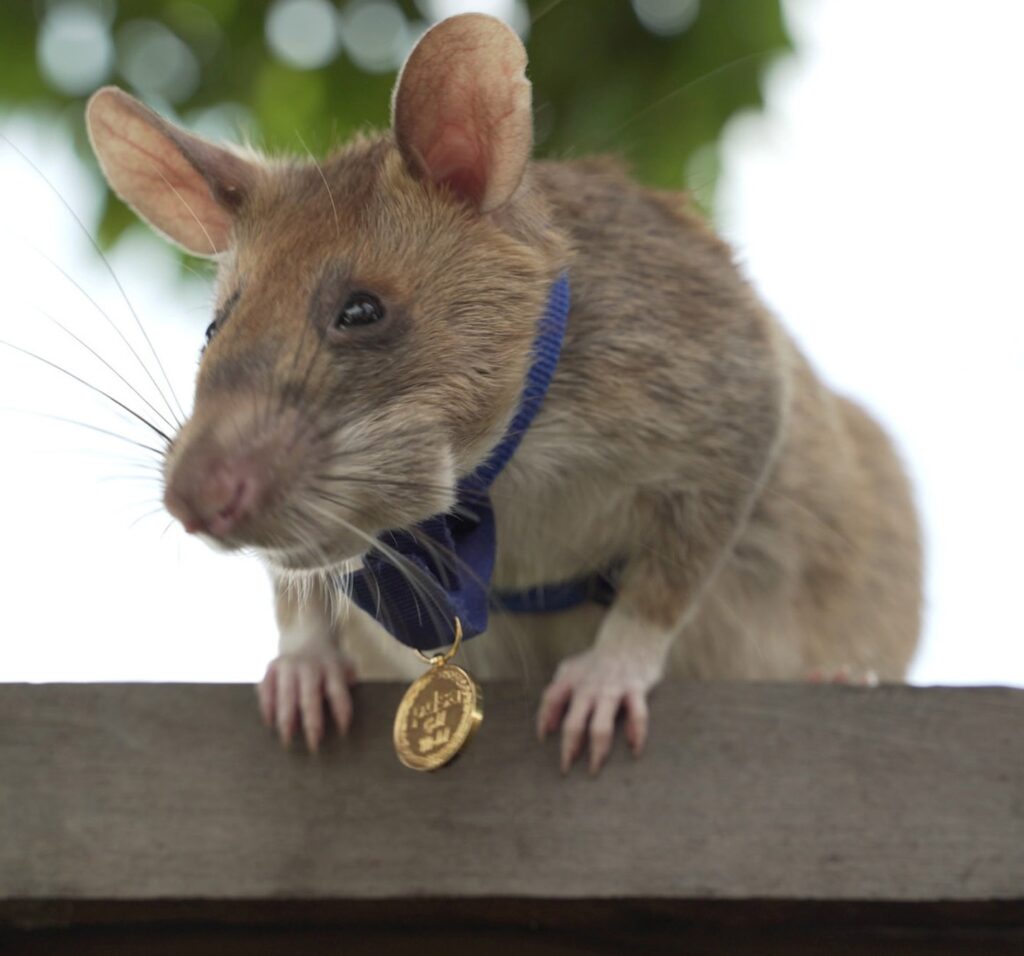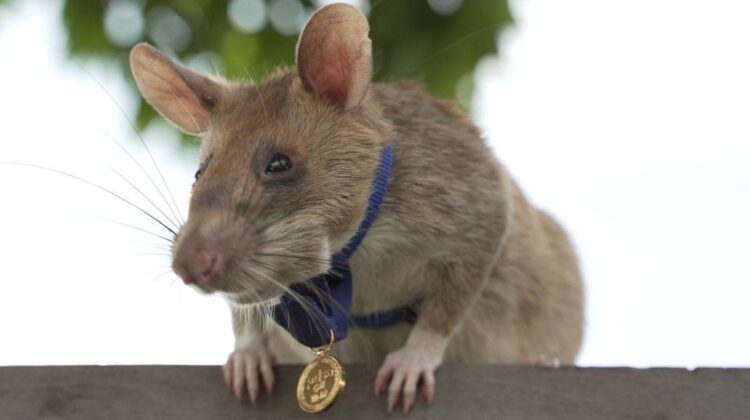
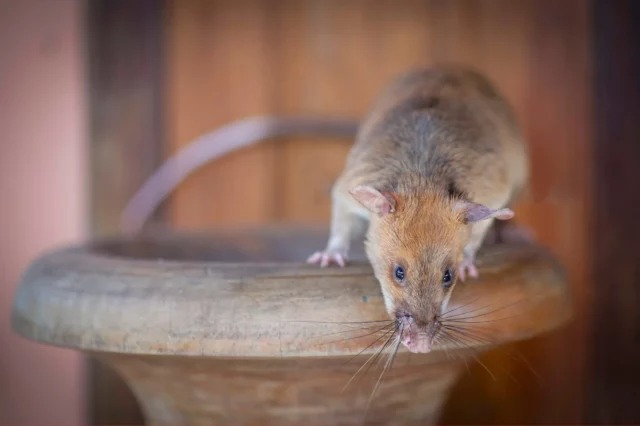
Magawa spent five years doing a job most people would never volunteer for. Across Cambodia’s minefields, this African giant pouched rat sniffed out 71 landmines and 38 unexploded munitions — work that eventually made him the first rat in history to receive the PDSA Gold Medal, an honor often described as the animal equivalent of Britain’s George Cross.
Born For The Job
Magawa was born in November 2013 at APOPO’s breeding facility at Sokoine University of Agriculture in Morogoro, Tanzania. APOPO, a Belgian-registered charity headquartered in Tanzania, has trained rats to detect landmines and tuberculosis by scent since the early 1990s, giving its animals the affectionate title “HeroRATs.”
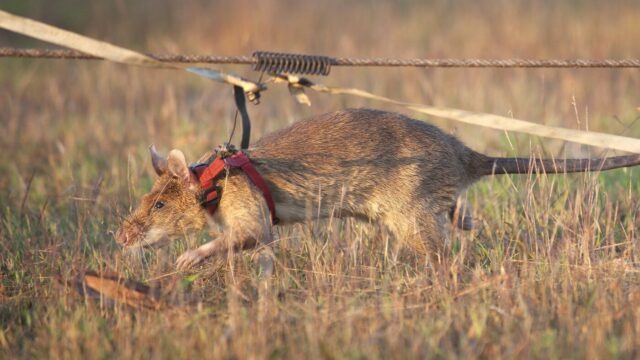
After roughly nine months of training — using a clicker and food rewards whenever he correctly identified the scent of TNT and other explosive compounds — Magawa passed his certification tests and was deployed to Siem Reap, Cambodia, in 2016 to begin real fieldwork.
Small, Fast, And Built For The Task
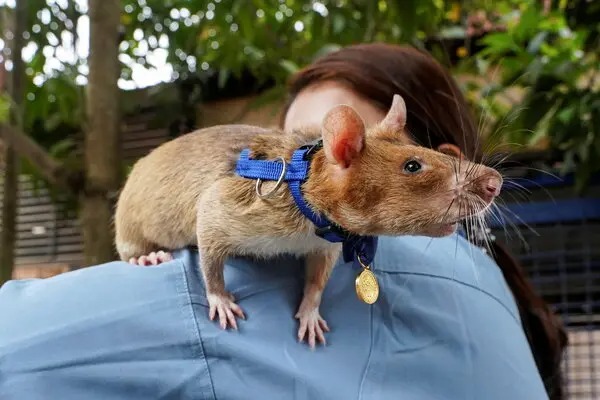
At just over a kilogram and about 70 centimeters long, Magawa was considerably larger than a typical pet rat, but still light enough that he could walk directly over a landmine without ever triggering it — a critical safety advantage that human deminers using metal detectors don’t share.
His training let him ignore scrap metal entirely, something that regularly slows down manual, metal-detector-based demining. As a result, Magawa could search an area the size of a tennis court in just 20 to 30 minutes — a task that would take a human deminer with a metal detector between one and four days to safely complete.
Five Years, 71 Landmines
Over his five-year career in Cambodia, Magawa helped clear more than 225,000 square meters — roughly 22.5 hectares, or about 56 acres — of land contaminated with hidden explosives. Cambodia remains one of the most heavily mined countries in the world, with an estimated four to six million landmines laid between 1975 and 1998, a legacy that has caused more than 64,000 casualties, including more than 40,000 amputees, according to PDSA.
Every mine or unexploded device Magawa located directly reduced that ongoing risk for the families and communities living nearby.
A Historic Medal
In September 2020, Magawa was awarded the PDSA Gold Medal, becoming the first rat in the charity’s history to receive the honor, inscribed “for animal gallantry or devotion to duty.”

“To receive this medal is really an honour for us,” said APOPO CEO Christophe Cox. “But also it is big for the people in Cambodia, and all the people around the world who are suffering from landmines.”
PDSA Director General Jan McLoughlin was similarly direct about the stakes involved. “Magawa’s work directly saves and changes the lives of men, women and children who are impacted by these landmines,” she said. “Every discovery he makes reduces the risk of injury or death for local people.”
Retirement, And A Quiet Ending
In June 2021, at nearly eight years old, Magawa officially retired. “Although still in good health, he has reached a retirement age and is clearly starting to slow down,” APOPO said at the time. “It is time.” The organization praised him for “allowing local communities to live, work, play and be educated; without fear of losing life or limb.”
Magawa passed away in January 2022, at the age of eight, leaving behind a record still regarded as the most successful in APOPO’s history.
Frequently Asked Questions
Why are rats used to detect landmines instead of dogs or machines? Rats like Magawa have an exceptionally strong sense of smell, can be trained to ignore scrap metal that confuses standard metal detectors, and are light enough to walk over a landmine without setting it off — making them faster and safer than many traditional detection methods.
How much land did Magawa clear during his career? Over five years, Magawa helped clear more than 225,000 square meters (about 22.5 hectares, or 56 acres) of landmine-contaminated land in Cambodia.
What happened to Magawa after he retired? He retired in June 2021 after nearly eight years, described by APOPO as still healthy but slowing down. He passed away in January 2022.
How does a rat get trained to detect landmines? Rats undergo roughly nine months of training using clicker training and food rewards, learning to associate the scent of TNT and other explosive compounds with a reward, then signaling their handler by scratching at the detected spot.
Why is Cambodia specifically affected by landmines? Decades of conflict left an estimated four to six million landmines across Cambodia between 1975 and 1998, causing more than 64,000 casualties over the years, making landmine clearance an ongoing, urgent public safety effort in the country.
Sources: PDSA, Wikipedia, and ABC/CNN reporting on APOPO’s HeroRAT program, cited above.