
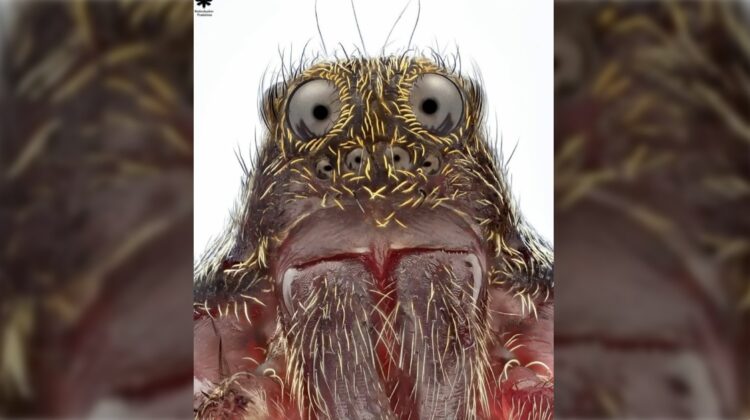
In a striking and unusual moment, a photographer captured what looks like a passport-style portrait of a wolf spider — revealing details rarely noticed by the human eye.
Wolf spiders are ground-dwelling hunters that rely on movement, precision, and stealth rather than webs. Instead of waiting for prey to become trapped, they actively chase insects, using speed, camouflage, and keen vision to survive.
These spiders are typically brown or gray, marked with stripes or mottled patterns that allow them to blend seamlessly into natural surroundings such as soil, fallen leaves, and grass. This natural camouflage makes them effective predators and difficult to spot in the wild.
What Makes Wolf Spiders Unique?
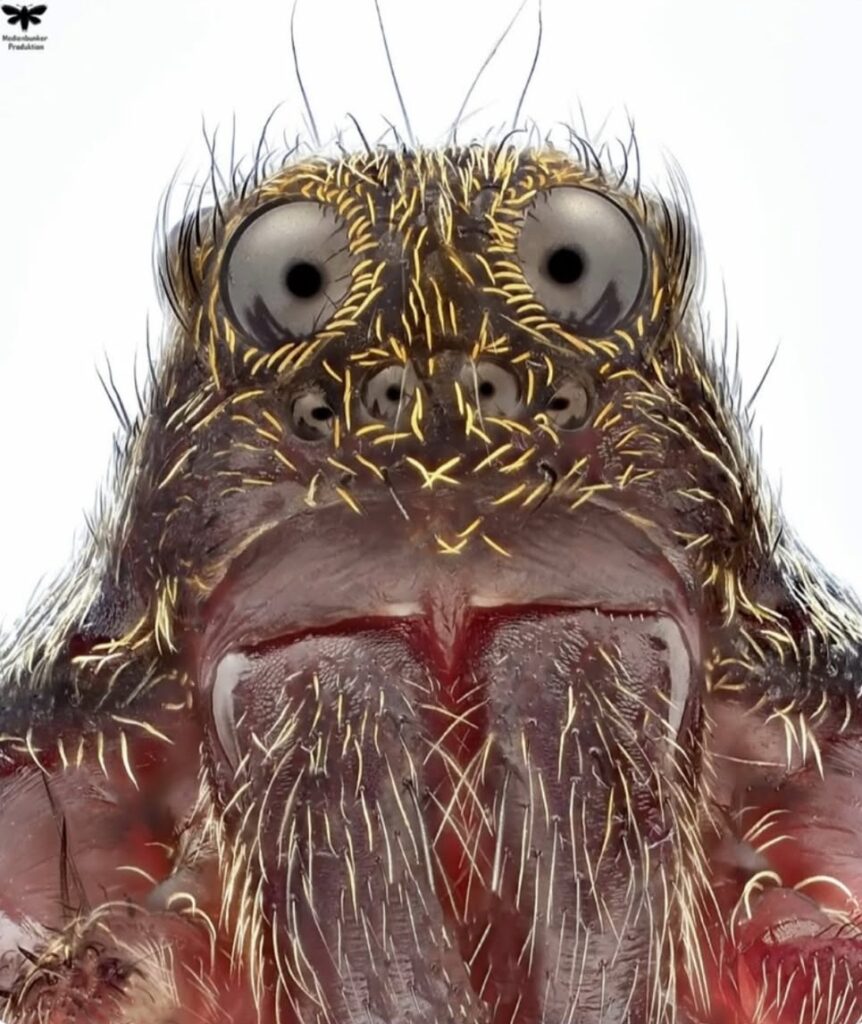
One of the most distinctive features of the wolf spider is its eye arrangement. It has eight eyes organized in three rows, including two large central eyes that provide excellent night vision. This advanced eyesight helps the spider detect movement and hunt effectively in low-light conditions.
Wolf spiders are found across the world in a wide range of habitats, including forests, fields, gardens, and occasionally inside homes. Despite their intimidating appearance, they are not aggressive toward humans.
Bites are rare and usually occur only when the spider is handled or feels threatened. When they do happen, symptoms are typically mild and comparable to a bee sting.
A Closer Look at an Often-Misunderstood Creature
Images like this remind us that even small, often-feared creatures play an important role in natural ecosystems. Wolf spiders help control insect populations and are an essential part of the ecological balance.

Seeing one up close — especially through a camera lens — offers a chance to replace fear with understanding and appreciation for the intricate design of nature.
Final Thought
Sometimes, a single photograph can change how we see the natural world. What appears frightening at first glance often reveals complexity, purpose, and quiet beauty when observed more closely.
Leave a Reply